| Piú votate - The Universe Inside |

ZA-Green flash from the Sun (2).jpgA "Green Flash" from the Sun (Portugal)105 visiteCaption NASA originale: "Many think it is just a myth. Others think it is true but its cause isn't known. Adventurers pride themselves on having seen it. It's a green flash from the Sun. The truth is the green flash does exist and its cause is well understood. Just as the setting Sun disappears completely from view, a last glimmer appears startlingly green. The effect is typically visible only from locations with a low, distant horizon and lasts just a few seconds".
(28 voti)
|
|
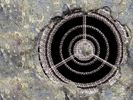
Pseudo-Crater.jpgPseudo-Crater <-- or --> True-Crater156 visite"...Laddove non c'è Verità non ci può neppure essere Bellezza..."
P.C. Floegers
(28 voti)
|
|

ALANBEAN-LUNARROVER.jpgLunar "Grand Prix"88 visiteApollo 16 Commander John Young is putting the Lunar Rover through a full test. This was the second mission with the Rover onboard and this Lunar Grand Prix would allow John to evaluate the performance of the Rover in the light gravity and the dusty, cratered, and rocky surface of the Moon.
His companion, Charlie Duke, is photographing it all with the 16-mm Data Acquisition Camera normally mounted on the Rover, but hand-held temporarily to document the Rover motion.
John later said:"The tendency was to drive wide open or very close to that and take what you got. The best reference to speed control was the speedometer, as I really didn't have a feel for the difference between 7 and 10 Km per hour."
Later, he demonstrated a sharp turn at ax speed, about 10 Km per hour. I made the Rover end break out to show the engineers how it looked.
It is no problem as all I had to do was cut back like I do when driving in snow...I didn't get up to any great speed, maybe 10 clicks at the most, but the terrain around there was too rough and rocky for that kind of foolishness..."
Charlie, who was filming it all, told Houston, "...man, Indy has never seen a driver like this."
(16 voti)
|
|

Venus Belt.jpgThe "Belt of Venus"170 visiteCaption originale NASA da "Astronomy Picture of the Day" del 27 Gennaio 2005:"A nearly full Moon and planet Earth's shadow set together in this scene captured from snowy Mt. Jelm, home of the Wyoming Infrared Observatory. For early morning risers (and late to bed astronomers), shadow set in the western sky is a daily apparition whose subtle beauty is often overlooked in favor of the more colorful eastern horizon. Extending through the dense atmosphere, Earth's setting shadow is seen in this picture as a "dark blue band" along the distant horizon, bounded above by a pinkish glow or antitwilight arch. Also known as the "Belt of Venus", the arch's lovely color is due to backscattering of reddened light from the rising Sun. The setting Moon's light is also reddened by the long sight-line through the atmosphere and echoes the dawn sky's yellow-orange hues".
Allora: che ne dite della "Cintura di Venere"? Affascinante, vero?!?...
(19 voti)
|
|

Moon and Companions.jpgMoon & Friends, from Great Salt Lake - Utah (USA)181 visiteDa "NASA - Picture of the Day" del 13 Settembre 2005:"(...) This busy quadruple 'coincidence sky' was visible last week all over the World. The easiest object to spot is the crescent Moon, which is easily the brightest sky orb in the above image. Venus is the highest Planet in the sky, with Jupiter to its right. The bright star Spica completes the quadruple just below Venus. The 'streak' on the far right is an airplane. (...)".
Nota: osservate lo "streak in the sky" lasciato dall'aeroplano (come la NASA stessa precisa) e poi provate a riguardare l'immagine Spirit relativa allo "Streak in the Sky" che alla NASA (ed anche in Italia, grazie al Corsera ed al Dr Caprara) venne immediatamente risolto come "vecchia sonda che precipita" (cfr.: "Another Spirit in the Sky?!?" - Sez. "Mars Spirit Anomalies and Maps"). Bene, allora se tanto ci dà tanto, vorremmo chiedere alla NASA "quale sonda - ripresa dal Sig. Wilson - stava precipitando nei cieli dello Utah, la sera del 6 Settembre u.s.?".
E scusateci l'ironia...
(18 voti)
|
|

Aurora Borealis.jpgAurora over Wisconsin120 visiteLo "spettacolo" delle Aurore Boreali che stanno manifestandosi un pò ovunque in Nord America non accenna a diminuire: questa si è verificata nel Wisconsin. Ecco la caption originale da "NASA - Picture of the Day" del 17 Novembre 2004:"The auroral displays of the past week are being reported as some of the most beautiful in memory. In particular, impressive auroral bands fanned out over much of eastern North America after sunset on November 8. The multicolored aurora pictured above was caught reflecting in one of the many small lakes in central Wisconsin near that time. Continued solar activity might create more aurora visible over the next few nights as the Leonids meteor shower peaks". Non comprendiamo, a dire il vero, la curiosa relazione implicita che ci sembra essere stata fatta tra il verificarsi di queste Aurore ed i prossimo picco delle Leonidi.
Forse non abbiamo capito bene o magari ci sta semplicemente sfuggendo qualcosa...
(22 voti)
|
|

FreeFall-1.jpgFree-Fall170 visiteDa "NASA - Picture of the Day" del 20.02.2006:"...Like a scene from a space mystery movie, a spacesuit floated away from the International Space Station earlier this month, but no investigation was needed. It was pushed out by the space station crew. Dubbed Suitsat-1, the unneeded Russian Orlan spacesuit filled mostly with old clothes was fitted with a faint radio transmitter and released to orbit the Earth. Suitsat-1 will orbit once every 90 minutes until it burns up in the Earth's atmosphere within a few weeks. The suit circled the Earth twice before its radio signal became unexpectedly weak. Pictured above, the lifeless spacesuit was photographed as it drifted away from the Earth-orbiting space station earlier this month..."
Nota: anche se la caption originale NASA si guarda bene dal dirlo, non siamo davanti nè ad uno scherzo, nè ad un gioco, ovviamente.
Questo esperimento, come in molti avranno già capito, è stato effettuato al solo scopo di vedere che cosa accadrebbe (e, di conseguenza, come si potrebbe intervenire) qualora un Astronauta "sfuggisse" agli ormeggi e si allontanasse - irreversibilmente - dalla Stazione Spaziale Internazionale.
Conseguenze a breve: l'Astronauta diventa un "satellite" ed inizia ad orbitare.
Nel tempo (esaurimento delle scorte di O2 a parte), questo "satellite umano" inizia a perdere quota e poi finisce con l'avviare una vera e propria "fase di rientro".
Ma l'Astronauta non è una Navicella Spaziale dotata di schermature protettive: il rientro, ovviamente, non si compirebbe mai ed il malcapitato Astronauta finirebbe bruciato (vivo o morto, ma presumibilmente morto) già negli strati superiori dell'atmosfera (ricordate il film "Mission to Mars"?).
(20 voti)
|
|

ALANBEAN-MOTHEREARTH.jpgMother Earth124 visitenessun commento
(16 voti)
|
|

ALANBEAN-SELFPORTRAIT.jpgIn the dust...102 visiteAutoritratto, nella polvere (o nella "nebbia dei ricordi"...) dell'Astronauta Alan Laverne Bean.
(16 voti)
|
|

ZZ-Jupiter and Venus.jpgJupiter and Venus in the dawn109 visiteUna spettacolare congiunzione Giove-Venere del Novembre 2004, come ripresa, pochi minuti prima dell'alba, nei cieli della Turchia (la città che appare nello sfondo è Bursa).
Si tratta di una fotografia amatoriale - a posa breve - ottenuta con estrema semplicità e senza l'ausilio - a quanto ci è dato vedere - di particolari accortezze tecniche.
(19 voti)
|
|

ZZ-Venus from Space.jpgVenus from the Earth's orbit140 visiteCaption NASA originale:"Venus can appear as a brilliant evening star. Besides the Sun and Moon, Venus is the brightest object visible in Earth's sky. Because it is closer to the Sun than Earth, Venus never strays far from the Sun in its apparent position and is seen during the year as either a bright morning or evening star. This beautiful sunset imaged from low earth orbit by the Atlantis space shuttle crew in May 1989 also reveals the planet Venus blazing above Earth's horizon. It is a fitting image for this mission and crew. It was recorded following the successful release of the robot Venus-explorer Magellan, the first planetary probe to be deployed from a space shuttle".
(19 voti)
|
|

Moon, Venus and Jupiter from Earth.jpgThe Moon, Venus and Jupiter from Shiraz (Iran)179 visiteDa "NASA - Picture of the Day" del giorno 13.11.2004: " Early morning risers around the world have enjoyed the sight of bright planets in this week's predawn skies - further enhanced by the celestial spectacle of the waning crescent Moon. From some locations the Moon was seen to pass in front of Jupiter or Venus, a lunar occultation. Recorded near sunrise on November 10th from Shiraz, Iran, this eastern horizon view finds Jupiter (top) and a brilliant Venus in line with the Moon, a lovely conjunction of the three brightest objects in the night sky. Although the Moon has now fallen out of the early morning scene, Venus and Jupiter (along with a much fainter Mars) still precede the rising Sun above the eastern horizon". Una fotografia molto simile a quella ripresa dalla Turchia (Bursa) - già pubblicata nella Sezione dedicata a Giove - la quale ci mostra e dimostra che non è poi così difficile "cristallizzare" un particolare (e suggestivo) momento del Cielo.
(22 voti)
|
|
| 496 immagini su 42 pagina(e) |
 |
|
|
|
|
|
|
|
40 | |
|








