| |

| Piú votate - The Universe Inside |

Solar_System.jpgThe Solar System, as it could have been (Credits: "Popular Science" Magazine - USA)191 visiteDavvero interessantissimo e Vi suggerisco di leggere l'articolo e guardare l'immagine.
Se avessimo fatto noi una cosa del genere, ci avrebbero chiamati nei peggio modi (almeno in questo Paese).
Ma tutto ciò NON é opera nostra.
E' opera di una delle più interessanti - e sconosciuta (in Europa) - riviste di Scienza "Divulgativa" Americane (altro che "Focus" e caxxate varie...).
La leggo da molti anni.
Questo articolo é semplice, chiaro per tutti e MOLTO suggestivo.
In un periodo in cui l'unica realtà che ascolto, vedo e leggo in giro é costruita su menzogne ed opportunismo, io credo che questo articoletto (che con il fottuto COVID non c'entra nulla, per fortuna...) possa essere spunto di buone idee ed intuizioni. Ed anche di "apertura" verso Realtà molto più grandi di noi tutti (intendo l'Umanità).
Sono a disposizione per commentare. Con Voi e per Voi.
A Great "Thank You" to all our American Friends and Readers.MareKromium
(5 voti)
|
|

Earth_and_Moon.gifMother and Daughter...138 visiteA NASA camera aboard the Deep Space Climate Observatory (DSCOVR) satellite captured a unique view of the Moon as it moved in front of the sunlit side of Earth last month.
The series of test images shows the fully illuminated “dark side” of the Moon that is never visible from Earth.
The images were captured by NASA’s Earth Polychromatic Imaging Camera (EPIC), a four megapixel CCD camera and telescope on the DSCOVR satellite orbiting 1 MMs from Earth. From its position between the Sun and Earth, DSCOVR conducts its primary mission of real-time solar wind monitoring for the National Oceanic and Atmospheric Administration (NOAA).MareKromium
(5 voti)
|
|

Storni.jpgBirds drawing a Bird....190 visiteUno stormo di storni, mi dicono "...in volo sopra la Casa Bianca...".
Visto il paesaggio sottostante, non credo proprio....
Comunque - sia come sia (ed immagine a parte, che penso essere stata ottenuta in aperta campagna) - la notizia diceva che si era trattato di uno stormo talmente fitto da far pensare ad un velivolo vero e proprio.
Non commento le riflessioni fatte dai Servizi di Sicurezza Americani (che, se vere, sarebbero ridicole), ma Vi invito a guardare il "disegno" che lo stormo ha tracciato nel Cielo: a me sembra una colomba in volo stilizzata.
"Vedo" bene le ali, la testa ed il becco.
E Voi? Vedete qualcosa?!?MareKromium
(5 voti)
|
|

HighwaysToForever090306_6229-32.jpgHighways to Forever98 visitenessun commentoMareKromium
(5 voti)
|
|

Sun-ISS.jpgIn the Sunshine...81 visitenessun commentoMareKromium
(5 voti)
|
|
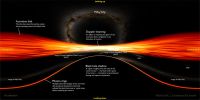
BlackHoleViz_Schnittman_1080_annotated.jpgNear a Black Hole and Disk (Image Credits: NASA's GSFC, J. Schnittman & B. Powell; Text: Francis Reddy (U. Maryland, NASA's GSFC - Credits for the Author of lyrical prose: Dr. Paolo C. Fienga)201 visiteWas ist, wenn…
(…Für einige ist Gerechtigkeit die Wahrheit, während andere glauben, dass Gerechtigkeit Rache bedeutet.
Da ich nun die Wahrheit kenne und Gerechtigkeit will, werde ich nach Rache streben.
Und Rache soll mein sein…)
§§§
Als ich ein Kind war, brachte mir mein Vater vor langer Zeit bei, den Himmel zu beobachten und die Namen der Sterne und Sternbilder zu lernen.
Er lehrte mich, das Unendliche über uns zu lieben und mir viele Fragen zu stellen.
Ich musste das tun, obwohl ich wissen musste, dass ich nie eine Antwort bekommen hätte.
Aber ich sollte zuschauen, lernen und meditieren.
Egal, was das Ergebnis all dieser Bemühungen gewesen sein mag.
Jetzt, nachdem viele Jahre vergangen sind, mache ich immer noch das Gleiche.
Wenn ich mich nachts in mein Bett lege, sehe ich die Sterne, verloren in einer nie endenden Dunkelheit.
Wenn ich im Morgengrauen aufwache und mich umschaue und sehe, was ich tun soll, sehe ich nur Leere. Banalitäten. Elend. Wahnsinnige Streitigkeiten, die ihren Ursprung in unserer unfassbaren Ignoranz und Dummheit haben. Ich höre albernes Geschwätz, Dialoge voller Gemeinplätze, leerer Versprechungen und offensichtlichen Unsinn.
Dann frage ich mich jeden Tag, was die Welt eigentlich antreibt, und ich verstehe, dass unsere Welt nicht von Glauben, Energie, Schönheit, Liebe oder Empathie und Mitleid angetrieben wird.
Unsere Welt basiert auf Lügen.
Die gleichen Lügen, die dazu führen, dass wir ein elendes Leben führen, auf der verzweifelten Suche nach dem, was unserer Meinung nach gut für uns ist.
Wir glauben, dass alles gut gehen wird und wir am Ende unsere wohlverdiente Belohnung erhalten.
Wir werden schnell, präzise, pünktlich, rechtmäßig und nachsichtig sein.
Dies alles wurde uns beigebracht, was wir zum Überleben brauchten und nützlich waren.
Deshalb glauben wir auch, dass alles, was wir studiert und gelernt haben, die Wahrheit ist.
Und die Wahrheit wird uns frei machen.
Wir glauben an ein endloses Universum, das wie eine Uhr funktioniert. Nur, dass diese Uhr ewig ist. Unveränderlich. Fest.
Wir glauben, dass das Universum nicht vollständig erklärt werden muss, weil es sich allein dadurch erklärt, dass es existiert und wir es sehen können.
Zumindest ein kleiner Teil davon.
Die Bücher erklären dies auf viele Arten. Und diese Erklärungen sind die Wahrheit.
Eine Wahrheit, die uns lebenswert macht.
Aber…
Was wäre, wenn unsere Lehrer uns belügen würden?
Und das Gleiche taten unsere Lieben, als sie sagten, dass sie uns liebten?
Müssen wir an die Liebe glauben, nur weil Liebe etwas Ewiges und Endloses ist?
Müssen wir glauben, dass Liebe etwas ist, das alle unsere Hoffnungen, Illusionen, Enttäuschungen, Fehler und Fehlverhalten erklären kann?
Was wäre, wenn unser Motor, den wir „Liebe“ genannt haben, einfach etwas zutiefst Falsches und Nichtexistentes wäre?
Und wenn es wirklich existiert, ist es einfach in seinen Grundlagen falsch und funktioniert tatsächlich nicht richtig, indem es uns dazu drängt, Dinge zu tun und an sie zu glauben, die uns nicht wirklich am Herzen liegen und an die wir nicht wirklich glauben?
Was wäre, wenn alle unsere Träume, Opfer und guten Taten nur Illusionen wären, die auf einem tiefgreifenden Missverständnis beruhen?
Eine Fehleinschätzung der Realität?
Was wäre, wenn wir alle von der Liebe in die Irre geführt werden, weil die Liebe einfach nicht existiert und wenn sie existiert, dann etwas ist, wovon wir nachts nur träumen, wenn die Decke unserer tiefsten Wahrheiten verschwindet und wir so von der kranken und nackten Realität umgeben sind?
Die Realität, dass wir ganz allein sind, ewig verloren in einem Universum, das nur in unseren Gedanken lebt?
In unseren unerreichbaren Träumen?
In unserem falschen und schwindenden Mitleid und Mitgefühl?
Vielleicht in unserem leeren und opportunistischen Glauben?
Was wäre, wenn die Wahrheit darin bestünde, dass es überhaupt keine Wahrheit gibt?
Was wäre, wenn wir alle unerwünschten Söhne einer viel zu anspruchsvollen Mutter und eines schelmischen Vaters wären?
Was wäre, wenn nichts wirklich real wäre oder zumindest nicht so real wäre, wie wir dachten?
Deshalb brauchen wir Lügen.
Wir brauchen sie, um unsere Missetaten und die immer noch ungestrafte intellektuelle Arroganz zu rechtfertigen.
Aber vor allem brauchen wir Lügen, um unsere eigene erbärmliche Existenz zu rechtfertigen, die keinen anderen und weiteren Sinn hat, als andere ihres guten Rechts zu berauben, zu glauben, dass wir zutiefst falsch lagen.
Wir brauchen Lügen, um unsere mangelnde Fähigkeit zu erklären, die Dinge so zu sehen, wie sie wirklich sind, zum Beispiel als nichts.
Das Universum ist leer.
Wie das Paradies und die Hölle: Sie sind alle leer.
So wie wir.
Und jetzt, in meinem hohen Alter, und jetzt, wo alle meine Tränen vergossen und ausgetrocknet sind und jetzt, wo all die Schmerzen, die mein Fleisch geerbt hat, gekommen und gegangen sind, kann ich endlich meine Augen öffnen und mich umschauen.
Aber es gibt nichts zu sehen.
Nichts, wofür es sich zu leben oder zu kämpfen lohnt.
Niemand mehr, den man hassen und lieben kann.
Ich bin allein, in diesem endlosen Nichts, das dieses ganze und nichtexistierende Universum umhüllt.
Ich bin allein.
Das Universum existiert nicht.
Und wenn es jemals existierte, ist es jetzt verstorben.
Und das tat ich auch.
Amen.
MareKromium
(4 voti)
|
|

FireRainbow_Harbig_960.jpgNice...128 visite“La Guerra di Religione: in pratica vi siete uccisi, vi state uccidendo e vi ucciderete per decidere chi abbia l'Amico Immaginario migliore"
Richard JeniMareKromium
(4 voti)
|
|

Grigna-1.jpgRosenrot (by Odette Casile)173 visite"Ich bereue nicht, einige Menschen im Laufe der Zeit verloren zu haben, aber ich bereue die Zeit, die ich mit ihnen verschwendet habe; denn die Menschen gehörten nicht mir, aber die Jahre, die ich mit ihnen verbracht habe, schon."
(Traduzione)
"...Non rimpiango alcune persone che ho perso col tempo, ma rimpiango il tempo che ho perso con loro; poiché le persone non mi appartenevano, ma gli anni vissuti (con loro), si..." (trad. libera)
Carl Gustav Jung
MareKromium
(4 voti)
|
|

Grigna-2019-11-11_at_08_34_52.gifOne "Clear Day" to remember... (by Tatiana Balbiani in Fienga)189 visite"Si puedes permanecer cerca de mÃ,
Y podemos ser diferentes,
Si el sol brilla sobre ambos,
Sin que nuestras sombras se superpongan,
Si podemos ser nosotros mismos, en medio del mundo,
Y junto al mundo, llorar, reÃr, vivir.
Si cada dÃa es un descubrimiento de quiénes somos,
Y no un recuerdo de cómo fuimos,
Si podemos entregarnos el uno al otro,
Sin saber quién será primero y quién último,
Si tu cuerpo canta con el mÃo porque juntos hay alegrÃa.
Entonces será amor,
Y no habrá sido en vano esperar tanto."
Traduzione
"...Se saprai starmi vicino,
E potremo essere diversi,
Se il sole illuminerà entrambi
Senza che le nostre ombre si sovrappongano,
Se riusciremo ad essere noi, in mezzo al mondo
E insieme al mondo, piangere, ridere, vivere.
Se ogni giorno sarà scoprire quello che siamo
E non il ricordo di come eravamo,
Se sapremo darci l'un l'altro
Senza sapere chi sarà il primo e chi l'ultimo
Se il tuo corpo canterà con il mio perché insieme è gioia...
Allora sarà amore
E non sarà stato vano aspettarsi tanto..."
(Pablo Neruda)MareKromium
(4 voti)
|
|

Helene-PIA10544.jpgDistant Sun and Helene (by Lunar Explorer Italia)95 visitenessun commentoMareKromium
(4 voti)
|
|
TB-05-20260619_203336.jpgFire in the Sky (Image Crtedits: Tatiana Balbiani)123 visite"L'Amour déçu par ses excès, et surtout l'Amour trompé par la fatalité de la Mort, ne peut aboutir qu'au suicide."
(Traduzione)
"L'Amore deluso nel suo eccesso, e soprattutto l'Amore ingannato dalla fatalità della Morte, non ha altro esito che il suicidio".
Michel Foucault (Histoire de la folie à l'époque classique - 1961)MareKromium
(3 voti)
|
|
TB-03-20260619_203336.jpgFire in the Sky (Image Crtedits: Tatiana Balbiani)132 visite"La Morte è una sfida.
Ci dice di non sprecare il Tempo.
Ci dice di crescere, ci dice di divenire!
Ci suggerisce di dire ora gli uni agli altri che ci amiamo.
Ci dice di donarci ora!"
Leo Buscaglia (Vivere, Amare, Capirsi - 1982)MareKromium
(3 voti)
|
|
| 496 immagini su 42 pagina(e) |
|
|
|
|
|
35 | |
|
|
|
|
|
|








