| Piú votate - The Universe Inside |

Saturn_Venus.jpgEvening Friends77 visite"...Sanctum hoc poetae nomen quod nulla umquam barbaria violavit..."
(Cicerone - "Pro Archia")
"...Venerato è il nome di Poeta, poichè nessuna barbarie potè violarlo..."MareKromium
(12 voti)
|
|

M_45_and_the_Moon.jpgThe Pleiades "obscured" by the Moon102 visite"...There is no point to Life; though there is a point to Art..."
frase attribuita a Kingsley Amis (1922 - 1995)MareKromium
(12 voti)
|
|

The_Sun.jpgPartial Eclipse84 visiteCaption NASA:"On Monday, March 19, 2007, shortly before the Equinox, locations in Asia and the Arctic were favoured by the New Moon's shadow during a partial Solar Eclipse. Although the view from Goa, India, found the eclipsed Sun near the horizon, photographer Joerg Schoppmeyer was still able to capture this lovely image, combining celestial with terrestrial silhouettes.
The next eclipse season will begin in late August this year, featuring a total Lunar Eclipse on August 28, and another partial solar eclipse on September 11. Compared to the March 19th eclipse, the September 11th eclipse will be seen on the other side of our fair planet, from parts of South America and Antarctica".
(12 voti)
|
|

Minotaur_and_Moon.jpgThe "Minotaur" rocket and the Moon74 visitenessun commentoMareKromium
(12 voti)
|
|

Autumn_s Moon.jpgLuna d'Autunno83 visitenessun commento
(12 voti)
|
|

Moon and Companions~1.jpgMoon and Venus from Missouri95 visiteUn'immagine carina che ci mostra un quarto di Luna (diremmo più che ampiamente sovraesposto) che si "incontra" con la Stella della Sera (e cioè Venere), il tutto in un quadretto autunnale. Anche questa immagine è stata estrapolata dalla rubrica "NASA - Picture of the Day" la quale, a nostro parere, sta iniziando a diventare leggermente ripetitiva anche nella proposizione di fotografie artistiche, sìano esse professionali o amatoriali.
(12 voti)
|
|

Moon and Companions~0.jpgMoon, Mars and Venus159 visiteDa "NASA - Picture of the Day" del 19 Ottobre 2005:"On another October 19, in 1899, a 17 year-old Robert Goddard climbed a cherry tree on a beautiful autumn afternoon in Worcester, Massachusetts. Inspired by H.G. Wells' "War of the Worlds" and gazing out across a meadow, young Goddard imagined it would be wonderful to make a device that had the possibility of ascending to Mars. Forever more he felt his life had a purpose and in the following years his diary entries record October 19th as "Anniversary Day", the anniversary of his ascent into the cherry tree. By 1926 he had designed, built, and flown the world's first liquid fuel rocket. Mars is just visible through the trees at the lower right in this dramatic sky view that also features the Moon and Venus - all visited by liquid fuel rockets constructed on principles developed by Goddard".
(12 voti)
|
|

ZP-Mercuryandfriends.jpgMercury, Venus and Saturn in the Western Sky...Again!91 visiteDa "NASA - Picture of the Day" del 30 Giugno 2005:"Venus, Mercury, and Saturn wandered close together in western evening skies last week. On Saturday, June 25, astronomer R. Jay GaBany recorded this snapshot of their eye-catching planetary conjunction, from historic Lick Observatory on Mt. Hamilton, California, USA. The view looks toward the Pacific shortly after sunset with the lights of San Jose and the southern San Francisco Bay area in the foreground. Of course, Venus is the brightest of the trio. Mercury is nearby on the right and Saturn is below and left, closest to the horizon. Farther to the right of the planetary triangle are Pollux and Castor, twin stars of Gemini, with Regulus, bright star of the constellation Leo, at the very upper left corner of the picture. In the coming days, Venus and Mercury remain close, while Saturn continues to drop below them, toward the horizon".
(12 voti)
|
|
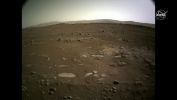
Martian_Landscape_-_Perseverance.jpgA Beautiful View!104 visite"...Look up at the stars and not down at your feet. Try to make sense of what you see, and wonder about what makes the Universe exist. Be curious..."
Stephen HawkingMareKromium
(11 voti)
|
|

The_Lion_Sleeps_Tonight.jpgA-Weema-Weh!126 visite"...Simba inaweza kubadilika Dunia...".
Kujitolea kwa Afrika.
MareKromium
(11 voti)
|
|

Roll-Cloud-2.jpgRoll-Cloud199 visitenessun commentoMareKromium
(11 voti)
|
|

Crescent_Moon.jpgMineral Diversity on a beautiful Crescent Moon334 visitenessun commentoMareKromium
(11 voti)
|
|
| 496 immagini su 42 pagina(e) |
 |
|
|
|
|
19 | |
|
|
|
|








