| Piú votate - The Universe Inside |

MOONRISE.jpgMoonrise170 visiteUna delle tante 'immagini artistiche' che ci aiutano a ricordare quanto la Natura sia misteriosa e, nel contempo, assolutamente affascinante ed inesplicabile.
(16 voti)
|
|
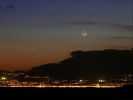
MoonMercMonaco_jacques_full.jpgThe Moon and Mercury, from Monaco (FRA)153 visiteUna falce di Luna ed una piccola scintilla, piuttosto alta nel cielo della sera: Mercurio.
Una bella immagine che ci arriva dalla Francia e che ha trovato spazio anche nella Rubrica "NASA - Picture of the Day".
Questa la caption originale:"Low on the western horizon after sunset, a slender crescent Moon and wandering planet Mercury join the lights of Menton and Monaco along the French Riviera. Astronomer Vincent Jacques took advantage of this gorgeous photo opportunity a week ago on March 11, when the Moon and Mercury were separated in the sky by just 3°. Of course, the Moon in a slender crescent phase is always seen near the horizon, as is Mercury - a bright planet which can be difficult to glimpse as it never strays far from the Sun in Earth's sky. In the coming days good views of Mercury will indeed be fleeting as the Solar System's innermost planet is rapidly dropping closer to the glare of the setting Sun".
(16 voti)
|
|

The_Mono_Lake.jpgThe "Mono" Lake147 visitenessun commentoMareKromium
(15 voti)
|
|

Near_InfraRed_Earth.jpgAnother Way to See... (by Marco Faccin)198 visite"...Un buon provvedimento emanato da un cattivo governo, è (o diviene), per questo solo fatto, un cattivo provvedimento?
Ed un cattivo provvedimento emanato da un buon governo, è (o diviene), per questo solo fatto, un buon provvedimento?..."
Paolo C. FiengaMareKromium
(15 voti)
|
|
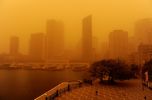
Sidney_in_the_Sand.jpgSidney, under a Dust Storm94 visiteDal bellissimo blog "Irgendwo", curato dal nostro Amico, Dr Stefano Cicetti, un'immagine che non potrà non interessare tutti gli Appassionati dell'ormai annosa querelle che discute circa i (sempre "misteriosi") "Colori di Marte".
Ne avevamo accennato in un articolo di qualche tempo fa ("True Colors"), avevamo già speso qualche parola al riguardo in sede di commento ad alcuni frames Marziani colorizzati dalla NASA, ma adesso abbiamo un'immagine - davvero - INEQUIVOCABILE: guardate che cosa succede alla meravigliosa ed ultramoderna città di Sidney, durante una tempesta che ha sollevato sino ad una quota - ritaniamo - significativa (forse oltre i 1500/2000 metri) le sabbie giallo-arancio-ocra del Deserto.
Che dire? A volte Marte assomiglia alla Terra ed a volte la Terra assomiglia a Marte.
Ma una cosa, a nostro avviso, è certa: queste condizioni di Tau sono una rarità. Sia sulla Terra e sia - molto probabilmente - su Marte (le Grandi Tempeste di Sabbia, sul Pianeta Rosso, occorrono con una certa frequenza, ma la loro intensità (almeno per quanto ne sappiamo) raramente giunge a risultati cromatici così spettacolari.
Secondo la NASA, invece, Marte dovrebbe essere COSTANTEMENTE in queste condizioni (così come le fotografie processate in True ed Approximately True Colors dai Ragazzi di Pasadena sembrano voler dimostrare).
La Verità? Noi non la conosciamo. Ma questo frame, ne siamo certi, Vi può aiutare a capire tantissime cose...
Nota: questa foto non è stata digitalmente interpolata o esaltata nei colori e nei contrasti.MareKromium
(15 voti)
|
|

ColorfulReality.jpgEmissions (by Marco Faccin)75 visitenessun commentoMareKromium
(15 voti)
|
|

SOL208-2R144843263FFL8400P1313L0M1-A208R1.jpgSmiling Sun...73 visitenessun commentoMareKromium
(15 voti)
|
|

Goldrake_Red_Moon.jpgForever Young, I wanna be...132 visiteUn indimenticabile Personaggio, noto soprattutto a quelli che, oggi, non sono più "ragazzi", ritorna ad affacciarsi nei nostri Cieli Immaginari, grazie al Grande Lavoro dell'Amico Giorgio Picciau e dei Suoi Colleghi e Collaboratori.
Goldrake, imponente come la Luna che splende alle sue spalle, ha rappresentato un momento alquanto particolare della Storie e della Cultura (non solo cartonistica e cinematografica) del nostro Paese e, forse, dopo il Mito di "Godzilla", egli ha sancito il ritorno in Europa ed in Italia (a questo punto in pianta stabile) del Fantasy Orientale.
I Sogni, come gli Eroi, non muoiono mai, anzi: si rinnovano e rinvigoriscono (come questa "Visione" di Goldrake, a nostro avviso, ne è una evidente conferma), pur rimanendo fedeli a se stessi.
Complimenti, ancora una volta, a Giorgio Picciau e congratulazioni per il Suo Sito "Ufo Robot Project" (http://www.uforobots.net/), che Vi invitiamo a visitare e che sponsorizziamo con infinito affetto!MareKromium
(15 voti)
|
|

Lost.jpgLost...83 visiteWandering through the Evening Sky, on May 4th, 2008, Planet Mars stood in line with Castor and Pollux, the two bright stars of the constellation Gemini.
In this time exposure of the celestial alignment, Mars actually takes on a distinct yellowish hue, contrasting in color with Pollux; a giant star known to have a Jupiter-class planet, and Castor; itself a multiple Star System.
Though in mythology Pollux and Castor are twin brothers, the two stars are physically unrelated and are about 34 and 50 LY distant respectively.
Included in the skyview are Procyon, alpha star of Canis Minor, and famous star cluster M44, also known as the Beehive Cluster. Dust in our own Solar System reflecting sunlight creates the faint band of Zodiacal Light emerging from the lower right corner of the frame. Just put your cursor over the picture for help with identifications.
Of course, bright Mars can still be found in the western evening skies and tonight wanders near the crescent Moon.MareKromium
(15 voti)
|
|

LunarEclipses.jpgEclipses...82 visiteCaption NASA, da "NASA - Picture of the Day", del 29 Febbraio 2008:"Welcome to the extra day in the Gregorian Calendar's leap year 2008! To celebrate, consider this grid of lunar eclipse pictures - starting in leap year 1996 and ending with February's eclipse - with the date in numerical year/month/day format beneath each image. Mostly based on visibility from a site in Turkey, the 3x4 matrix includes 11 of the 13 total lunar eclipses during that period, and fills out the grid with the partial lunar eclipse of September 2006. Still, as the pictures are at the same scale, they illustrate a noticeable variation in the apparent size of the eclipsed Moon caused by the real change in Earth-Moon distance around the Moon's elliptical orbit. The total phases are also seen to differ in color and darkness. Those effects are due to changes in cloud cover and dust content in the atmosphere reddening and refracting sunlight into Earth's shadow. Of course, the next chance to add a total lunar eclipse to this grid will come at the very end of the decade".MareKromium
(15 voti)
|
|

Freedom.jpgFreedom (credits: Dr Marco Faccin)122 visite"...Un Regno che non conosce la Pietà, è un Regno effimero..."MareKromium
(15 voti)
|
|

Puzzle-Cook.jpgOne piece after another...74 visite"...Ed alla fine non restano che ricordi.
Sorrisi, lacrime, sensazioni di caldo e di freddo.
L'ultimo - e più prezioso - patrimonio che non potrò mai lasciare in eredità: la mia Memoria…"
P.C. Floegers - "Conversations for Tomorrow"MareKromium
(15 voti)
|
|
| 495 immagini su 42 pagina(e) |
 |
|
|
|
|
11 | |
|
|
|
|








