| Piú votate - The Universe Inside |

LongAgo.gifAccording to Lagrange...85 visitenessun commentoMareKromium
(16 voti)
|
|

RingOfFire.jpgThe "Ring of Fire"152 visite"...Fides facit Fidem..."
(Binder)
"...La Fede genera la Fede..."MareKromium
(16 voti)
|
|
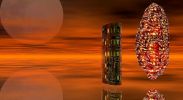
Beyond.jpgBeyond... (by Roberto Tremolada)85 visitenessun commentoMareKromium
(16 voti)
|
|

Voyagers-00.gifTowards the "Terra Incognita" (1)86 visiteInterstellar Mission - Mission Objective
The mission objective of the Voyager Interstellar Mission (VIM) is to extend the NASA exploration of the Solar System beyond the neighborhood of the outer planets to the outer limits of the Sun's sphere of influence, and possibly beyond. This extended mission is continuing to characterize the outer Solar System environment and search for the heliopause boundary, the outer limits of the Sun's magnetic field and outward flow of the solar wind. Penetration of the heliopause boundary between the solar wind and the interstellar medium will allow measurements to be made of the interstellar fields, particles and waves unaffected by the solar wind.
The VIM is an extension of the Voyager primary mission that was completed in 1989 with the close flyby of Neptune by the Voyager 2 spacecraft. Neptune was the final outer planet visited by a Voyager spacecraft. Voyager 1 completed its planned close flybys of the Jupiter and Saturn planetary systems while Voyager 2, in addition to its own close flybys of Jupiter and Saturn, completed close flybys of the remaining two gas giants, Uranus and Neptune.
At the start of the VIM, the two Voyager spacecraft had been in flight for over 12 years having been launched in August (Voyager 2) and September (Voyager 1), 1977. Voyager 1 was at a distance of approximately 40 AU (Astronomical Unit - mean distance of Earth from the Sun, 150 million kilometers) from the Sun, and Voyager 2 was at a distance of approximately 31 AU.
As of July 2007, Voyager 1 was at a distance of 15.4 Billion Kilometers (103 AU) from the sun and Voyager 2 at a distance of 12.4 Billion kilometers (83 AU).
Voyager 1 is escaping the solar system at a speed of about 3.6 AU per year, 35 degrees out of the ecliptic plane to the north, in the general direction of the Solar Apex (the direction of the Sun's motion relative to nearby stars). Voyager 2 is also escaping the solar system at a speed of about 3.3 AU per year, 48 degrees out of the ecliptic plane to the south.
Both Voyagers are headed towards the outer boundary of the solar system in search of the heliopause, the region where the Sun's influence wanes and the beginning of interstellar space can be sensed. The heliopause has never been reached by any spacecraft; the Voyagers may be the first to pass through this region, which is thought to exist somewhere from 8 to 14 billion miles from the Sun. In December 2004 Voyager 1 crossed an area known as the termination shock. This is where the million-mile-per-hour solar winds slows to about 250,000 miles per hour—the first indication that the wind is nearing the heliopause. Voyager 2 is currently observing preshock phenomena, indicating that it is close to the termination shock. The Voyagers should cross the heliopause 10 to 20 years after reaching the termination shock. The Voyagers have enough electrical power and thruster fuel to operate at least until 2020. By that time, Voyager 1 will be 12.4 billion miles (19.9 billion KM) from the Sun and Voyager 2 will be 10.5 billion miles (16.9 billion KM) away. Eventually, the Voyagers will pass other stars. In about 40,000 years, Voyager 1 will drift within 1.6 light years (9.3 trillion miles) of AC+79 3888, a star in the constellation of Ophiucius. In some 296,000 years, Voyager 2 will pass 4.3 light years (25 trillion miles) from Sirius, the brightest star in the sky . The Voyagers are destined—perhaps eternally—to wander the Milky Way. For current distances, check: Mission Weekly Reports
MareKromium
(16 voti)
|
|

CometHale-Bopp-970401C_lodriguss.jpgOn the edge of Oblivion...78 visite"...Mi dispiace vedere che gran parte delle persone vivano la loro Vita non secondo un modello personale - magari discutibile, ma proprio -, bensì secondo il modello creato solo ed esclusivamente dalla televisione (o da chi per essa).
Un modello orrendo e della razza peggiore.
Certo, non esiste un modello predefinito di "Vita" e allora ognuno di noi cresce assieme a quello che gli sta attorno, aiutandosi con quanto si trova in giro. Però...
Però vedo sempre più maiali inconsapevoli di viaggiare verso il mattatoio e, anche se dovrei (forse) preoccuparmi più di me stesso, questa visione - un pò - mi duole..."
Giorgio Picciau - "Lettere"MareKromium
(16 voti)
|
|
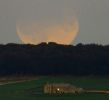
Lunar Eclipse.jpgLunar Eclipse over England83 visiteDa "NASA - Picture of the Day", dell'11 Settembre 2006:"Last Thursday - Sept., 7th, 2006 -, part of our Moon turned dark. The cause, this time, was not a partial lunar phase - the Moon was full - but rather that part of the Moon went into Earth's shadow. The resulting Partial Lunar Eclipse was visible from the Eastern Atlantic Ocean through Europe, Africa and Asia and into the Western Pacific Ocean. The darkest part of the Lunar Eclipse, when part of the Moon was completely shielded from Sunlight, lasted about 90 minutes.
Pictured here, a partially eclipsed Moon is seen rising over an estate in Huddersfield, England. The above image was taken far away from the house in the foreground, as only this would allow it to appear as angularly small as the half-degree Moon far in the background. A setting twilight Sun lit the foreground. The next eclipse of the Moon will occur in March 2007".
(16 voti)
|
|

Perseid-1.jpgShooting Star (1)84 visiteL'immagine è sicuramente bella, ma quello che vorremmo farVi notare è la tessitura della striscia lasciata dalla "stella cadente" la quale, come ben si vede (anche senza operare ingrandimenti), contiene "nodi" (modesti rigonfiamenti dovuti, probabilmente, a perdita/consunzione di materiale a seguito dell'attrito durante la caduta del frammento di Corpo Celeste attraverso l'atmosfera) e "brillamenti" (delle vere e proprie "fiammate" che si avviano, di regola, in corrispondenza dei "nodi" e che indicano cambi di temperatura - ergo di luminosità - del Corpo in questione).
(16 voti)
|
|
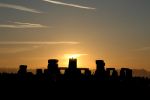
Solstice over Stonehenge.jpgSolstice on Stonehenge98 visiteDa "NASA - Picture of the Day" del 21 Giugno 2006:"Today the Sun reaches its northernmost point in the planet Earth's sky.
Called a "solstice", the date traditionally marks a change of seasons -- from Spring to Summer in Earth's Northern Hemisphere and from Fall to Winter in Earth's Southern Hemisphere. Pictured above is the 2005 Summer Solstice celebration at Stonehenge in England. The event was rare because Stonehenge was not always open to the public, and because recent Summer Solstices there had been annoyingly cloudy.
In 2005, however, thousands of people gathered at sunrise to see the sun rise through the 4000 year old solar monument.
Due to the precession of the Earth's orbital axis over the millennia, the Sun no longer rises over Stonehenge in an astronomically significant way, although the photographer was able to find a good spot where the rising Sun appeared over one of Stonehenge's massive standing stones".
(16 voti)
|
|

South Polar Halo.jpgSouth Polar Halo86 visiteWhen Sunlight reflects and refracts off of tiny ice crystals in the atmosphere, the result can be ice crystal halos, which are related to rainbows (the latter being produced when Sunlight reflects and refracts from water droplets).
In Antarctica the temperatures are cold and the air is dry, so snow crystals grow very slowly. This slow growth tends to produce very clean hexagonal prisms, which are well suited for producing beautiful atmospheric displays. The example here is a South Pole halo, showing a rich variety of arcs and halos.
Halos arise from the way minute ice crystals in the atmosphere scatter Sunlight (or Moonlight!) into different angles.
The quality of a halo depends on the type and quality of the ice crystals that produce it.
(16 voti)
|
|

Moon-1.jpgThe Moon over a "Red Planet"101 visiteOriginal caption:"Near its Northernmost declination, tonight's Full Moon (Dec. 15, 2005) will be a special one, arcing high in Northern Hemisphere skies. But a Full Moon won't occur on this calendar date for another 19 years, a period known as the Lunar Metonic Cycle (...)".
(16 voti)
|
|

ZZ-ZZ-The Sun over K.jpgIs this Earth?95 visiteAvevamo proposto un'immagine altrettanto enigmatica nella Sezione dedicata al Pianeta Venere, allorché la "Stella della Sera" veniva ripresa dalla sommità di una montagna in compagnia della Luna, così generando un effetto davvero molto particolare.
Ora è la volta di un'alba, vista dal Monte Kilimanjaro. Sono stati usati filtri speciali? Forse i colori sono stati ritoccati al computer? No, su tutta la linea. Questa è una foto scattata dalla Terra, in colori reali, che riprende l'alba.
Adesso capite meglio perché la problematica dei 'Colori dello Spazio' non è accademica né peregrina? Se, in determinate condizioni di illuminazione, ergo a diverse ore del giorno, anche la Terra può apparire un Mondo Alieno (tipo Marte o Venere) allora, date le medesime variabili, anche un Mondo Alieno potrebbe, a diverse ore del giorno, apparire come la Terra e non ci sarebbe nulla di straordinario nel dirlo e nel mostrarlo. Ma, a quanto pare, la NASA non "vede" (ed é proprio il caso di dirlo...) le cose come le vediamo noi..
(16 voti)
|
|

ZZ-ZZ-SunFromMaunaKea.jpgThe Sun from Mauna Kea: an alien landscape176 visiteDa "NASA - Picture of the Day" del 4 Luglio 2005:"Typically, views from Mauna Kea are up and dark. That's because the famous dormant volcano in Hawaii is arguably Earth's premier observing platform of the complex and ever changing night sky. However, this daytime view is across and bright. White snow and white clouds seem to blend together to make an alien landscape. Cinder cones from extinct volcanic outbursts dominate the foreground. Scrolling right will reveal structures visually incongruous even here: an armada of the largest optical telescopes on Earth. The observatories seen include Subaru and Keck. In the distance on the far left is Mauna Loa, Earth's largest volcano".
(16 voti)
|
|
| 495 immagini su 42 pagina(e) |
 |
|
|
|
|
10 | |
|
|
|
|








