| Piú votate - Mars through the eyes of Soujourner-Pathfinder |
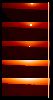
SOU-SOL029-Sunrise_stills.gifSunrise on Mars - Sol 29 (coloring: NASA)92 visiteUna nostra opinione su questi (suggestivi) "stills" dell'alba Marziana: ottimi frames, colori (ribadiamo) "suggestivi" ed "affascinanti"...Ma secondo noi COMPLETAMENTE ERRATI (oppure, se preferite, talmente "stretchati/esasperati" sulla dominante rosso-arancio che, alla fine, il risultato è totalmente non realistico).MareKromium
(5 voti)
|
|
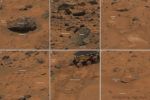
SOU-SOL035-1.jpgThe colors of the soil near Pathfinder89 visitenessun commento
(5 voti)
|
|

SOU-SOL042-Flat_Top_left.jpgFlat-Top close-up (1) - Sol 42108 visiteThese two images make a stereo pair taken from the Soujourner Rover's Front Cameras on the morning of Sol 42. Visible in the foreground is the rock nicknamed Flat Top. Based on previous images from the Pathfinder Lander camera, Flat Top appeared to have a layered texture (in the opinion of some scientists). These close-up images show that this is probably not the case. The texture visible on the side of the rock is made up of elongated pits, which may be either vesicles from volcanic outgassing or etches caused by weathering. The boundary between the edge and top of the rock exhibits topography, some of which correlates to the flute-like texture on the top surface. These depressions may have been carved by the wind, but more study of Flat Top is needed before this can be confirmed.
(5 voti)
|
|

SOU-SOL035.jpgWind-tails - Sol 3585 visiteThis image was taken by the Soujourner Rover's Left Front Camera on Sol 32. The Pathfinder Lander is at right and is about 9 mt away. Wind tails of dust are clearly seen extending from the left side of many of the small rocks in the foreground. The large rocks on the horizon at left center are the next goal of Soujourner as it continues our exploration of Mars.
(5 voti)
|
|
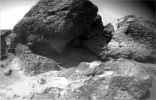
SOU-SOL071-1.jpgGiant Rock? - Sol 7184 visiteUn altro esempio di quello che (senza ricorrere a trucchi e manipolazioni digitali) una semplice ripresa dal basso può farci vedere: in questo frame c'è solo un sasso di modestissime dimensioni che, ripreso dal basso e da molto vicino, diventa, per gli occhi della camera montata sul mini-rover (e quindi per i nostri occhi), una "roccia gigantesca" (per la cronaca: questa roccia venne battezzata "Shark").
Caption NASA originale:"This image mosaic of part of the Rock Garden was taken by the Soujourner Rover's Left Front Camera on Sol 71 (such as September 14, 1997). The rock Shark is at left center and Half Dome is at right. Fine-scale textures on the rocks are clearly seen. Broken crust-like material is visible at bottom center".
(5 voti)
|
|

SOU-SOL036-35136.jpgHuge Rocks and Mountains? - Sol 36108 visiteSono rocce gigantesche e dalle forme aguzze e squadrate quelle che sembrano emergere da questo frame e da altri Mars Frames, oppure è tutta un'illusione? Dipende, ovviamente: le "piramidi", come i "cubi" di roccia e/o le rocce "a lancia" ed i cosiddetti "razorblades" sembrano essere - effettivamente, come ben dimostra questo discreto frame - una caratteristica ricorrente della superficie Marziana.
Premesso che si dovrebbe trattare, a nostro parere, di rocce ignee (graniti e/o basalti) le cui dimensioni, talvolta, sono davvero notevoli, non si può neppure escludere che, in qualche caso, la loro mastodonticità (al pari della loro cubicità, piramidalità ed acutezza) potrebbe essere solo un effetto dell'angolo di ripresa adottato. Proprio come in questo frame: un frame in cui le rocce "ciclopiche" sono solo dei sassetti delle dimensioni di pochi cm ma che ci appaiono enormi, poichè ripresi dal basso (dalla fotocamera inserita nel mini-rover che percorse qualche decina di metri attorno alla Carl Sagan Station).
Insomma: non è altro che un effetto ottico determinato dal tipo di lente usata, dall'altezza della camera rispetto all'oggetto ripreso e dalla distanza fra camera ed oggetto che noi chiamiamo - invenzione del nostro tecnico della fotografia - "deformazione stroboscopica".
(5 voti)
|
|

SOU-SOL008-81443_full.jpg"Monster-Pan" in 3-D (15) - Sol 879 visitenessun commento
(5 voti)
|
|

SOU-SOL008-81437_full.jpg"Monster-Pan" in 3-D (9) - Sol 865 visitenessun commento
(5 voti)
|
|

SOU-SOL006-LandingSiteMap1.jpgThe pinpointing of the Mars Pathfinder Landing Site81 visitenessun commento
(5 voti)
|
|

SOU-SOL005-81093_full.jpgWedge & Flat Top - Sol 5102 visiteCaption originale:"Here we see the rocks named Wedge and Flat Top imaged in natural colors as part of the so-called Monster Panorama".
(5 voti)
|
|

SOU-SOL065-GB.JPGLonely Soujourner... - Sol 65 (possible True Colors; credits: Dr G. Barca)66 visitenessun commentoMareKromium
(4 voti)
|
|

SOU-SOL026-Mini_Matsuperres-2.jpgDeflated Air-Bags and Disturbed Terrain - Sol 26 (natural colors; credits: Dr G. Barca)77 visitenessun commentoMareKromium
(4 voti)
|
|
| 149 immagini su 13 pagina(e) |
 |
|
|
|
6 | |
|
|
|
|
|








