| Piú votate - Walking on Mars with Spirit and Opportunity |

SOL318-325-Husband_Hill-PIA07334_br2-00.jpgColumbia Hills: "Husband Hill's Region" - full 360° panorama (1 - Approximate True Colors; credits: NASA/JPL-Caltech)66 visiteCaption NASA originale:"NASA's Mars Exploration Rover Spirit took this full-circle panorama of the Region near "Husband Hill" (the peak just to the left of center) over the Thanksgiving holiday, before ascending farther. This 360° view combines 243 images taken by Spirit's Panoramic Camera over several Martian Days, (from Sol 318 - Nov. 24, 2004 - to sol 325 - Dec. 2, 2004). It is an approximately true-color rendering generated from images taken through the camera's 750, 530 and 480 nanometer filters. The view is presented here in a cylindrical projection with geometric seam correction".
Abbiamo guardato con attenzione questa immagine e, al di là di qualche piccola valutazione semi-positiva unicamente riferita al suo lato "estetico" - ed a condizione di utlizzare un modestissimo ingrandimento del frame!), i nostri commenti non sono stati affatto positivi.
Vediamo perchè...
(11 voti)
|
|

OPP-SOL339-B_P2581_L456-B352R1.jpgSkull Rock is an iron-nickel meteorite! - Sol 339 (Approximate True Colors; credits: NASA/JPL-Caltech)106 visiteDunque avevamo visto giusto: Skull Rock sembrava "estranea" al paesaggio Marziano di Meridiani Planum perchè NON è una roccia Marziana! Skull Rock è - a quanto dice la NASA - il frammento di una meteora precipitata su Marte. EccoVi la caption NASA originale:"NASA's Mars Exploration Rover Opportunity has found an iron meteorite on Mars, the first meteorite of any type ever identified on another planet. The pitted, basketball-size object is mostly made of iron and nickel. Readings from spectrometers on the Rover determined that composition. Opportunity used its panoramic camera to take the images used in this approximately true-color composite on Sol 339. This composite combines images taken through the PanCam's 600-nanometer (red), 530-nanometer (green) and 480-nanometer (blue) filters".
(11 voti)
|
|
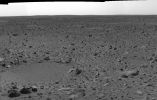
SOL053-PANORAMA-01-ra-2-back-A053R1-PCF-LXTT-00.jpgA very BIG (!) Surface Anomaly from Sol 53 (RAW b/w NASA Original frame)114 visiteGuardate attentamente l'immagine: focalizzate la Vostra attenzione sopra un dettaglio, piccolo ma luminoso, a mezza altezza dell'immagine, leggermente spostato verso la Sn dell'Osservatore. Vi anticipiamo subito che si tratta di un'Anomalia a tutti gli effetti e che, purtroppo, non abbiamo trovato altri frames che la riprendessero meglio o più da vicino. Tuttavia una cosa l'abbiamo notata...
(11 voti)
|
|

SPIRIT-FOGGYLANDSCAPE-3-2P140650025EFF6900P2375R1M1_crop-A170R1.jpgMartian hills covered by fog: suspended dust particles or humidity?195 visiteTutte le volte che osserviamo una fotografia come questa, ci domandiamo se sia vero che la nebbiolina che avvolge (ed in parte nasconde) le colline più lontane sia solo polvere in sospensione. Certo è che, se si trattasse di umidità vera e propria, allora dovremmo cominciare a cercare con attenzione, fra le rocce, qualche muschio o - magari - addirittura qualche stelo d'erba. E, perchè no, qualche pianta simile ai nostri cactus. Potreste eccepire che queste piante vivono nei deserti, a temperature spesso...
(11 voti)
|
|

OPP-SOL036.jpgOpportunity's Backshell and Parachute - Sol 36 (Almost True Colors; credits: NASA/JPL-Caltech)114 visiteGuardate ancora attentamente questa immagine e poi provate a studiare, oltre la precedente, anche le due successive: la differenza è abissale. Sembra che si tratti di fotografie scattate su due diversi Pianeti. C'è però un argomento che ci fa riflettere: in alcune foto di Marte scattate da Terra, dall'HST o da Sonde in orbita appaiono, effettivamente, dei contrasti di colore eclatanti (guardate le foto di Marte dall'HST per esempio). Forse Marte è davvero un mondo contraddittorio ed estremo...
(11 voti)
|
|

SOL055-THE_RAT2-2N131246299EFF1147P1940R0M1.jpgThe "Rat" is back!756 visiteSi, certo: NON è un "Topo".
Ma questa Surface Feature, ripresa dal Rover Spirit durante l'ormai lontano Sol 55 della sua Missione Marziana all'interno del Cratere Gusev, assomiglia in maniera, a parere di chi scrive, "incredibile", ad un tipico roditore terrestre. Il frame originale è stato leggermente ingrandito ed i contrasti sono stati pure leggermente esaltati, così da enfatizzare il profilo della Feature.
Quello che si vede ("topo" o "non topo") è semplice, e credo sia difficile dimostrare il contrario: abbiamo una roccia con una vasta crepa latitudinale che "guarda" verso il Rover. Da questa crepa, sembra che "qualcosa" si stia sporgendo verso l'esterno, e questo "qualcosa" è reale, dato che la sua "porzione frontale" (il "muso", se volete) proietta anche una netta ombra sul bordo della roccia da cui esso pare fuoriuscire.
Se osservate la Feature con ESTREMA ATTENZIONE, noterete che dei leggeri dettagli superficiali sono chiaramente visibili e sembrano essere degli "occhi", delle piccole "orecchie" ed una parvenza di "naso", con un leggero rigonfiamento all'altezza di quelle che potremmo chiamare "guance". Il resto del "corpo" della Feature, è immerso nell'ombra.
Non è un "topo", certo: lo so e lo sappiamo BENISSIMO! Ma è una Feature veramente inusuale che, a parere di chi scrive, può tranquillamente essere definita come "Anomalia di Superficie". E' una "stranezza", una ennesima (ancorchè vecchiotta, ormai...) "Martian Oddity". E chiunque ritenga di essere in grado di spiegare con un ragionevole margine di certezza di che cosa si tratta, non deve fare altro che scrivere o commentare...MareKromium
(10 voti)
|
|
SOL082-2N133638138EFF2232P1957L0M1.jpgMorning Sky over Spirit - Sol 82 (possible True Colors; credits: Lunar Explorer Italia)69 visiteLeft Navigation Camera Non-linearized Full frame EDR acquired on Sol 82 of Spirit's mission to Gusev Crater at approximately 10:27:08 Mars Local Solar Time.MareKromium
(10 voti)
|
|

OPP-SOL307-MF-LXT.jpgTipuna Rock - Sol 307 (Natural Colors; credits for the additional process. and color.: Dr Marco Faccin - Lunexit Team)155 visitenessun commentoMareKromium
(10 voti)
|
|

OPP-SOL291-1N154004966EDN37MIP1580L0M1~0.jpgLight and Bright Clouds over Opportunity - Sol 291 (True Colors - credits: Lunexit)87 visiteE così, dopo innumerevoli tentativi, probabilmente siamo arrivati alla fine...Il che vuol dire, per ciò che riguarda i colori del "giorno pieno" di Marte, quello che vedete qui.MareKromium
(10 voti)
|
|

OPP-SOL165-B_P2394_L257atc-1.jpgThe Rim of Endurance and the Sky above - Sol 165 (composite - credits: NASA & Lunexit)84 visitenessun commentoMareKromium
(10 voti)
|
|
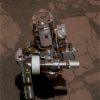
OPP-SOL405-2.jpgStudying the Martian Paving (1) - Sol 405 (true-colors; credits: Dr G. Barca)73 visitenessun commentoMareKromium
(10 voti)
|
|
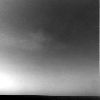
OPP-SOL956-PIA09170-1.gifClouds over Meridiani - Sol 956 (GIF-Movie)75 visiteNASA's MER Opportunity captured a view of wispy afternoon clouds, not unlike fair weather clouds on Earth, passing overhead on the Rover's 956th Sol (such as Oct. 2, 2006). With Opportunity facing North-East, the clouds appear to drift gently toward the West in this movie taken with the Rover's NavCam.
The 10 frames, taken 32" apart, show the formation and evolution of what are likely mid-level, convective water clouds. Such clouds are common near Mars' Equator at this time of the Martian year. They have been observed by both of NASA's MER, by satellites orbiting Mars and by the HST. In this case, the clouds appear to develop at a fixed location, in the center of the frame about 25° above the horizon. This style of origin suggests that a thermal plume is rising over a surface feature. In spite of apparent winds aloft, the thermal plume appears to remain stationary for the whole duration of the movie.
Though scientists have determined from the images that the wind bearing is East/North-East, approximately 80°, it is not possible on the basis of the movie to unambiguously determine the height and speed of the clouds. Scientists estimate, based on models of atmospheric wind profiles and the apparent displacement of the clouds, that all of the clouds in the movie are at about the same height somewhere between 5 and 25 Km (about 3 to 20 miles) above the surface. The clouds are estimated to be moving at 2,5 mt per second, if they are low, to 12,5 mt per second, if they are high (8 to 41 feet per second).
(10 voti)
|
|
| 5453 immagini su 455 pagina(e) |
 |
|
|
5 | |
|
|
|
|
|
|





