| Piú votate - Walking on Mars with Spirit and Opportunity |
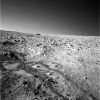
SOL164-POSSIBLECLOUDS-2N140937480EFF6938P1914L0M1.jpgClouds over Gusev Crater?122 visiteL'apparizione di nuvole nell'Area di Meridiani Planum è un evento abbastanza frequente. Altrettanto non può dirsi per l'Area Gusaev Crater. In effetti, sin dall'avvio della Missione del Rover Spirit, le fotografie inviate a Terra non ci hanno mai mostrato nulla che somigliasse ad una nuvola. In questo frame, tuttavia, abbiamo l'impressione (guardando l'immagine a schermo pieno) che si possano intuire delle sottolissime nubi stratiformi, a Sn dell'Osservatore e, forse, a ridosso dell'orizzonte. Forse.
(7 voti)
|
|
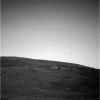
SOL153-FORT-2P139962911EFF6500P2366R1M1.jpgThe "Martian Mound": a very unusual rock formation (2)130 visitenessun commento
(7 voti)
|
|
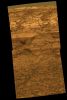
OPP-SOL173-B_P2401_L257-B173R1_br2.jpgInside Endurance Crater: Rat-Holes and Sky - Sol 163 (Almost True Colors; credits: NASA/JPL-Caltech)97 visiteVista di Endurance Crater dall'interno. Immagine ripresa dal Rover Opportunity durante il suo 173mo giorno di permanenza su Marte. Tralasciando il fatto che la Missione ha già conseguito un successo straordinario, invitiamo l'Osservatore a notare, ancora una volta, le forme delle pietre piatte che lastricano le pareti di Endurance Crater e che sembrano, in alcuni punti, costruire un mosaico. Si osservi questa immagine in stretta relazione con la successiva (identica, ma elaborata in "Falsi Colori").
(17 voti)
|
|

OPP-SOL463-1R169294697EFF55E3P1314R0M1.jpgOpportunity begins a VERY careful "rollout"62 visiteCaption NASA originale:"Opportunity rotated its wheels on Sol 463 for the first time since the Rover dug itself into a sand dune more than 2 weeks earlier. The wheels made about 2 and 1/2 rotations, as commanded, and the results were a good match for what was expected from tests on Earth. In the loose footing, the rover advanced 2,8 cm (about 1,1") forward, 4,8 mm (about 0,19") sideways and 4,6 mm (about 0,18") downward.
After further analysis of the results, the Rover Team will decide whether to repeat the same careful movement again on Sol 465. Meanwhile Opportunity's main tasks for Sol 464 were remote-sensing observations".
(10 voti)
|
|

OPP-SOL208-1P146648952EFF35B8P2423L7M1.jpgEscher Rock and the "paved walls" of Endurance - Sol 208 (EDM)83 visitenessun commento
(10 voti)
|
|
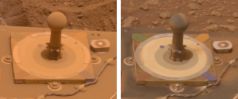
SOL416-426-cal_targets-A433R1.jpgSpirit's "Cleaning Techniques" - Soles 416 and 426 (Approximate True Colors; credits: NASA/JPL-Caltech)120 visiteCaption NASA originale:"These 2 images from 10 days apart show that dust was removed from the PanCam's calibration target on NASA's Mars Exploration Rover Spirit. Spirit's PanCam took the picture on the left on the Rover's 416th Sol (such as March 5, 2005) and took the picture on the right on Sol 426 (such as March 15, 2005). During the time in-between, other evidence of dust-lifting winds were a jump in power output by Spirit's solar arrays on Sol 420 from removal of some accumulated dust, and sighting of two dust devils in Sol 421 images from Spirit. The size of the base plate on the calibration target shown in both of these images is 8 cm on each side".
(13 voti)
|
|

OPP-SOL198-1P145765040EFF3505P2554L2M1.jpgThe "Muddy Dunes" inside Endurance Crater - Sol 198116 visitenessun commento
(16 voti)
|
|

OPP-SOL116-00.jpgEndurance Crater - Sol 116 (Approx. True Colors; credits: NASA/JPL-Caltech)246 visiteUna veduta panoramica del Cratere "Endurance", Area Meridiani Planum. Indecifrabile ciò che si vede sul fondo del cratere: una sorta di sabbia fangosa che sembra disegnare onde su di sè. Relativamente realistico il colore del cratere (almeno per come noi ci immaginiamo Marte).
Incoerente rispetto a tanti altri "almost true color" frames (oltre che poco realistico per l'uniformità di tinte ed un'eccessiva densità cromatica) il Cielo Marziano.
(16 voti)
|
|
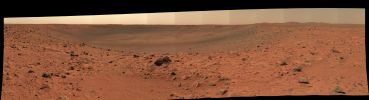
SOL068-01.jpgBonneville Crater - Sol 68 (Contrast Enhanced - Almost True Colors; credits: NASA/JPL-Caltech)197 visiteA parte la problematica - non minore - dei "colori veri" di Marte, facciamo notare, sul margine Dx del Cratere Bonneville (Sn dell'Osservatore), il "rottame spaziale" (lo Scudo Termico - o "Heat-Shield" - della Sonda) che brilla al Sole e che ha fatto pensare a noi - come, crediamo, a tanti altri - ad una scintillante e tangibile presenza "Aliena".
Secondo noi di segni e segnali di "presenze Aliene" su Marte - come sulla Luna - ce ne sono in notevoli quantitativi; ma in questo caso il dettaglio argenteo che splende sul bordo del Cratere è proprio "Made in USA".
Leggete comunque - se volete - l'interessantissima inchiesta del Dr Alessio Feltri intitolata "Space (Heat) Shields" e che troverete nella Sezione "Investigations": in fondo, su Marte, niente è come sembra...
(16 voti)
|
|
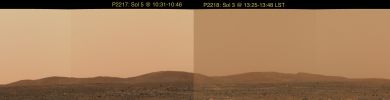
SOL003-005.jpgThe Eastern Hills at two different hours of the day - Soles 3 and 5137 visiteQuesta immagine composita che ci illustra il medesimo paesaggio in due diversi momenti della giornata è, secondo noi, del tutto rivelatrice su due circostanze: la prima è che Marte, tra le 10:31 e le 13:48, cambia radicalmente aspetto, MA rimane un Pianeta abbastanza "poco luminoso". La seconda è che attraverso l'elaborazione grafica delle immagini si stravolge (diremmo completamente) la realtà, anche agendo nella più perfetta Buona Fede.
(19 voti)
|
|

SOL068-03.jpgThe Heatshield on the edge of Bonneville Crater - Sol 68 (Contrast Enhanced - Almost True Colors; credits: NASA/JPL-Caltech)125 visiteUn nuovo ed interessante frame relativo al grande Cratere Bonneville ed allo "scudo termico" (nel riquadro) precipitato sul bordo del cratere. Un'immagine chiarificatrice, da tanti punti di vista...
(15 voti)
|
|

SOL270-Ebenezer_Rock-PIA06914_modest.jpgEbenezer - Sol 270 (True Colors; credits: NASA/JPL)87 visiteUna fotografia interessante della roccia chiamata "Ebenezer", dopo che la stessa è stata intaccata dagli abrasori di cui i Rover sono dotati. Molto interessante la colorazione di fondo: si tratta di un arancio acceso molto suggestivo e, a quanto dicono alla NASA, assolutamente reale. Bene: il "mistero" del "vero colore" di Marte si infittisce sempre più...
(15 voti)
|
|
| 5453 immagini su 455 pagina(e) |
 |
|
|
|
|
443 | |
|
|
|
|





