| Piú votate - Walking on Mars with Spirit and Opportunity |
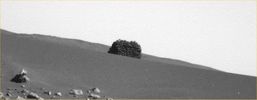
SOL728-2P191002092EFFAMOAP2443R1M1.jpgMars "vegetation"? (3) - Sol 728120 visiteOriginal caption:"Right PanCam Non-linearized Full frame EDR acquired on Sol 728 of Spirit's mission to Gusev Crater at approximately 14:24:06 MLT.
Camera commanded to use Filter 1 (436 nm)".
(8 voti)
|
|
SOL723-2P190546930EFFAMFHP2542L4M1-1.jpgFossil-like feature? - Sol 72381 visiteDifficile non fare paragoni fra la "roccia" che vediamo emergere dalle sabbie sul lato Sx dell'immagine e le "madrepore" terrestri (o, se si vuole rimanere su Marte, possiamo rinviarVi alle "razorblades-like rocks" di Meridiani Planum).
Si tratta, dunque, di un antico fossile?
O forse questo rilievo è solo il risultato finale di una curiosa combinazione di elementi esterni (piogge, venti e chissà cosa) i quali flagellarono la superficie di Marte in epoche remote?
Comunque, data e premessa l'indubitabile similitudine fra questa roccia (apparentemente porosa e lamellare) e le "razorblades-like rocks" di Maridiani, la domanda sorge spontanea: Meridiani - NASA docet - un tempo era un Oceano e le forme delle rocce che vediamo laggiù sono il risultato dell'azione dell'acqua. Ma che dire di Gusev Crater, allora? Gusev Crater era un lago forse? La NASA sembra essere "neutralmente scettica" su questa teoria ma, logica alla mano, "uguali configurazioni chiamano uguali cause". Almeno di regola.
Voi che dite?!?
(8 voti)
|
|
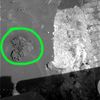
SOL723-2F190570590EDNAMFHP1121R0M1.jpgWhat is that? (2) - Sol 72361 visiteOriginal caption:"Right Front Haz-Cam Non-linearized Downsampled EDR acquired on Sol 723 of Spirit's mission to Gusev Crater at approximately 17:43:27 MLT".
(8 voti)
|
|

SOL723-2F190570590EDNAMFHP1121L0M1.jpgWhat is that? (1) - Sol 72383 visiteOriginal caption:"Left Front Haz-Cam Non-linearized Downsampled EDR acquired on Sol 723 of Spirit's mission to Gusev Crater at approximately 17:43:27 MLT".
(8 voti)
|
|

OPP-SOL652-1P186064071EFF64KCP2422L7M1.jpgThe "Martian Paving", from VERY close (2) - Sol 65259 visitenessun commento
(8 voti)
|
|

SOL653-06-PIA03233.jpgEast Basin (6) - Sol 65379 visitenessun commento
(8 voti)
|
|
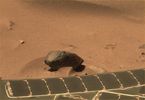
SOL621-5-Everest_L257atc-A622R1.jpgFragments of a "strange" Panorama - Sol 621102 visite... e sostituirla con qualche certezza? Beh, probabilmente dipende dal tipo di certezza/e che venisse/ro data/e in sostituzione della speranza tolta...
Questa speculazione ci è stata suggerita da alcuni Soci Lunar Explorer i quali ritengono che la dicotomia Scienza-Religione (si badi: qui non si parla di Fede o di Spiritualità, le quali sono necessarie e fondamentali anche - e soprattutto, forse - per conseguire una Ricerca Scientifica pura e moralmente accettabile. Qui si parla di Religione, il che è qualcosa di profondamente diverso - e spesso antitetico, secondo noi - rispetto alla Fede ed alla Spiritualità) meriti qualche angolo di riferimento e qualche puntualizzazione.
Noi sappiamo che un approccio come questo è destinato a suscitare controversie, ma a noi piace pensare che le opinioni - tutte le opinioni - purchè manifestate in forma civile e seguendo una linea di pensiero coerente, abbiano una Dignità Assoluta. Sappiamo che in molti pensano che l'Umanità è "sola" nell'Universo perchè, se così...
(8 voti)
|
|
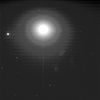
SOL602-2P179769016EFFAEGHP2733L1M1.jpgRising Phobos... (3) - Sol 60259 visiteA volte - e penso che in questo caso si tratti di una sensazione comune a tanti Ricercatori ed Appassionati di Astronomia - mi piacerebbe sedermi su un cumulo di pietre, accatastate sul ciglio di una strada (un "outcrop urbano"...), ed aspettare il sorgere di Due Lune. Una piccola, ed a forma di tubero, ed un'altra, ancora più minuscola, forse più simile ad una stella luminosissima che ad un mondo roccioso di modestissime dimensioni.
A volte penso, pur rimanendo del tutto consapevole dei rischi (e dei costi, ovviamente...) connessi ad un viaggio verso Marte, che ne varrebbe la pena, sempre e comunque.
A volte penso che qualsiasi sacrificio sarebbe accettabile pur di riuscire, un giorno, a sedersi su una duna o su un macigno, guardare l'orizzonte ed il cielo e poi, magari chiacchierando con un Compagno di Viaggio, attendere il sorgere di Due Lune.
Chissà...
(8 voti)
|
|
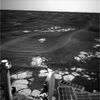
OPP-SOL578-1N179502557EFF59EKP0655R0M1.jpgThe surroundings of Erebus Crater (5) - Sol 57873 visitenessun commento
(8 voti)
|
|

SOL594-phobos_deimos_585-A585R1.jpgDeimos and Phobos60 visite"It is incredibly cool to be running an observatory on another planet" said planetary scientist Jim Bell of Cornell University, Ithaca, N.Y., lead scientist for the panoramic cameras on Spirit and Opportunity. In this picture, both Martian Moons, Deimos on the left and Phobos on the right, are well visible in the night sky in front of the constellation Sagittarius. Part of Sagittarius resembles an upside-down teapot. Phobos is the brighter object on the right; Deimos is on the left.
Spirit acquired these enhanced-brightness images with the PanCam on the night of Sol 585 (Aug. 26, 2005).
(8 voti)
|
|

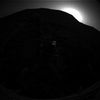
SOL594-phobos_deimos_585txt-A585R1.jpgMars Night-Sky63 visiteThe bright star Aldebaran and some of the stars in the constellation Taurus are visible on the right. Spirit acquired this image the evening of martian day, or sol, 590 (Aug. 30, 2005). The image on the right provides an enhanced-contrast view with annotation. Within the enhanced halo of light is an insert of an unsaturated view of Phobos taken a few images later in the same sequence.
On Mars, Phobos would be easily visible to the naked eye at night, but would be only about one-third as large as the full Moon appears from Earth. Astronauts staring at Phobos from the surface of Mars would notice its oblong, potato-like shape and that it moves quickly against the background stars. Phobos takes only 7 hours, 39 minutes to complete one orbit of Mars. That is so fast, relative to the 24-hour-and-39-minute sol on Mars (the length of time it takes for Mars to complete one rotation), that Phobos rises in the west and sets in the east. Earth's moon, by comparison, rises in the east and sets in the west. The smaller martian moon, Deimos, takes 30 hours, 12 minutes to complete one orbit of Mars. That orbital period is longer than a martian sol, and so Deimos rises, like most solar system moons, in the east and sets in the west.
(8 voti)
|
|
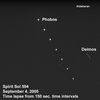
SOL594-P_D_Timelapse_594Atxt-A585R1.jpgDeimos and Phobos, from Husband's Hill Summit67 visiteTaking advantage of extra solar energy collected during the day, NASA's Mars Exloration Rover Spirit settled in for an evening of stargazing, photographing the two moons of Mars as they crossed the night sky. Spirit took this succession of images at 150-second intervals from a perch atop "Husband Hill" in Gusev Crater on martian day, or sol, 594 (Sept. 4, 2005), as the faster-moving martian moon Phobos was passing Deimos in the night sky. Phobos is the brighter object on the left and Deimos is the dimmer object on the right. The bright star Aldebaran and some other stars in the constellation Taurus are visible as star trails. Most of the other streaks in the image are the result of cosmic rays lighting up random groups of pixels in the camera.
Scientists will use images of the two moons to better map their orbital positions, learn more about their composition, and monitor the presence of nighttime clouds or haze. Spirit took the five images that make up this composite with its panoramic camera using the camera's broadband filter, which was designed specifically for acquiring images under low-light conditions.
(8 voti)
|
|
| 5453 immagini su 455 pagina(e) |
 |
|
|
|
|
15 | |
|
|
|
|





