| |

| Piú votate - Mercury |

ZZ-Mercury-Craters-Kertész_Crater-PIA16624-PCF-LXTT-IPF.jpgKertész Crater (Absolute Natural Colors; credits for the additional process. and color.: Dr Paolo C. Fienga/Lunar Explorer Italia/Italian Planetary Foundation)82 visiteThe bright and white-colored Material so clearly visible all over the Floor of Kertész Crater (whose diameter is approx. 31 Km - such as a little more than 19 miles) is not - despite its color and physical appearence - the Water Ice that has been recently confirmed to be present deep inside many Impact Craters located near Mercury's Poles, but it might well be behaving as Ice would on another Planet.
As a matter of fact, Mercury's Daytime Temperatures are so hot at most Latitudes that several kinds of Rocks (---> Minerals) which would be quite stable at other places in the Solar System, may essentially evaporate on Mercury. That is just one (a new one, we believe) theory that could explain the formation of these bright, irregular Features known as "Hollows" and seen here and, as you should already know very well, in many other places on the Planet Mercury (however, these fascinating Surface Features must, somehow - and in our humble opinion, as IPF -, be related to Impact Mechanics since they can mostly - if not exclusively - be found either inside, or on the Rims and/or, often, in close proximities with Impact Craters).
Date acquired: November, 17th, 2012
Image Mission Elapsed Time (MET): 261598284
Image ID: 2969138
Instrument: Narrow Angle Camera (NAC) of the Mercury Dual Imaging System (MDIS)
Center Latitude: 27,38° North
Center Longitude: 145,5° East
Resolution: 46 meters/pixel
Solar Incidence Angle: 42,6° (meaning that the Sun, at the time that the pictures were taken, was about 47,4° above the imaged Local Mercurian Horizon)
Emission Angle: 59,7°
Sun-Mercury-Messenger (or "Phase") Angle: 91,4°
This picture (which is an Original NASA - MESSENGER Spacecraft b/w frame published on the NASA - Planetary Photojournal with the ID n. PIA 16624) has been additionally processed and then colorized in Absolute Natural Colors (such as the colors that a human eye would actually perceive if someone were onboard the NASA - MESSENGER Spacecraft and then looked down, towards the Surface of Mercury), by using an original technique created - and, in time, dramatically improved - by the Lunar Explorer Italia Team. Different colors, as well as different shades of the same color, mean, among other things, the existence of different Elements (Minerals) present on the Surface of Mercury, each having a different Albedo (---> Reflectivity) and Chemical Composition.MareKromium
(4 voti)
|
|

ZZ-Mercury-Craters-Basho_Crater-PIA16625-PCF-LXTT-IPF.jpgBasho Crater (Absolute Natural Colors; credts for the additional process. and color.: Dr Paolo C. Fienga/Lunar Explorer Italia/Italian Planetary Foundation)147 visiteToday's APOD (obtained by the NASA - MESSENGER Spacecraft during the past month of November) provides us with the best look yet at Basho Crater (approximately 75 Km - such as about 47 miles - in diameter): a (relatively) young Impact Crater located in the Southern Hemisphere of the Planet Mercury. Basho Crater features some of the most striking Albedo (---> Reflectivity) contrasts that can be found on the whole Surface of the Innermost Planet of the Solar System, with both Low-Reflectance Ejecta and High-Reflectance Deposits (probably the most "famous", common and yet highly controversial - as far as its origin is concerned -Mercurian Surface Feature ever discovered: the so-called Hollows).
Date acquired: November, 6th, 2012
Image Mission Elapsed Time (MET): 260649832
Image ID: 2901613
Instrument: Narrow Angle Camera (NAC) of the Mercury Dual Imaging System (MDIS)
Center Latitude: 32,47° South
Center Longitude: 189,2° East
Resolution: 103 meters/pixel
Solar Incidence Angle: 32,4° (meaning that the Sun, at the time that the pictures were taken, was about 57,6° above the imaged Local Mercurian Horizon)
Emission Angle: 4,9°
Sun-Mercury-Messenger (or "Phase") Angle: 32,6°
This picture (which is an Original NASA - MESSENGER Spacecraft color frame published on the NASA - Planetary Photojournal with the ID n. PIA 16625) has been additionally processed and then re-colorized in Absolute Natural Colors (such as the colors that a human eye would actually perceive if someone were onboard the NASA - MESSENGER Spacecraft and then looked down, towards the Surface of Mercury), by using an original technique created - and, in time, dramatically improved - by the Lunar Explorer Italia Team. Different colors, as well as different shades of the same color, mean, among other things, the existence of different Elements (Minerals) present on the Surface of Mercury, each having a different Albedo (---> Reflectivity) and Chemical Composition.MareKromium
(4 voti)
|
|

ZZ-Mercury-Limb-PIA16398-PCF-LXTT-IPF.jpgMercurian Horizon (Absolute Natural Colors; credits for the additional process. and color.: Dr Paolo C. Fienga/Lunar Explorer Italia/Italian Planetary Foundation)80 visiteIn this image, Mercury's Cratered Surface stretches to the Horizon. Limb images with the Wide Angle Camera (WAC) have been a part of MDIS imaging campaigns since the beginning of orbital operations. A few months ago, in June 2012, NAC images of Mercury's Limb were added to the regular weekly observations, resulting in a few images each week with dramatic views of Mercury's Horizon such as seen here.
This image was acquired as part of MDIS's limb imaging campaign. Once per week, MDIS captures images of Mercury's Limb, with an emphasis on imaging the Limb of the Southern Hemisphere. These Limb images provide information about Mercury's shape and complement measurements of topography made by the Mercury Laser Altimeter (MLA) of Mercury's Northern Hemisphere.
Date acquired: July 17, 2012
Image Mission Elapsed Time (MET): 250986760
Image ID: 2215464
Instrument: Narrow Angle Camera (NAC) of the Mercury Dual Imaging System (MDIS)
Center Latitude: 30,3° South
Center Longitude: 59,4° East
Scale: the bottom of the image is approximately 300 Km (about 190 miles) in lengthMareKromium
(4 voti)
|
|
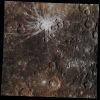
ZZ-Mercury-Craters-Mena_and_Cezanne_Crater-PIA16341-PCF-LXTT-IPF.jpgMena and Cezanne Crater (Absolute Natural Colors; credits for the additional process. and color.: Dr Paolo C. Fienga/Lunar Explorer Italia/Italian Planetary Foundation)87 visiteIn this Image-Mosaic, the Bright Rays of Mena Crater and the distinctive color difference of Cezanne Crater (with the surrounding area) are well highlighted. These two distinctive Impact Features provide beautiful contrast to this Absolute Natural Color image, giving the viewer more insight into reflectance variations (---> Albedoes) on Mercury's Surface. Also note the extremely old, degraded and larger, infilled Unnamed Crater visible on the center right of the frame, which is crossed by at least three major Crater Chains.
Date acquired: June 04, 2012
Image Mission Elapsed Time (MET): 247336883, 247336875, 247336879
Image ID: 1955368, 1955366, 1955367
Instrument: Wide Angle Camera (WAC) of the Mercury Dual Imaging System (MDIS)
WAC filters: 9, 7, 6 (996, 748, 433 nanometers) in red, green, and blue
Center Latitude: 3,78° South
Center Longitude: 235,8° East
Resolution: 552 meters/pixel
Scale: Cezanne Crater, such as the Crater in the bottom center, is about 67 km (approx. 41 miles) in diameter.
Solar Incidence Angle: 55,6° (meaning that the Sun was about 34,4° above the imaged Local Horizon at the time the pictures were taken)
Emission Angle: 0,0° (meaning that the MESSENGER Spacecraft, at the time that the pictures were taken, was absolutely perpendicular to the Mercurian Surface visible in the center of the frame)
Sun-Mercury-MESSENGER (or "Phase") Angle: 55,6°MareKromium
(4 voti)
|
|

ZZ-Mercury-Craters-Unnamed_Crater_with_bright_Rays-PIA15204-PCF-LXTT.jpgBright Rayed Crater (Enhanced Natural Colors; credits for the additional process. and color.: Dr Paolo C. Fienga - Lunar Explorer Italia)140 visiteThe Ejecta of this (relatively, of course) "fresh" approx. 20-Km Impact Crater swept the Surface, leaving beautiful bright Rays. Crater Rays fade with time as smaller impacts mix them into the surrounding Soil while Particles from the Solar Wind change the Surface's Chemistry. Given a little time (perhaps a million years or so), this Unnamed Crater will look like the other similar-sized Craters in the frame.
Date acquired: November, 17th, 2011
Image Mission Elapsed Time (MET): 230018573
Image ID: 1023529
Instrument: Narrow Angle Camera (NAC) of the Mercury Dual Imaging System (MDIS)
Center Latitude: 51,0° South
Center Longitude: 175,1° East
Resolution: 221 meters/pixel
Scale: the Rayed Crater is approximately 20 Km (about 12 miles) in diameter
Solar Incidence Angle: 53,1° (meaning that the Sun is about 36,9° above the Local Horizon)
Emission Angle: 37,8°
Sun-Mercury-MESSENGER (or "Phase") Angle: 78,6°MareKromium
(4 voti)
|
|

ZZ-Mercury-Crater_Chain-PIA15156-PCF-LXTT.jpgSecondary Crater Chains (Absolute Natural Colors; credits for the additional process. and color.: Dr Paolo C. Fienga - Lunexit Team)212 visiteThis image, taken with the Narrow Angle Camera (NAC), shows a pair of Secondary Crater Chains. These features are formed when Ejecta from a Primary iImpact is thrown outward from the growing crater cavity. As chunks of Ejecta fall back to the Surface, they can form Chains of Secondary Craters that often overlap.
This image was acquired as part of MDIS's High-Resolution Surface Morphology Base Map. The surface morphology base map will cover more than 90% of Mercury's Surface with an average resolution of approx. 250 meters/pixel (0,16 miles/pixel or 820 feet/pixel).
Images acquired for the Surface Morphology Base Map typically have off-vertical Sun angles (such as High Solar Incidence Angles, meaning low Sun over the Local Horizon ) and visible shadows so as to reveal clearly the topographic form of geologic features.
Date acquired: October 28, 2011
Image Mission Elapsed Time (MET): 228324766
Image ID: 943677
Instrument: Narrow Angle Camera (NAC) of the Mercury Dual Imaging System (MDIS)
Center Latitude: 2,94° North
Center Longitude: 160,5° East
Resolution: 193 meters/pixel
Scale: this frame is about 100 Km (approx. 62 miles) across
Solar Incidence Angle: 87,3° (meaning that the Sun is about 2,7° above the Local Horizon)
Emission Angle: 17,3°
Sun-Mercury-MESSENGER (or "Phase") Angle: 104,7°MareKromium
(4 voti)
|
|

ZZ-Mercury-Unusual_Surface_Feature-PIA14465-PCF-LXTT.jpgAngular "Albedo Arc" (Enhanced Absolute Natural Colors; credits for the additional process. and color.: Dr Paolo C. Fienga - Lunar Explorer Italia)135 visiteCaption NASA:"A distinct Albedo difference is visible in this image, separating lighter, smoother ground in the North from darker, older Terrain in the South. This contrast is likely indicative of a compositional difference between the two Terrains. Although at first glance this feature seems angular, the Albedo change most likely marks the edge of an extremely degraded Impact Basin (---> Crater)".
Date acquired: June, 21st, 2011
Image Mission Elapsed Time (MET): 217183900
Image ID: 409241
Instrument: Wide Angle Camera (WAC) of the Mercury Dual Imaging System (MDIS)
WAC filter: 7 (748 nanometers)
Center Latitude: 30,53° North
Center Longitude: 226,2° East
Resolution: 343 meters/pixel
Scale: the diagonal length of this image is about 500 km (310 mi) across
Solar Incidence Angle: 54,3° (meaning that the Sun is about 35,7° above the Local Mercurian Horizon)
Emission Angle: 0,3°
Sun-Mercury-Messenger (or "Phase") Angle: 54,1°MareKromium
(4 voti)
|
|

ZZ-Mercury-Terminator-PIA14195-PCF-LXTT.jpgMercurian Terminator (Absolute Natural Colors; credits for the additional process. and color.: Dr Paolo C. Fienga - Lunexit Team)203 visiteDate acquired: March 31, 2011
Image Mission Elapsed Time (MET): 210035203
Image ID: 71446
Instrument: Wide Angle Camera (WAC) of the Mercury Dual Imaging System (MDIS)
WAC filter: 7 (748 nanometers)
Center Latitude: 83,17° South
Center Longitude: 250,9° East
Resolution: 1833 mt/pixel
Scale: the center of this image is about 1970 Km (approx. 1225 miles) acrossMareKromium
(4 voti)
|
|
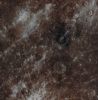
ZZ-Mercury-Global_View_of_the_Surface-PIA14082-PCF-LXTT.jpgCraters and Striations (Enhanced Absolute Natural Colors; credits for the additional process. and color.: Dr Paolo C. Fienga - Lunexit Team)156 visiteDate Acquired: March 29, 2011
Image Mission Elapsed Time (MET): 0209894354, 0209894356, 0209894362
Image ID: 65195, 65196, 65200
Instrument: Wide Angle Camera (WAC) of the Mercury Dual Imaging System (MDIS)
WAC filter: 6,7,9 (433, 749, 996 nanometers wavelength)
Center Latitude: 18,1° North
Center Longitude: 18,3° East
Resolution: approx. 980 meters/pixel
Scale: image width is approx. 510 kmMareKromium
(4 voti)
|
|

ZZ-Mercury-Limb-PIA14190-PCF-LXTT-1.jpgThe Limb of Mercury (Enhanced Natural Colors; credits for the additional process. and color.: Dr Paolo C. Fienga - Lunexit Team)155 visitenessun commentoMareKromium
(4 voti)
|
|

ZZ-Mercury-Rupes-PIA13748-1.jpgBeagle Rupes and Impact Craters Sveinsdottir, Izquierdo and Kunisada (Edited EDM)120 visitenessun commentoMareKromium
(4 voti)
|
|

ZZ-Mercury-Rupes-PIA13748-0.jpgBeagle Rupes and Impact Craters Sveinsdottir, Izquierdo and Kunisada (Context Frame)103 visiteWhen MESSENGER first flew by Mercury on January, 14th, 2008, MDIS acquired images of a large portion of Mercury's Surface that had never previously been seen by Spacecraft. This mosaic of NAC images shows some of the Geologic Features discovered during that first fly-by that have been subsequently named: the curving cliff face of Beagle Rupes, the elongated crater Sveinsdottir and the craters Izquierdo and Kunisada flooded with Lava.
This year, the MESSENGER spacecraft is positioned once again to visit the Solar System's Innermost Planet. However, this time, the Spacecraft won't just pass by. On March 18, 2011, a 15-minute maneuver will place MESSENGER in orbit around Mercury, making it the first Spacecraft ever to do so. The MESSENGER Mission will then begin an extensive year-long science campaign to unravel Mercury's mysteries.
Date Acquired: January, 14th, 2008
Instrument: Narrow Angle Camera (NAC) of the Mercury Dual Imaging System (MDIS)
Scale: Izquierdo Crater is approx. 170 Km (105,57 miles) in diameterMareKromium
(4 voti)
|
|
| 248 immagini su 21 pagina(e) |
|
|
|
|
|
8 | |
|
|
|
|
|
|





