| Piú votate - Mercury |
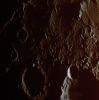
ZZ-Mercury-Terminator-PIA11372.jpgDawn on Mercury (HR - possible True Colors; credits: Lunexit)64 visiteThe first image taken following MESSENGER’s closest distance to Mercury (PIA11352) during the mission’s recent flyby was a Wide Angle Camera (WAC) image. The image shown here is the first NAC image acquired after closest approach, and since the resolution of the NAC is a factor of seven higher than that of the WAC, this image is the highest-resolution image obtained during MESSENGER’s second Mercury flyby.
The image was taken near local dawn, so the shadows are long and many features are shrouded in darkness. The right side of this image overlaps with the left side of the previously released close-up view of Machaut crater (see PIA11249), which was taken just 5" later than this image. This portion of Mercury’s Surface is heavily cratered, with small craters visible down to the limits of even this highest-resolution image.
Date Acquired: October 6, 2008
Image Mission Elapsed Time (MET): 131770803
Instrument: Narrow Angle Camera (NAC) of the Mercury Dual Imaging System (MDIS)
Resolution: 100 meters/pixel (0,06 miles/pixel)
Scale: This image is about 100 Km (approx. 63 miles) across
Spacecraft Altitude: approx. 3800 Km (about 2400 miles)MareKromium
(7 voti)
|
|

ZZ-Mercury-Terminator-PIA12045.jpgMercurian Terminator (Natural Colors; credits: Lunar Explorer Italia)73 visiteThis high-resolution NAC image shows a view of Mercury's Dawn Terminator, the division between the sunlit dayside and dark nightside of the planet, as seen as the MESSENGER Spacecraft departed the Planet during the mission's second Mercury flyby.
This frame is just one of 195 images that make up the second NAC mosaic obtained following closest approach (see PIA11767). A mosaic is a series of images that form a larger picture, in this case a high-resolution view of a portion of Mercury's Northern Hemisphere. This image is also just one of the 1287 total images acquired during Mercury flyby 2.
Last week, all of the images (as well as data from MESSENGER's other instruments) collected during Mercury flyby 2 were made publicly available on NASA's Planetary Data System (PDS) website, giving scientists around the world access to this exciting new dataset.
Date Acquired: January 14, 2008
Image Mission Elapsed Time (MET): 108829034
Instrument: Narrow Angle Camera (NAC) of the Mercury Dual Imaging System (MDIS)
Resolution: 590 meters/pixel (0,37 miles)
Scale: Moody is approx. 80 Km (about 50 miles) in diameter
Spacecraft Altitude: about 23.100 Km (approx. 14.300 miles)MareKromium
(6 voti)
|
|

ZZ-Mercury-Terminator-PIA10937-0.jpgNorthern Latitudes and a possible Orbital Anomaly (natural colors; credits: Lunexit)75 visiteAbout 91 minutes after MESSENGER’s closest pass by the Planet, MDIS acquired this image of Mercury’s Northern Surface, which is one in a set of 48 that form a mosaic of the departing Planet. In this image, the left portion of the Surface fades into darkness at the Terminator, the line between the sunlit dayside of the Planet and the dark night side.
The left-side portions of the surface that are just coming out of the darkness are being hit with the first rays of morning sunlight. Some of the surface to the right of this scene can be viewed in this previously released image looking toward Mercury’s North Pole (PIA10193).
Date Acquired: January 14, 2008
Image Mission Elapsed Time (MET): 108830334
Instrument: Narrow Angle Camera (NAC) of the Mercury Dual Imaging System (MDIS)
Resolution: 0,8 Km/pixel (0,5 miles/pixel) Scale: The width of this image is about 800 Km (approx. 500 miles)
Spacecraft Altitude: about 30.700 Km (approx. 19.100 miles)MareKromium
(5 voti)
|
|

ZZ-Mercury-Terminator-PIA10939.jpgSveinsdóttir Crater and Beagle Rupes (natural colors; credits: Lunexit)77 visiteNamed for Júlíana Sveinsdóttir, an Icelandic painter and textile artist, Sveinsdóttir Crater superimposed by Beagle Rupes is a distinctive feature on Mercury's landscape. Unusually elliptical in shape, the Crater was produced by the impact of an object that hit Mercury’s Surface obliquely. More than 600 Km (about 370 miles) long and one of the largest fault scarps on the Planet, Beagle Rupes marks the surface expression of a large thrust fault believed to have formed as Mercury cooled and the entire planet shrank. Beagle Rupes crosscuts Sveinsdóttir Crater and has uplifted the easternmost portion (right side portion) of the crater floor by almost a kilometer, indicating that most of the fault activity at Beagle Rupes occurred after the impact that created Sveinsdóttir. Crosscutting relationships such as this are used to understand the sequence in time of the different processes that have affected Mercury’s evolution.
Date Acquired: January 14, 2008
Image Mission Elapsed Time (MET):108830230
Instrument: Narrow Angle Camera (NAC) of the Mercury Dual Imaging System (MDIS)
Resolution: 0,77 Kilometers/pixel (0,48 miles/pixel)
Scale: This image is about 780 Km (approx. 490 miles) across; Sveinsdóttir crater is about 120 by 220 Km (appprox. 75 by 140 miles)
Spacecraft Altitude: about 30.300 Km (approx. 18.800 miles)
MareKromium
(5 voti)
|
|

B-Mercury-PIA02946.jpgCraters on the morning terminator...61 visiteCaption NASA originale:"As Mariner 10 passed by Mercury on its second encounter with the planet on September 21, 1974, this picture (FDS 166850) of a large circular (350 Km - or 220 mile diameter) basin was obtained near the morning terminator. The basin appears to have been flooded with the plain material and then subsequently cratered by numerous large events. Filling of the basin, presumably by lava flows analogous to those of the lunar maria, partially inundated small craters which had formed along the basin rim (lower left) and in some places overflowed the basin rim and spilled onto the surrounding terrain (top)".
(4 voti)
|
|

ZN-Messenger to Mercury.jpgMessenger going to Mercury93 visiteE, per concludere questo brevissimo "fly-by" fotografico di Mercurio, Vi offriamo una fotografia che contiene, in fondo, un pò di "speranza": è l'immagine della partenza della Sonda Messenger verso Mercurio.
Ci rivedremo fra qualche anno - se tutto andrà bene - con nuove fotografie ed informazioni provenienti da un mondo davvero poco conosciuto.
Se saremo bravi (e fortunati) troveremo senz'altro alcune risposte a molti quesiti, e certo non mancherà del materiale per porsi nuove domande e sbirciare nell'Ignoto, nei suoi Misteri, nei suoi Enigmi e nelle sue Anomalie.
Ed è per questi motivi (e per mille altri che non conosciamo ma che certamente esistono) che il Viaggio della Scienza è - e rimane - sempre e comunque, un Viaggio Infinito!
(15 voti)
|
|

Hero Rupes-PIA02413.jpgHero Rupes83 visiteCaption NASA originale:"After passing Mercury the first time and making a trip around the Sun, Mariner 10 again flew by Mercury on September 21 at 1:59 PMPDT. This encounter brought the spacecraft in front of Mercury in the southern hemisphere.
Hero Rupes, the large scarp visible running across the bottom of the image, is thought to thought to have been formed by global tectonic forces, possibly due to shrinkage of the planet as it cooled. Mariner 10 was looking obliquely across Mercury's southern hemisphere when it acquired this dramatic shot near the beginning of its southern hemisphere pass (FDS166618)".
(11 voti)
|
|

Mercury - Zola Crater from Mariner 10.jpgZola Crater - Mariner 1070 visiteCosa farà Messenger al riguardo? Usando uno strumento chiamato "altimetro laser" determinerà la presenza (o la mancanza) di sostanza liquida nel nucleo esterno del Pianeta, misurando la sua "librazione" (ossìa quella lenta, ma rilevabile, oscillazione di Mercurio attorno al proprio asse di rotazione).
Tale "librazione", qualora esistesse ancora un nucleo esterno liquido (magari anche solo in parte) su cui la componente rocciosa del Pianeta, di fatto, si trovasse a "galleggiare",...
(11 voti)
|
|

Mercury from Mariner 10.jpgMercury close-up from Mariner 10 (2)84 visiteIl che vuol dire che le zone interne di quei crateri polari, che hanno le pareti esterne sufficientemente elevate, giacciono nel buio e nel gelo perpetuo: oltre i -210°C!
Circa la possibile origine del ghiaccio d'acqua, l'ipotesi più probabile è che esso sia stato "portato" su Mercurio, un poco alla volta, dalle meteore e dalle comete che hanno impattato il Pianeta.
Oppure può anche darsi che si tratti di vapore acqueo proveniente dall'interno stesso di Mercurio il quale, una volta giunto in superficie (forse a seguito di eventi sismici), si è istantaneamente congelato.
(13 voti)
|
|

B-Mercury-PIA02418.jpgMercury: the "outgoing" hemisphere64 visiteCaption NASA originale:"This mosaic shows the planet Mercury as seen by Mariner 10 as it sped away from the planet on March 29, 1974. The mosaic was made from over 140 individual TV frames taken about two hours after encounter, at a range of 37.300 miles (60.000 Km ). North is at top. The limb is at right, as is the illuminating sunlight. The equator crosses the planet about two-thirds of the way from the top of the disc. The terminator - such as the line-separating day from night - is about 190° West longitude. The planet shows a gibbous disc-more than half-illuminated. This hemisphere is dominated by smooth plains, rather than heavily cratered terrain, and resembles portions of the Moon's maria in general shape. Half of a very large, multi-ringed basin named Caloris Basin appears near the center of the disc near the terminator. Its surrounding mountain ring is 800 miles (1.300 Km) in diameter".
(5 voti)
|
|

B-Mercury-PIA02414.jpgMercury or the Moon?67 visiteCaption NASA originale:"After passing Mercury the first time and making a trip around the Sun, Mariner 10 again flew by Mercury on September 21, 1974, at 1:59 PMPDT. This encounter brought the spacecraft in front of Mercury in the Southern Hemisphere.
Much of Mercury looks like the lunar highlands, a scene carved by billions of years of impact craters. This image (FDS 166724)was taken when Mariner 10 was near its closest approach to the planet during the second encounter, from about 50.000 Km. This image is found near the center of the area not imaged during the first encounter".
(12 voti)
|
|

Mercury - The Flat Plains.jpgThe Flat Plains - Mariner 1095 visiteDurante questi passaggi la Sonda (speriamo...) effettuerà la mappatura fotografica del Pianeta, coprendo anche quelle aree "non viste" da Mariner 10 (e che sono pari ad oltre il 55% dell'intera superficie!).
Gli Scienziati si aspettano grandi rivelazioni da questa Missione ed il motivo è semplice: Mercurio, a dispetto di 30 anni di "abbandono", è tutt'altro che poco interessante. Mercurio, per esempio, possiede un campo magnetico completo, proprio come la Terra.
E la cosa è assolutamente sorprendente.
(12 voti)
|
|
| 248 immagini su 21 pagina(e) |
 |
|
|
|
|
|
|
|
|
20 |
|





