| |

| Piú votate - Mercury |

ZZ-Mercury-Limb-PIA14551-pcf-lxtt.jpgMercurian Limb (Absolute Natural Colors; credits for the additional process. and color.: Dr Paolo C. Fienga - Lunexit Team)131 visiteThe Rays apparent in this spectacular Limb image of Mercury come from Debussy, the sharp Crater near the Terminator. This dominant Crater on Mercury was also a part of MESSENGER's historic image of Mercury- the first image ever to be taken from a spacecraft in orbit about this Planet. Readers may also notice a streak in the blackness of space in the top left corner of the image. This artifact was produced by a Cosmic Ray hitting the camera's CCD detector while the image was being collected.
This image was acquired as part of MDIS's Limb imaging campaign. Once per week, MDIS captures images of Mercury's Limb, with an emphasis on imaging the Southern Hemisphere's Limb. These Limb images provide information about Mercury's shape and complement measurements of topography made by the Mercury Laser Altimeter (MLA) of Mercury's Northern Hemisphere.
Date of acquisition: July, 26th, 2011
Image Mission Elapsed Time (MET): 220137668
Image ID: 550504
Instrument: Wide Angle Camera (WAC) of the Mercury Dual Imaging System (MDIS)
WAC filter: 7 (748 nanometers)
Center Latitude: 27,90° South
Center Longitude: 29,17° East
Resolution: 2783 meters/pixel
Scale: Mercury's radius is approximately 2440 km (about 1515,24 miles)
Solar Incidence Angle: 65,1°
Emission Angle: 48,2°
Sun-Mercury-Spacecraft (i.e.: "Phase") Angle: 95,3°MareKromium
(3 voti)
|
|

ZZ-Mercury-Craters-Rembrandt_Crater-PIA14549-PCF-LXTT.jpgRembrandt Crater (Absolute Natural Colors; credits for the additional process. and color: Dr Paolo C. Fienga - Lunexit Team)156 visiteDate acquired: August, 07, 2011
Image Mission Elapsed Time (MET): 221198580
Image ID: 601688
Instrument: Wide Angle Camera (WAC) of the Mercury Dual Imaging System (MDIS)
WAC filter: 7 (748 nanometers)
Center Latitude: 32,95° South
Center Longitude: 84,90° East
Resolution: 1756 meters/pixel
Scale: Rembrandt Crater is ~715 Km (444,015 miles) in diameter.
Solar Incidence Angle: 46,3°
Emission Angle: 48,7°
Sun-Mercury-Spacecraft (or "Phase") Angle: 95,0°MareKromium
(3 voti)
|
|

ZZ-Mercury-Craters-Xiao_Zhao_Crater-PIA14495-PCF-LXTT.jpgXiao Zhao Crater (Absolute Natural Colors; credits for the additional process. and color.: Dr Paolo C. Fienga - Lunexit Team)133 visiteDate acquired: July, 11th, 2011
Image Mission Elapsed Time (MET): 218840609
Image ID: 489105
Instrument: Wide Angle Camera (WAC) of the Mercury Dual Imaging System (MDIS)
WAC filter: 9 (996 nanometers)
Center Latitude: 14,17° North
Center Longitude: 122,3° East
Resolution: 456 meters/pixel
Scale: the diameter of Xiao Zhao is 24,2 Km (approx. 15 miles)
Solar Incidence Angle: 22,1°
Emission Angle: 34,3°
Phase Angle: 56,4°MareKromium
(3 voti)
|
|

ZZ-Mercury-Global_View_of_the_Surface-PIA14399-PCF-LXTT.jpgLow Reflectance Material and Crater Rays (Enhanced Absolute Natural Colors; credits for the additional process. and color.: Dr Paolo C. Fienga - Lunexit Team)206 visiteThis image highlights some of the color features present on Mercury's Surface, such as Low Reflectance Material (LRM) and Crater Rays. Visible in the top left quadrant of this image is the named crater Moody, which has a prominent yellow-orange color on its Floor in this enhanced color image.
This image was acquired as part of MDIS's color base map. The color base map is composed of WAC images taken through eight different narrow-band color filters and will cover more than 90% of Mercury's Surface with an average resolution of 1 Km/pixel (0,6 miles/pixel). The highest-quality color images are obtained for Mercury's surface when both the Spacecraft and the Sun are overhead, so these images typically are taken with viewing conditions of low incidence and emission angles.
Date acquired: July, 3rd, 2011
Image Mission Elapsed Time (MET): 218154838, 218154854, 218154834
Image ID: 456233, 456237, 456232
Instrument: Wide Angle Camera (WAC) of the Mercury Dual Imaging System (MDIS)
WAC filter: 9 (1000 nanometers), 7 (750 nanometers), 6 (430 nanometers) as red-green-blue
Center Latitude: 30,86° South
Center Longitude: 149,5° East
Resolution: 1712 meters/pixel
Scale: Moody crater is approx. 83 Km (~51,5 mi.) in diameter
Incidence Angle: 32,6°
Emission Angle: 0,5°
Phase Angle: 32,8°MareKromium
(3 voti)
|
|

ZZ-Mercury-Craters-Ives_Crater-PIA14360-PCF-LXTT.jpgIves Crater (Natural Colors; credits for the additional process. and color: Dr Paolo C. Fienga - Lunexit Team)133 visiteCaption NASA:"In this image, one is immediately drawn to the Rayed Crater in the upper right. Ives Crater, named in 1979 after American composer Charles Edward Ives, is smaller than many Unnamed Craters visible in this image, but it is younger and therefore brighter than its surrounding Terrain".
Date acquired: May, 20th, 2011
Image Mission Elapsed Time (MET): 214374721
Image ID: 276065
Instrument: Wide Angle Camera (WAC) of the Mercury Dual Imaging System (MDIS)
WAC filter: 7 (748 nanometers)
Center Latitude: 29,74° South
Center Longitude: 245,4° East
Resolution: 933 meters/pixel
Scale: the width of this image is approx. 677 Km
Incidence Angle: 49,0°
Emission Angle: 1,7°
Sun-Target-Spacecraft (such as "Phase") Angle: 50,7°MareKromium
(3 voti)
|
|

ZZ-Craters-Mercury-Secondary_Craters_Field-PIA14379.jpgSecondary Crater-Chains or Signs of multiple and simultaneous Cometary Impacts? (Enhanced Natural Colors; credits for the additional process. and color.: Dr Paolo C. Fienga - Lunexit Team)158 visiteCaption NASA:"This view captured by MESSENGER's wide angle camera (WAC) shows many Secondary Crater-Chains that originated from a Primary Impact Crater located outside this image, to the West. The Secondary Crater-Chains are formed as the Parent Crater-forming event launches Ejecta into the surrounding area. The chunks of Ejecta dig out their own craters which sometimes overlap to form a long valley-like depression. These features are striking though not uncommon on Mercury's battered Surface. Some other examples of Secondary Craters can be found at Abedin Crater".
Date acquired: April, 30th, 2011
Image Mission Elapsed Time (MET): 212677081
Image ID: 196161
Instrument: Wide Angle Camera (WAC) of the Mercury Dual Imaging System (MDIS)
WAC filter: 7 (748 nanometers)
Center Latitude: 63,76°
Center Longitude: 198,7° East
Resolution: 162 meters/pixel
Scale: this image is about 165 Km across
Incidence Angle: 79,9°
Emission Angle: 1,1°
Sun-Target-Spacecraft (such as "Phase") Angle: 81,0°MareKromium
(3 voti)
|
|

ZZ-Mercury-Craters-Cervantes_Crater-PIA14251-PCF-LXTT.jpgPortion of the Rim of Cervantes Crater (Natural Colors; credits for the additional process. and color.: Dr Paolo C. Fienga - Lunexit Team)151 visiteThe Rim of the Double-Ring Basin Cervantes cuts through the middle of this NAC image. Cervantes has a diameter of about 213 Km and was named in honor of the Spanish novelist, playwright, and poet Miguel de Cervantes (1547-1616), best known for his novel Don Quixote.
This image was acquired as part of MDIS's High-Resolution Surface Morphology Base Map. The Surface Morphology Base Map will cover more than 90% of Mercury's Surface with an average resolution of 250 meters/pixel (0,16 miles/pixel or 820 feet/pixel). Images acquired for the Surface Morphology Base Map typically have off-vertical Sun Angles (i.e.: high Solar Incidence Angles) and visible shadows so as to reveal clearly the topographic form of geologic features. On March 17, 2011 (March 18, 2011, UTC), MESSENGER became the first Spacecraft ever to orbit the planet Mercury. The mission is currently in its commissioning phase, during which Spacecraft and instrument performance are verified through a series of specially designed checkout activities. In the course of the one-year primary mission, the Spacecraft's seven scientific instruments and radio science investigation will unravel the history and evolution of the Solar System's innermost Planet.
Date acquired: May, 26th, 2011
Image Mission Elapsed Time (MET): 214857150
Image ID: 298561
Instrument: Narrow Angle Camera (NAC) of the Mercury Dual Imaging System (MDIS)
Center Latitude: 73,85° South
Center Longitude: 232,9° East
Resolution: 208 meters/pixel
Scale: This image is approx. 300 Km from the Western Corner to the Eastern Corner
Solar Incidence Angle: 77,8°
Emission Angle: 0,6°
Sun-Target-Spacecraft (such as "Phase") Angle: 78,2°MareKromium
(3 voti)
|
|

ZZ-Mercury-Limb-PIA14250-PCF-LXTT-1.jpgCrescent Mercury (Natural Colors; credits for the additional process. and color.: Dr Paolo C. Fienga - Lunexit Team)74 visiteMercury forms a beautiful crescent shape in this image, acquired as the MESSENGER Spacecraft was high above Mercury's Southern Hemisphere. On the left side is the Terminator, dividing the day from night. On the right side is the sunlit Limb, separating Mercury from the darkness of (the Inner) Space.
This image was acquired as part of MDIS's limb imaging campaign. Once per week, MDIS captures images of Mercury's Limb, with an emphasis on imaging the Southern Hemisphere Limb. These Limb images provide information about Mercury's shape and complement measurements of topography made by the Mercury Laser Altimeter (MLA) of Mercury's Northern Hemisphere.
On March 17, 2011 (March 18, 2011, UTC), MESSENGER became the first Spacecraft ever to orbit the planet Mercury. The mission is currently in its commissioning phase, during which Spacecraft and instrument performance are verified through a series of specially designed checkout activities. In the course of the one-year primary mission, the Spacecraft's 7 scientific instruments and radio science investigation will unravel the history and evolution of the Solar System's innermost Planet.
Date acquired: May, 24th, 2011
Image Mission Elapsed Time (MET): 214697006
Image ID: 290397
Instrument: Wide Angle Camera (WAC) of the Mercury Dual Imaging System (MDIS)
WAC filter: 7 (748 nanometers)
Center Latitude: 53,01° South
Center Longitude: 116,7° East
Resolution: 2827 meters/pixel
Scale: Mercury's radius is about 2440 Km (approx. 1520 miles)MareKromium
(3 voti)
|
|
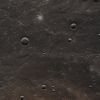
ZZ-Mercury-Plains-PIA14193-PCF-LXTT.jpgRidged Plains (Absolute Natural Colors; credits for the additional process. and color.: Dr Paolo C. Fienga - Lunexit Team)201 visiteDate acquired: March 30, 2011
Image Mission Elapsed Time (MET): 209982350
Image ID: 69294
Instrument: Wide Angle Camera (WAC) of the Mercury Dual Imaging System (MDIS)
WAC filter: 7 (748 nanometers wavelength)
Center Latitude: 56,5° North
Center Longitude: 23,5° East
Resolution: 187 mt/pixel
Scale: the scene is about 191 Km acrossMareKromium
(3 voti)
|
|
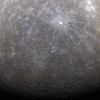
ZZ-Mercury-Z1.jpgThe "Face" of Mercury (Natural Colors; credits for the additional process. and color.: NASA/JHU APL/CIW)192 visiteCaption NASA:"On March 17, 2011, the MESSENGER Spacecraft became the first to orbit Mercury, the Solar System's Innermost Planet. This is its first processed color image since entering Mercury orbit. Larger, denser, and with almost twice the Surface Gravity of Earth's moon, Mercury still looks moon-like at first glance.
But in this view its Terrain shows light blue and brown areas near Craters and long bright rays of material streaking the Surface. The prominent bright ray crater Debussy at the upper right is approx. 80 Km (49,68 miles) in diameter. Terrain toward the bottom of the historic image extends to Mercury's South Pole and includes a region not previously imaged from Space".MareKromium
(3 voti)
|
|

ZY-Mercury-PCF-LXTT.jpgThe "Face" of Mercury (Enhanced Absolute Natural Colors; credits for the additional process. and color.: Dr Paolo C. Fienga - Lunexit Team)200 visitenessun commentoMareKromium
(3 voti)
|
|

ZX-Mercury-PIA13840.jpgCrescent Mercury (an Image-Mosaic by NASA/Johns Hopkins University Applied Physics Laboratory/Carnegie Institution of Washington)95 visiteThis HR mosaic of NAC images shows Mercury as it appeared to MESSENGER as the Spacecraft departed the Planet following its first mission's Fly-By. This mosaic resembles the historic first image transmitted back to Earth after that Fly-By and shows a portion of the Planet never previously seen by Spacecrafts.
Date Acquired: January, 14th, 2008
Instrument: Narrow Angle Camera (NAC) of the Mercury Dual Imaging System (MDIS)MareKromium
(3 voti)
|
|
| 248 immagini su 21 pagina(e) |
|
|
|
|
|
14 | |
|
|
|
|
|
|





