| Piú votate - Jupiter: the "King" and His Moons |

Amalthea-PIA01076.jpgAmalthea and a few inner Moons of Jupiter68 visiteChe cosa distingue questi "macigni vaganti" dalla maggior parte delle Lune di Giove? Si tratta di Lune originarie del Sistema Gioviano o sono state "attratte" da Giove, durante un passaggio troppo ravvicinato? Probabilmente si tratta di asteroidi vaganti o di comete mancate: oggetti provenienti dalla Fascia di Kuiper (KBO) che, in transito accanto al Gigante Gassoso, si sono trovati all'angolo ed alla velocità corretti per non essere nè semplicemente deflessi dalla loro corsa e quindi scagliati via nello...
(8 voti)
|
|
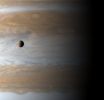
IO 2.jpgIo & Jupiter (from Cassini)62 visiteL'immenso Giove ed il piccolo (ma affascinante e VIVO, geologicamente parlando) Io, in un transito immortalato dalla Sonda Cassini, in transito accanto al Signore degli Dei ed in viaggio verso il Sistema di Saturno.
(8 voti)
|
|
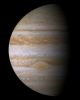
JUPITER from 10,1 MKM.jpgJupiter from 10,1 MKM85 visitePadre degli Dei e Signore incontrastato del Sistema Solare; troppo grande per essere solo un pianeta, ma troppo piccolo per diventare una stella. Con la sua luce giallo-arancio illumina i nostri cieli durante la notte ed è, assieme a Venere, uno dei primi astri ad essere visibile verso l'imbrunire ed è l'unico corpo celeste che può essere visto ad occhio nudo (sapendo dove guardare...) anche durante il giorno.
Questo è Giove.
(8 voti)
|
|

Jupiter, Europa & Callisto.jpgJupiter, Europa and Callistus58 visitenessun commento
(8 voti)
|
|

Io-PIA03530-Loki-PCF-LXTT.jpgThe Loki Region of Io (Enhanced and Darkened Natural Colors; credits for the additional process. and color.: Dr Paolo C. Fienga - Lunar Explorer Italia)199 visitenessun commentoMareKromium
(7 voti)
|
|
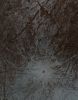
Europa-Craters-Pwyll_Crater-PIA01211-PCF-LXTT.jpgPwyll Crater on Europa (Absolute Natural Colors; credits for the additional process. and coloring: Dr Paolo C. Fienga - Lunexit Team)607 visitenessun commentoMareKromium
(7 voti)
|
|

Io-Natural_Colors-PCF-LXTT.jpgIo (Absolute Natural Colors; credits: Dr Paolo C. Fienga - Lunexit Team)120 visitenessun commentoMareKromium
(7 voti)
|
|

Io-TelegonusMensa-PIA03528_modest.jpgCollapsing Cliff at Telegonus Mensa (MULTISPECTRUM; credits: Lunexit)54 visiteCaption NASA:"This mosaic, showing an area called Telegonus Mensa, on Jupiter's moon Io and obtained by using frames taken by the NASA's Galileo Spacecraft on Oct. 16, 2001, reveal a complex interplay of geologic processes.
Four small, HR frames (9,6 mt, or 32 feet, per picture element) have been set into the larger context mosaic, which has a resolution of 42 mt (140 feet) per picture element. The illumination is from the upper right and North is to the top of the mosaic. A fracture runs North-West from the lower right corner of the mosaic into the amphitheater in the center of the frame. A HR image along this fracture reveals that lava has erupted from it.
The amphitheater itself is the site of extensive erosion, as the cliff has slumped South-Eastward under the influence of Io's gravity. HR frames directly south of the amphitheater show another slumping cliff in detail. Flat tops of massive slump blocks — up to 6 Km (3,7 miles) long and 0,5 Km (0,3 miles) across — are illuminated by the the Sun and cast shadows down the face of the cliff.
Based on these shadows, Galileo scientists estimate that the cliff is 1 to 2 Km high.
Just to the left of center a series of landslides can be seen, the longest of which extends for about 4 Km (such as approx. 2,5 miles)".MareKromium
(7 voti)
|
|

Io-051407_loop.gifErupting Tvashtar (GIF Movie)58 visiteThis five-frame sequence of New Horizons images captures the giant plume from Io's Tvashtar volcano. Snapped by the probe’s Long Range Reconnaissance Imager (LORRI) as the spacecraft flew past Jupiter earlier this year, this first-ever “movie” of an Io plume clearly shows motion in the cloud of volcanic debris, which extends 330 Km (200 miles) above the moon’s surface. Only the upper part of the plume is visible from this vantage point – the plume’s source is 130 Km (about 80 miles) below the edge of Io's disk, on the far side of the moon.
The appearance and motion of the plume is remarkably similar to an ornamental fountain on Earth, replicated on a gigantic scale. The knots and filaments that allow us to track the plume’s motion are still mysterious, but this movie is likely to help scientists understand their origin, as well as provide unique information on the plume dynamics.
Io's hyperactive nature is emphasized by the fact that two other volcanic plumes are also visible off the edge of Io's disk: Masubi at the 7 o'clock position, and a very faint plume, possibly from the volcano Zal, at the 10 o'clock position.
Jupiter illuminates the night side of Io, and the most prominent feature visible on the disk is the dark horseshoe shape of the volcano Loki, likely an enormous lava lake. Boosaule Mons, which at 18 Km (about 11 miles) is the highest mountain on Io and one of the highest mountains in the Solar System, pokes above the edge of the disk on the right side.
The five images were obtained over an 8-minute span, with two minutes between frames, from 23:50 to 23:58 Universal Time (UT) on March 1, 2007. Io was approx. 3,8 MKM (about 2,4 MMs) from New Horizons; the image is centered at Io coordinates 0° North Lat. and 342° West Long.
The pictures were part of a sequence designed to look at Jupiter's Rings, but planners included Io in the sequence because the moon was passing behind Jupiter's Rings at the time.MareKromium
(7 voti)
|
|

Io-050107_08~0.jpgThe "Burning Night" of Io - possible natural colors (elab. Lunexit)56 visitenessun commentoMareKromium
(7 voti)
|
|

Europa-050107_01.jpgRising Europa55 visiteNew Horizons took this image of the icy moon Europa rising above Jupiter’s cloud tops with its Long Range Reconnaissance Imager (LORRI) at 11:48 Universal Time on February 28, 2007, six hours after the spacecraft’s closest approach to Jupiter.
The picture was one of a handful of the Jupiter System that New Horizons took primarily for artistic, rather than scientific, value. This particular scene was suggested by space enthusiast Richard Hendricks of Austin, Texas, in response to an Internet request by New Horizons scientists for evocative, artistic imaging opportunities at Jupiter.
The spacecraft was 2,3 MKM (about 1,4 MMs) from Jupiter and 3 MKM (such as about 1,8 MMs) from Europa when the picture was taken.
Europa's diameter is 3.120 kilometers (1.939 miles).
The image is centered on Europa coordinates 5° South and 6° West.
In keeping with its artistic intent - and to provide a more dramatic perspective - the image has been rotated so South is at the top.
Nota: in data 9 Maggio 2007, la NASA pubblica nel suo "Planetary Photojournal" questa medesima immagine con il medesimo titolo.
Se non altro, dato che sappiamo che la NASA legge Lunexit, ci farebbe piacere ricevere, di quando in quando, un "grazie per la collaborazione!"...MareKromium
(7 voti)
|
|

Jupiter-050107_11.jpgThe "Little Spot" of Jupiter56 visiteThis amazing color portrait of Jupiter’s “Little Red Spot” (LRS) combines high-resolution images from the New Horizons Long Range Reconnaissance Imager (LORRI), taken at 03:12 UT on February 27, 2007, with color images taken nearly simultaneously by the Wide Field Planetary Camera 2 (WFPC2) on the Hubble Space Telescope. The LORRI images provide details as fine as 9 miles across (15 Km), which is approx. 10 times better than Hubble can provide on its own.
The improved resolution is possible because New Horizons was only 1,9 MMs (about 3 MKM) away from Jupiter when LORRI snapped its pictures, while Hubble was more than 500 MMs (abou 800 MKM) away from the Gas Giant Planet.
The Little Red Spot is the second largest storm on Jupiter, roughly 70% the size of the Earth, and it started turning red in late-2005. The clouds in the Little Red Spot rotate counterclockwise, or in the anticyclonic direction, because it is a high-pressure region. In that sense, the Little Red Spot is the opposite of a hurricane on Earth, which is a low-pressure region – and, of course, the Little Red Spot is far larger than any hurricane on Earth.
Scientists don't know exactly how or why the Little Red Spot turned red, though they speculate that the change could stem from a surge of exotic compounds from deep within Jupiter, caused by an intensification of the storm system. In particular, sulfur-bearing cloud droplets might have been propelled about 50 kilometers into the upper level of ammonia clouds, where brighter sunlight bathing the cloud tops released the red-hued sulfur embedded in the droplets, causing the storm to turn red. A similar mechanism has been proposed for the Little Red Spot's "older brother," the Great Red Spot, a massive energetic storm system that has persisted for over a century.
New Horizons is providing an opportunity to examine an “infant” red storm system in detail, which may help scientists understand better how these giant weather patterns form and evolve.
MareKromium
(7 voti)
|
|
| 324 immagini su 27 pagina(e) |
 |
|
|
|
|
7 | |
|
|
|
|





