| Piú votate - Jupiter: the "King" and His Moons |
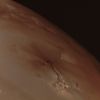
Io-PIA02232-PCF-LXTT.jpgIo's Limb (Absolute Natural Colors; credits for the additional process. and color.: Dr Paolo C. Fienga - Lunar Explorer Italia)183 visitenessun commentoMareKromium
(5 voti)
|
|

Jupiter-Red_Spot-PCF-LXTT.jpgJupiter's Great Red Spot from Voyager 1 (Credit: NASA, JPL - Additional processing and color.: Dr Paolo C. Fienga - Lunexit Team)339 visiteCaption NASA:"It is a hurricane twice the size of the Earth. It has been raging at least as long as telescopes could see it, and shows no signs of slowing. It is Jupiter's Great Red Spot, the largest swirling storm system in the Solar System.
Like most astronomical phenomena, the Great Red Spot was neither predicted nor immediately understood after its discovery. Still today, details of how and why the Great Red Spot changes its shape, size, and color remain mysterious. A better understanding of the weather on Jupiter may help contribute to the better understanding of weather here on Earth.
The above image is a recently completed digital enhancement of an image of Jupiter taken in 1979 by the Voyager 1 Spacecraft as it zoomed by the Solar System's largest planet.
At about 117 AU from Earth, Voyager 1 is currently the most distant human made object in the Universe and expected to leave the entire Solar Heliosheath any time now".
MareKromium
(5 voti)
|
|
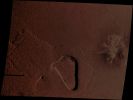
Io-Volcanic_Depression-PIA03532_modest2.jpgVolcanic Depression near the Equator (Absolute Natural Colors; credits for the additional process. and color.: Dr Paolo C. Fienga - Lunexit Team)121 visitenessun commentoMareKromium
(5 voti)
|
|

Europa-Lineae-Minos_Linea-PIA00275.jpgEuropa: Minos Linea (an EDM in possible Absolute Natural Colors; credits for the additional process. and color.: Dr Paolo C. Fienga - Lunexit Team)138 visitenessun commentoMareKromium
(5 voti)
|
|

Io-lor_0034785119_0x630_sci_1~0.jpgIo, from New Horizon (Natural Colors; credits: Lunexit)95 visitenessun commentoMareKromium
(5 voti)
|
|

Jupiter-Impact-2010-004.jpgImpact on Jupiter! (from Hubble Space Telescope - edm)58 visiteDiscovered by Australian amateur astronomer Anthony Wesley on Sunday, July 19, 2009, the spot was created when a small object plunged into Jupiter's atmosphere and disintegrated. The only other time in history such a feature has been seen on Jupiter was 15 years ago.
"This is strikingly similar to the comet Shoemaker Levy 9 that impacted Jupiter in July 1994" said team member Keith Noll of the Space Telescope Science Institute in Baltimore, Md.
"Since we believe this magnitude of impact is rare, we are very fortunate to see it with Hubble" added Amy Simon-Miller of NASA's Goddard Space Flight Center in Greenbelt, Md. She explained that the details seen in the Hubble view shows a lumpiness to the debris plume caused by turbulence in Jupiter's atmosphere. The spot is presently twice the length of the United States.
Simon-Miller estimated that the diameter of the object that slammed into Jupiter was at least the size of several football fields. The force of the explosion on Jupiter was thousands of times more powerful than the suspected comet or asteroid that exploded over the Tunguska River Valley in Siberia in June 1908.
The WFC3, installed by the STS-125 astronauts in May, is not yet fully calibrated. So while it is possible to obtain celestial images, the camera's full power cannot yet be realized for most observations. The WFC3 can still return meaningful science images that will complement the Jupiter pictures being taken with ground-based telescopes.
This is a Natural Color image of Jupiter as seen in Visible Light.
Credit: NASA, ESA, and H. Hammel (Space Science Institute, Boulder, Colo.), and the Jupiter Impact Team
The members of the Jupiter Impact Team are:
Dr. Heidi B. Hammel (Space Science Institute, Boulder, Colo.)
Dr. Amy Simon-Miller (NASA's Goddard Space Flight Center, Greenbelt, Md.)
Dr. Keith S. Noll (Space Telescope Science Institute, Baltimore, Md.)
Dr. Michael H. Wong (Space Telescope Science Institute, Baltimore, Md.)
Prof. John T. Clarke (Boston University, Boston, Mass.)
Prof. Imke de Pater (University of California, Berkeley, Calif.)
Dr. Glenn S. Orton (Jet Propulsion Laboratory, Pasadena, Calif.)
Dr. Agustin Sanchez-Lavega (University of the Basque Country, Spain)
CONTACT
Dwayne Brown
HQ, Washington
202-358-1726
dwayne.c.brown@nasa.gov
Ray Villard
Space Telescope Science Institute, Baltimore, Md.
410-338-4514
villard@stsci.eduMareKromium
(5 voti)
|
|

Jupiter-Impact-2010-003.jpgImpact on Jupiter! (from Hubble Space Telescope - ctx frame)58 visiteNASA scientists have interrupted the checkout and calibration of the Hubble Space Telescope to aim the recently refurbished observatory at a new expanding spot on the giant planet Jupiter. The spot, caused by the impact of a comet or an asteroid, is changing day to day in the Planet's cloud tops.
For the past several days the world's largest telescopes have been trained on Jupiter. Not to miss the potentially new science in the unfolding drama 360 MMs away, Space Telescope Science Institute director Matt Mountain allocated discretionary time to a team of astronomers led by Heidi Hammel of the Space Science Institute in Boulder, Colo.
The Hubble picture, taken on July 23, 2009, is the sharpest visible-light picture taken of the impact feature. The observations were made with Hubble's new camera, the Wide Field Camera 3 (WFC3).
"This image of the impact on Jupiter is fantastic" said U.S. Senator Barbara A. Mikulski, D-Md., chairwoman of the Commerce, Justice and Science Appropriations Subcommittee. "It tells us that our astronauts and ground crew at the Goddard Space Flight Center successfully repaired the Hubble telescope".
"This is just one example of what Hubble's new, state-of-the-art camera can do, thanks to the STS-125 astronauts and the entire Hubble team," said Ed Weiler, associate administrator of NASA's Science Mission Directorate. "However, the best is yet to come!".
"Hubble's truly exquisite imaging capability has revealed an astonishing wealth of detail in the 2009 impact site" said Hammel. "By combining these images with our ground-based data at other wavelengths, our Hubble data will allow a comprehensive understanding of exactly what is happening to the impact debris. My sincerest congratulations and thanks to the team who created Wide Field Camera 3 and to the astronauts who installed it!".
Co-investigator Imke de Pater of the University of California at Berkeley said: "The combination of the Hubble data with mid-infrared images from the Gemini telescope will give us an insight into changes of the vertical structure of the atmosphere due to the impact".MareKromium
(5 voti)
|
|
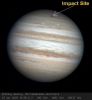
Jupiter-Impact-2010-001.jpgImpact on Jupiter! (ctx frame)58 visitenessun commentoMareKromium
(5 voti)
|
|

Jupiter-Impact-2010-000.jpgImpact on Jupiter!72 visiteUn "Grazie di Cuore" a Lorenzo Leone ("Anakin") per aver citato l'informazione - preziosa e straordinaria, da innumerevoli punti di vista - che ora possiamo illustrare con immagini adeguate.
Un asteroide "grande quanto la Terra" o quasi, impatta Giove. "Grande quanto la Terra"? Onestamente ne dubitiamo (rectius: VOGLIAMO DUBITARNE!), per tantissimi motivi (sicurezza della Terra in primis ed efficienza del Sistema di Monitoraggio dei cosiddetti "Asteroidi Vicini" in secundis).
Ma una cosa è certa. O meglio, "sembra" certa: il Cielo sta cambiando.
Osserviamolo meglio! Osserviamolo TUTTI!MareKromium
(5 voti)
|
|

Jupiter-Impact-2010-002.jpgImpact on Jupiter! (edm)59 visitenessun commentoMareKromium
(5 voti)
|
|

Io-TohillMons-PIA03600_1.jpgTohill Mons (MULTISPECTRUM-2; credits: Lunexit)58 visiteCaption NASA:"Dramatic shadows across a mountainous landscape on Jupiter's moon Io reveal details of the topography around a peak named Tohil Mons in this mosaic created from images taken by NASA's Galileo Spacecraft in October 2001.
Tohil Mons rises 5,4 Km (18.000 feet) above Io's Surface, according to analysis of stereo imaging from earlier Galileo flybys of Io. The new images, with a resolution of 327 mt (1070 feet) per picture element, were taken when the Sun was low in the sky, producing informative shadows. North is to the top and the Sun illuminates the Surface from the upper right. The topographic features revealed include a very straight ridge extending South-West from the peak, 500- to 850-meter-high (1640- to 2790-foot-high) cliffs to the North-West and a curious pit immediately East of the peak.
Major questions remain about how Io's mountains form and how they are related to Io's ubiquitous volcanoes. Although Io is extremely active volcanically, few of its mountains appear to be volcanoes. However, two volcanic craters do lie directly to the North-East of Tohil's peak, a smaller dark-floored one and a larger one at the very edge of the mosaic. Furthermore, the shape of the pit directly East of the peak suggests a volcanic origin.
Galileo scientists will use these images to investigate the geologic history of Tohil Mons and its relationship to the neighboring volcanic features.
The image is centered at 28° South Latitude and 161° West Longitude".
MareKromium
(5 voti)
|
|

Jupiter-02.jpgInternal Heat Drives Jupiter's Giant Storm Eruption (IR + VL)58 visiteDetailed analysis of two continent-sized storms that erupted in Jupiter's Atmosphere in March 2007 shows that Jupiter's internal heat plays a significant role in generating atmospheric disturbances. Understanding this outbreak could be the key to unlock the mysteries buried in the deep Jovian Atmosphere, say astronomers.
Understanding these phenomena is important for Earth's meteorology where storms are present everywhere and jet streams dominate the atmospheric circulation. Jupiter is a natural laboratory where atmospheric scientists study the nature and interplay of the intense jets and severe atmospheric phenomena.
An international team coordinated by Agustin Sánchez-Lavega from the Universidad del País Vasco in Spain presents its findings about this event in the January 24 issue of the journal Nature.
The team monitored the new eruption of cloud activity and its evolution with an unprecedented resolution using NASA's HST, the NASA Infrared Telescope Facility in Hawaii, and telescopes in the Canary Islands (Spain).
A network of smaller telescopes around the world also supported these observations.
According to the analysis, the bright plumes were storm systems triggered in Jupiter's deep water clouds that moved upward in the atmosphere vigorously and injected a fresh mixture of ammonia ice and water about 20 miles (30 Km) above the visible clouds. The storms moved in the peak of a jet stream in Jupiter's Atmosphere at 375 mph (600 Km/hour). Models of the disturbance indicate that the jet stream extends deep in the buried atmosphere of Jupiter, more than 60 miles (approx. 100 Km) below the cloud tops where most sunlight is absorbed.MareKromium
(5 voti)
|
|
| 324 immagini su 27 pagina(e) |
 |
|
|
|
|
12 | |
|
|
|
|





