| |

| Piú votate - Venus |

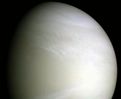
9-Venus.jpgVenus from 2.700.000 Km (Galileo Probe)216 visiteLa competizione USA/URSS, finchè l'URSS è esistita, ha dato grandi risultati in termini di inventiva, volontà, capacità di fronteggiare le difficoltà e superare gli ostacoli (il Programma Apollo ne è la prova lampante!) ma poi...Dissoltasi l'Unione Sovietica e svanita la 'corsa' verso le Stelle, si è incominciato a guardare il 'portafogli' e, dato che le missioni spaziali "costano care", la NASA (o dovremmo dire "Il Congresso"?!?) ha ritenuto più saggio, sicuro ed economico limitarsi ad inviare sonde programmate per entrare in orbita attorno a Venere e poi scattare foto a raggi X della superficie, così da superare l'ostacolo costituito dalla coltre perenne di nubi che sovrasta il Pianeta, SENZA dover ricorrere al landing ed alla successiva, rapida ed inevitabile perdita della navicella.
(18 voti)
|
|

Venusian_Surface-Venera_10-01.jpgVenus from Venera 10 - October, 25, 1975 - enhanced and processed image424 visiteAd ogni modo, in questa foto, ripresa dalla Sonda Venera 10 il 25 Ottobre 1975, possiamo finalmente vedere la superficie di Venere.
La Sonda Sovietica sopravvisse solo 65' sul Pianeta e, al momento di scattare la fotografia, il Sole si trovava vicino allo zenith.
Cosa avremmo visto guardando in alto?
Un cielo completamente nuvoloso ed intensamente illuminato da luce bianca.
Diciamo che lo spettacolo sarebbe stato simile a quello visibile in un torrido giorno dell'Estate terrestre, allorchè il cielo viene invaso da formazioni compatte di nuvole bianche.
(17 voti)
|
|

0-Venus.jpgVenus from Mariner 10173 visiteVenus Data and Statistics
Mass (kg) = 4.869e+24
Mass (Earth = 1) = 81476
Equatorial radius = 6.051,8 Km
Equatorial radius (Earth = 1) = 0,94886
Mean density (gm/cm^3) = 5,25
Mean distance from the Sun = 108.200.000 Km
Mean distance from the Sun (Earth = 1) = 0,7233
Rotational period (days) = 243,0187
Orbital period (days) = 224,701
Mean orbital velocity = 35,02 Km per second
Tilt of axis = 177,36°
Orbital inclination = 3,394°
Equatorial surface gravity (m/sec^2) = 8,87
Equatorial escape velocity = 10,36 Km per second
Magnitude (Vo) = - 4,4
Mean surface temperature = + 482°C
Atmospheric pressure (bars) = 92
Atmospheric composition: Carbon dioxide 96%, Nitrogen 3% and trace amounts of: Sulfur dioxide, water vapor, carbon monoxide, argon, helium, neon, hydrogen chloride and hydrogen fluoride.
(16 voti)
|
|

Venusian_Surface-Venera_13-02.jpgVenus from Venera 13 (camera 2)149 visitenessun commento
(14 voti)
|
|

Venusian_Surface-Venera_14-02.jpgVenus from Venera 14 (camera 2)120 visite"...These images are the original Russian digital images, with a little reprocessing. The original color images were darker and somewhat noisier than the b/w pictures scanned through the clear filter.
In this image, I combined the chroma signal from the color images with the luminance from the clear-filter images. The color chart, extended from the spacecraft was originally painted with gray, red, green and blue silicone enamel. On Venus, its color was shifted by effects of heat and pressure, and tinted by the orange sky. I adjusted the image colors slightly to match the calculated hues of the chart, but these pictures are not precisely color balanced..."
(14 voti)
|
|

Venusian_Surface-Venera_14-00.jpgVenus from Venera 14 (camera 1)128 visite"...The quality (of the Venera frames) is remarkably good, and a nearly perfect transmission can be compiled by carefully merging the information from multiple transmissions. A few sections appear damaged by noise, but these are actually bit synchronization errors which can be repaired in software. For example: work on this data set is in progress. Recovering the radiometric response function and balancing color are the next steps. Since the scene was scanned several times, it may be possible to calculate a super-resolution image from multiple panoramas, as NASA has done with Mars Pathfinder images..."
(14 voti)
|
|
1-Venus_Galileo_Visible.jpgVenus139 visiteUna magnifica ricostruzione di Venere - ad opera dello "Space Artist" Don P. Mitchell - nei colori in cui un umano che fosse nello spazio la vedrebbe.
Queste le annotazioni originali dell'Artista:
Full spectral data is rarely available, and instead we must use views through color filters. Above, the Galileo probe captured Venus through a clear filter (left) and through a 410 nm violet filter, which reveals the subtle yellow and white clouds. Unfortunately, many different color images could result in the same two clear and violet signals above. Even when so-called red, green and blue filters are used, the problem is just as difficult, because the filters are not really the right red, green and blue to just plug into the channels of a color display. Theoretically, information from the two images above and from the Cassini spectrum could be combined using Bayesian decision theory, to compute the most probable color image. If colors are estimated correctly, there is a final issue of tone mapping. How bright does the image appear to the eye in a given context. The image above is the best color image of Venus I've found, showing the planet as it would likely appear to a human observer in space. It was made by Turkish astronomer A. Tayfun Oner, using the two color channels from the Galileo camera, and a third interpolated channel.
(14 voti)
|
|

8-Venus.jpgVenus from 2.700.000 Km (Galileo Probe)171 visiteUna meravigliosa visione di Venere, davvero simile alla Terra vista dalla Luna, mentre la fitta coltre di nuvole che la ricopre riflette i raggi del Sole. Come avevamo detto in sede di commento alle prime foto, Venere suggerisce un'idea di "tranquillità e benessere".
Un Mondo bianco e azzurro apparentemente simile al nostro ma, come avete visto insieme a noi, in realtà violento ed assolutamente inospitale.
Un Mondo comunque bellissimo da guardare, ammirare e studiare, ma ... Restando lontan!
...Molto lontani...
(14 voti)
|
|

Volcanic_Regions.jpgVenus (X-ray close-up) from Galileo208 visiteCome dicevamo in precedenza l'atterraggio su Venere equivarrebbe, ancora oggi, come 22 anni fa, alla perdita sicura della Sonda.
Si è allora pensato di "bucare" la coltre di nuvole usando le onde radio (Magellan Project) ed i raggi X (Galileo Project).
Ed eccoVi un risultato della fotografia di Venere adottata impiegando questa tecnica: come potete vedere Voi stessi la superficie del Pianeta ci appare in tutta la sua straordinaria complessità e bellezza, "come se le nubi non ci fossero".
(13 voti)
|
|

Venusian_Surface-Venera_09-001.jpgVenus from Venera 9 - October, 22, 1975 - enhanced and processed image278 visiteOsservate ora il panorama ripreso da Venera 9, sette anni prima: tutto quanto molto simile tranne, forse, la sensazione che in quest'area, al momento dello scatto della fotografia, non stesse "piovendo" (guardate bene l'immagine scattata da Venera 13 e cercate di cogliere la diversità, in termini di riflettenza, fra le due superfici riprese).
Notate, infine, che questa fotografia è l'UNICA che Venera 9 riuscì a scattare e ad inviare a Terra durante la sua breve permanenza sul Pianeta: solo 53 minuti, ma comunque un'eternità ed un grandissimo successo, considerata la tecnologia disponibile negli anni '70/'80 (in rapporto a quella posseduta oggi)!
(12 voti)
|
|

A-Venus.gifThe Phases of Venus (2) - GIF108 visiteCaption originale:"Venus goes through phases. Just like our Moon, Venus can appear as full as a disk or as a thin as a crescent. Venus, frequently the brightest object in the post-Sunset or pre-Sunrise Sky, appears so small, however, that it usually requires binoculars or a small telescope to clearly see its current phase. The above time-lapse sequence, however, was taken over the course of many months and shows not only how Venus changes phase but how it's apparent angular size also changes. In the middle negative image, Venus is in a new phase, the same phase that occurred during its rare partial eclipse of the Sun in 2004".
(11 voti)
|
|

Venusian_Surface-Venera_13-03.jpgVenus from Venera 13 (detail mgnf)125 visiteSpettacolare dettaglio di un frame originale Venera 13 il quale ci mostra, molto vicino al Lander, delle rocce che - ad occhio - sembrano essere di natura basaltica (ergo avere un'origine vulcanica).
Molto intrigante il dettaglio, visibile in alto a Sx e proprio a ridosso della linea dell'orizzonte, di un rilievo immerso nella nebbia. Si direbbe una modesta collina dal profilo smussato (simile alla famosa Husband Hill di Gusev Crater). Un profilo così smussato da farla somigliare ad una sorta di "cupola".
Una splendida elaborazione, davvero.
(11 voti)
|
|
| 126 immagini su 11 pagina(e) |
1 |
|
|
|
|
|
|
|
|
|
|
|





