| Piú votate - Saturn: the "Ringed Beauty" and His Moons |

Saturn-PIA08933.jpgSaturnian Shadows58 visiteCaption NASA:"The Cassini spacecraft looks across Saturn's cloud-dotted North and shadowed Pole, and out across the lanes of ice that compose its Rings.
Prometheus is visible between the A and F-Rings near the center of the image.
This view looks toward the unilluminated side of the Rings from about 42° above the Ring-Plane. The Planet's shadow stretches toward the lower right corner.
The image was taken in visible light with the Cassini spacecraft wide-angle camera on April 1, 2007 at a distance of approx. 2 MKM (about 1,2 MMs) from Saturn.
Image scale is roughly 119 Km (about 74 miles) per pixel".MareKromium
(4 voti)
|
|

Saturn-PIA08932.jpgThe bluish Northern Latitudes of Saturn (natural colors - elab. NASA)57 visiteCaption NASA:"In Saturn's bluish North, day ends for the dreamy white clouds that stretch here into twilight.
This natural color scene shows middle latitudes in Saturn's North at excellent resolution, and with little detectable blur due to spacecraft motion.
North on Saturn is up and rotated 22° to the right.
Images taken using red, green and blue spectral filters were combined to create this color view. The image was taken with the Cassini spacecraft narrow-angle camera on April 1, 2007 at a distance of approx. 2 MKM (about 1,2 MMs) from Saturn and at a Sun-Saturn-spacecraft, or phase, angle of 86°.
Image scale is roughly about 12 Km (approx. 7 miles) per pixel".MareKromium
(4 voti)
|
|
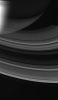
Saturn-PIA08929.jpgSuncatcher57 visiteCaption NASA:"The Rings of Saturn glow softly as sunlight from below wends its way through. Some of the Sun's light bounces off the Rings' opposite side and can be seen illuminating Saturn's night side Southern Hemisphere.
Such a view is only possible from the Saturn-orbiting Cassini spacecraft.
This view looks toward the unilluminated side of the rings from about 33° above the Ring-Plane. Shadows of the innermost Rings are cast upon the Planet at upper left. The edge of Saturn's shadow cuts a straight line across the Rings near upper right.
The image was taken in visible light with the Cassini spacecraft wide-angle camera on March 30, 2007 at a distance of approx. 1,9 MKM (about 1,2 MMs) from Saturn. Image scale is roughly 117 Km (about 73 miles) per pixel".MareKromium
(4 voti)
|
|
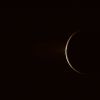
Enceladus-N00081661.jpgFountains in the Darkness (1) - natural colors, elab. Lunexit61 visiteCaption NASA:"N00081662.jpg was taken on April 24, 2007 and received on Earth April 25, 2007.
The camera was pointing toward ENCELADUS that, at the time, was approx. 189.092 Km away, and the image was taken using the CL1 and CL2 filters.
This image has not been validated or calibrated".
Nota: nei primi due frames le "plumes" di ghiaccio d'acqua (le "Fontane", come le abbiamo battezzate qui) che si dipartono dalle Regioni Sud Polari di Encelado possono essere già individuate, da un occhio attento e con l'immagine portata in full-size, anche se esse esplodono in tutta la loro bellezza ed evidenza nei frames 3 e 4.MareKromium
(4 voti)
|
|

Saturn-W00027278.jpgNoise, Lack and/or Loss of signal from Saturn58 visiteEsempio di image-artifacts derivanti da "noise" ("rumore di fondo", ossìa disturbi di varia natura ed origine - macchie solari, gamma bursts, influenze elettromagnetiche et si.); "lack" of signal ("insufficienza/mancanza di segnale") e/o "loss" of signal (e cioè "perdita" di segnale).MareKromium
(4 voti)
|
|

Saturn-PIA08923.jpgFrom South to North81 visiteCaption NASA:"The Cassini spacecraft gazes upward at the face of giant Saturn, seeing beyond the Equator to where ring shadows fall across the bluish Northern Latitudes.
This extreme southern view looks northward from about 58° below the Ring-Plane.
Images taken using red, green and blue spectral filters were combined to create this natural color view. The images were obtained with the Cassini spacecraft wide-angle camera on Feb. 1, 2007 at a distance of approx. 940.000 Km (abput 584.000 miles) from Saturn.
Image scale is roughly 106 Km (about 66 miles) per pixel".MareKromium
(4 voti)
|
|

Japetus-N00081090.jpgThe unusual shape of Japetus... (true colors, elab. Lunexit)56 visitePianeta o Pianetoide? Sfera o Sferoide?
Il problema sembra ozioso (e, forse, lo è davvero...), ma la curiosità è grande: come mai Giapeto ha un aspetto così "angolare" - notate il suo profilo - mentre (quasi) tutte le altre Lune Maggiori di Saturno sono delle sfere decisamente belle e lineari? Forse perchè Giapeto si è raffreddato (acquisendo la sua forma finale) molto più rapidamente rispetto a quanto non abbiano fatto gli altri corpi celesti che orbitano nello Spazio di Saturno.
O forse perchè su Giapeto è accaduto qualcosa di devastante. Un evento catastrofico il quale è stato capace, oltre che di renderlo...bicolore (metà di questo mondo, infatti, è color nero, mentre un'altra metà tende al bianco/marrone, con qualche accenno di rosa), anche di "deformarlo".
O forse si è trattato di una serie di eventi ricollegabili agli stress-mareali ai quali questo piccolo mondo (al pari di tutti gli altri mondi che orbitano intorno ai Giganti Gassosi) è stato ed è sottoposto?
Difficile (se non impossibile) dare una risposta sicura. Diciamo che, nel momento in cui saremo stati capaci di individuare ed analizzare tutte le possibili situazioni (e, quindi, oltre a quelle citate, anche 100 altre...), avremo compiuto un lavoro eccellente. Per il resto, noi riteniamo che, anche possedendo una Scienza Perfetta (che comunque non abbiamo...), ad alcune domande, con ogni probabilità, una risposta netta e finale non sarà MAI possibile darla.
Forse...MareKromium
(4 voti)
|
|

Saturn-PIA08911.jpgSaturn: the Ringed Beauty57 visiteCaption NASA:"(...) This infrared view from high above Saturn's Ring-Plane highlights the contrast in the cloud bands, the dimly glowing rings and their shadows on the Gas Giant Planet. The overall effect is stirring.
This view looks toward the unlit side of the Rings from about 48° above the Ring-Plane.
The image was taken with the Cassini spacecraft wide-angle camera using a combination of spectral filters sensitive to wavelengths of polarized infrared light.
The view was obtained on Feb. 12, 2007 at a distance of approx. 1,7 MKM (about 1 MMs) from Saturn and at a Sun-Saturn-spacecraft, or phase, angle of 144°.
Image scale is roughly 191 Km (about 119 miles) per pixel".
(4 voti)
|
|

Saturn-PIA09185.jpgThe Saturnian "Hexagon" and Aurora59 visiteThis nighttime view of Saturn's north pole by the visual and infrared mapping spectrometer on NASA's Cassini orbiter reveals a dynamic, active planet at least 75 kilometers (47 miles) below the normal cloud tops seen in visible light. Clearly revealed is the bizarre six-sided hexagon feature present at the north pole.
This image is one of the first clear images of the north polar region ever acquired from a unique polar perspective. In this image, the blue color shows high-altitude emissions from atmospheric molecules excited by charged particles smashing into the atmosphere along Saturn's powerful magnetic field lines, producing the aurora at very high altitudes in Saturn's atmosphere. The red color indicates the amount of 5-micron wavelength radiation, or heat, generated in the depths of the warm interior of Saturn that escapes the planet. Clouds blocking this light are revealed as silhouettes against the background thermal glow of the planet.
This image is among the first to capture the entire hexagonal feature and north polar region in one shot. It is also one of the first polar views using Saturn's thermal glow at 5 microns (seven times the wavelength visible to the human eye) as the light source. This allows polar cloud features to be revealed during the persistent nighttime conditions under way during north polar winter.
The hexagonal feature was originally discovered by NASA's Voyager spacecraft in 1980, but those images and subsequent ground-based telescope images suffered from poor viewing perspectives, which placed the feature and the north pole at the extreme northern limb (edge) in those images.
The strong brightness of the hexagon feature indicates that it is primarily a clearing in the clouds, which extends deep into the atmosphere, at least down to the 3-bar (3-Earth atmospheres pressure) level, about 75 kilometers (47 miles) below the clouds and hazes seen in visible wavelengths. Thick clouds border both sides of the narrow feature, as indicated by the adjacent dark lanes paralleling the bright hexagon. This image and other images acquired over a 12-day period between Oct. 30 and Nov. 11, 2006, show that the feature is nearly stationary, and likely is an unusually strong pole-encircling planetary wave that extends deep into the atmosphere.
This image was acquired by the Cassini visual and infrared mapping spectrometer on Oct. 29, 2006, from an average distance of 905,000 kilometers (562,340 miles) above the clouds.
(4 voti)
|
|

Enceladus.jpgEnceladus, the "E-Ring Creator"...56 visiteCaption NASA:"The active moon Enceladus appears to be making Saturn's E-Ring. An amazing picture showing the moon at work was taken late last year (AD 2006) by the Saturn-orbiting Cassini spacecraft and is shown above. Enceladus is the bright point near the center, right near the center of Saturn's E-Ring. Streams of ice and water vapor can be seen pouring off Enceladus into the E-Ring.
The above bright image of the normally faint E-Ring was made possible by aligning Cassini so that Saturn blocked the Sun. From that perspective, small ring particles reflect incoming sunlight more efficiently. Cassini has now been orbiting Saturn for almost three years, and is scheduled to swoop by the unexpectedly cryovolcanic Enceladus at least several more times".MareKromium
(4 voti)
|
|

Streak-W00026015~0.jpgA new "Streak" in the Sky of Saturn (digitally - but only partially - cleaned-up)57 visitenessun commento
(4 voti)
|
|

Saturn-PIA08890.jpgClouds & Clouds57 visiteCaption NASA:"Bright equatorial clouds give way to darker southern bands in this infrared Cassini spacecraft view taken with a filter sensitive to methane absorption in Saturn's Atmosphere.
Delicate shadows cast onto the Planet by its Inner Rings are visible at upper right.
A portion of the same Inner Rings are seen at lower right.
The image was taken with the Cassini spacecraft wide-angle camera using a combination of spectral filters sensitive to wavelengths of polarized infrared light.
The view was acquired on Jan. 14, 2007 at a distance of approx. 976.000 Km (about 606.000 miles) from Saturn.
Image scale is roughly 55 Km (about 34 miles) per pixel".
(4 voti)
|
|
| 2244 immagini su 187 pagina(e) |
 |
|
|
|
|
96 | |
|
|
|
|





