| Piú votate - Saturn: the "Ringed Beauty" and His Moons |

PHOEBE-PIA06068_modest.jpgPhoebe (Extremely Ehnanced and Saturated Natural Colors; credits: Lunexit Team)59 visitenessun commentoMareKromium
(4 voti)
|
|

PHOEBE-PIA06072_modest.jpgPhoebe (natural colors; credits: Lunexit)58 visitenessun commentoMareKromium
(4 voti)
|
|

Enceladus-PIA11114.jpgBaghdad and Cairo Sulci on Enceladus (possible True Colors; credits: Lunexit)62 visiteCaption NASA:"Cassini shot past the surface of Saturn's moon Enceladus on Aug. 11, 2008, acquiring a set of 7 HR images targeting known hot spot locations on the moon's "Tiger Stripe" fractures, or Sulci.
Five of those images are presented in this mosaic.
Features on Enceladus are named for characters and places from "The Arabian Nights", and the four most prominent Sulci are named Alexandria, Cairo, Baghdad and Damascus. Here, Baghdad Sulcus runs across the top mosaic tile, from lower left to upper right. Cairo Sulcus runs from left to right just beneath the center tile.
One highly anticipated result of this flyby was to pinpoint previously identified source locations for the jets that blast icy particles, water vapor and trace organics into space.
The yellow circles indicate the Jets' Source Locations I and V, as identified in PIA08385" .
Scientists are using these new images to study geologic activity associated with the sulci, and effects on the surrounding terrain. This information, coupled with observations by Cassini's other instruments, may answer the question of whether reservoirs of liquid water exist beneath the surface.
The mosaic consists of five images taken with the clear spectral filters on Cassini's narrow-angle camera. The view is an orthographic projection with an image scale of 14,5 meters (47,5 feet) per pixel. The area shown here is centered on 81,6° South Latitude and 56,5° West Longitude. The original images ranged in resolution from 10 to 24 meters (33 to 79 feet) per pixel and were taken at distances ranging from 1288 to 3600 Km (such as from about 800 to approx. 2237 miles) from Enceladus".MareKromium
(4 voti)
|
|

Enceladus-W00048467.jpgThe Unbelievable Surface of Enceladus, from ONLY 545 Km: the bright (and icy) walls of a Canyon58 visiteCaption NASA:"W00048467.jpg was taken on August 11, 2008 and received on Earth August 12, 2008. The camera was pointing toward ENCELADUS that, at the time, was approximately 545 kilometers away.
The image was taken using the CL1 and CL2 filters and it has not been validated or calibrated". MareKromium
(4 voti)
|
|

Enceladus-N00118362.jpgThe Unbelievable Surface of Enceladus, from about 1500 Km! (the Monolith of Enceladus)55 visiteCaption NASA:"Caption NASA:"N00118365.jpg was taken on August 11, 2008 and received on Earth August 12, 2008. The camera was pointing toward ENCELADUS that, at the time, was approximately 1574 Km away.
The image was taken using the CL1 and CL2 filters and it has not been validated or calibrated".
Nota Lunexit: indicato dalla freccia, una probabile struttura colonnare - individuata grazie all'ombra straordinariamente lunga che proietta - che riteniamo simile (se non altro concettualmente) al Monolito di Phobos ed alle Cuspidi di Blair.MareKromium
(4 voti)
|
|
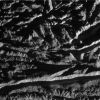
Enceladus-N00118363.jpgThe Unbelievable Surface of Enceladus, from about 1500 Km!61 visiteCaption NASA:"Caption NASA:"N00118365.jpg was taken on August 11, 2008 and received on Earth August 12, 2008. The camera was pointing toward ENCELADUS that, at the time, was approximately 1564 Km away.
The image was taken using the CL1 and CL2 filters and it has not been validated or calibrated".
Nota Lunexit: osservate come l'avvicinarsi alla Linea del Terminatore rende le immagini straordinariamente affilate e dense di profondità...MareKromium
(4 voti)
|
|

Saturn-PIA09908~0.jpgThrough the Rings... (MULTISPECTRUM; credits: Lunexit)59 visitenessun commentoMareKromium
(4 voti)
|
|

The_Rings-PIA10419.jpgOn the edge... (MULTISPECTRUM-2; credits: Lunexit)70 visiteCaption NASA:"This detailed look at Saturn's A-Ring captures Daphnis in the narrow Keeler Gap. The small moon creates complex wave patterns in the gap edges that Cassini scientists are working to understand. To the right of the Keeler Gap, the outer A-Ring edge is significantly brighter than the rest of the Ring.
This view looks toward the unilluminated side of the Rings, from about 32° above the Ring-Plane. Daphnis is about 8 Km (approx. 5 miles) wide.
The image was taken in visible light with the Cassini Spacecraft narrow-angle camera on May 31, 2008. The view was acquired at a distance of approx. 1 MKM (about 629.000 miles) from Saturn.
Image scale is roughly 6 Km (about 4 miles) per pixel".MareKromium
(4 voti)
|
|
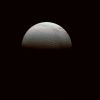
Enceladus-N00114741.jpgCrescent Enceladus (MULTISPECTRUM-2; credits: Lunexit)65 visitenessun commentoMareKromium
(4 voti)
|
|
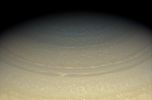
Saturn-PIA10414.jpgNorthern Blue (natural colors; credits: NASA/JPL/Space Science Institute)56 visiteCaption NASA:"Golden hues continue to creep Northward on Saturn, subduing the blues and grays the Cassini Spacecraft witnessed upon arrival in mid-2004. This view was acquired from about 27° above the Ring-Plane.
Images taken using red, green and blue spectral filters were combined to create this natural color view. The images were acquired with the Cassini Spacecraft wide-angle camera on May 23, 2008 at a distance of approx. 1,3 MKM (such as about 780.000 miles) from Saturn.
Image scale is roughly 71 Km (about 44 miles) per pixel".MareKromium
(4 voti)
|
|

Methone-N00111933.jpgStar-Trails and Methone57 visitenessun commentoMareKromium
(4 voti)
|
|
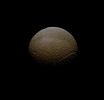
Tethys-PIA10400.jpgTethys (MULTISPECTRUM-2; credits: Lunexit)59 visiteCaption NASA:"The Cassini Spacecraft took a Southern view of the scarred face of icy Tethys. The moon's South Pole is at bottom center, just above the Terminator. To the left of the Pole, is Crater Melanthius, with its complex of central peaks poking upward into sunlight. On the limb at right, Ithaca Chasma extends Northward. The smoothness of the limb is interrupted at the 11 o'clock position by the rim of Crater Odysseus. A belt of darker terrain girdles the moon's Equator. (...)
Lit terrain seen here is on the Leading Hemisphere of Tethys (about 1062 Km or approx. 660 miles across). North is up, and rotated 9° to the right.
The image was taken in visible green light with the Cassini Spacecraft narrow-angle camera on May 10, 2008. The view was acquired at a distance of approx. 477.000 Km (such as about 296.000 miles) from Tethys and at a Sun-Tethys-Spacecraft angle of 44°.
Image scale is roughly 3 Km per pixel".MareKromium
(4 voti)
|
|
| 2244 immagini su 187 pagina(e) |
 |
|
|
|
|
90 | |
|
|
|
|





