| Piú votate - Saturn: the "Ringed Beauty" and His Moons |

The Rings-N00034622.jpgSunshine and stars, through the F-Ring!59 visiteUn'immagine davvero molto bella e suggestiva; inutili altri commenti.
(5 voti)
|
|
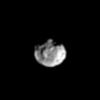
Hyperion-PIA06643.jpgSome of Hyperion's main surface features60 visiteCaption NASA originale:"Several distinct craters on Saturn's moon Hyperion can be seen here, as well as a protruding feature, perhaps a mountain, near the center.
The image was taken in visible light with the Cassini spacecraft narrow-angle camera on March 16, 2005, at a distance of approx. 1,8 MKM (such as approx. 1,1 MMs) from Hyperion and at a Sun-Hyperion-spacecraft, or phase, angle of 42°.
Resolution in the original image was 11 Km (approx. 7 miles) per pixel. The image has been contrast-enhanced and magnified by a factor of three to aid visibility".
(5 voti)
|
|
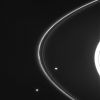
The Rings-N00032099.jpgThe "clumpy" F-Ring and two Shepherd Moons60 visiteUna spettacolare inquadratura dell'Anello F di Saturno il quale, come sapete si caratterizza (anche) a causa delle sue numerose irregolarità ed increspature (che alla NASA chiamano clumps---->grumi/agglomerati) che dovrebbero essere dovute all'azione mareale di Lune-Pastore come Pandora ed Atlas, per esempio.
(5 voti)
|
|
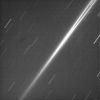
The Rings-PIA06627.jpgThe G-Ring and "Star-Trails"56 visiteCaption NASA originale:"Cassini's ability to remain sharply pointed at its targets allowed this image of Saturn's faint, dusty G-Ring to be made. The thin streaks visible here are "Star-Trails", which are created during long exposures, when the spacecraft remains locked onto a single target. The camera shutter was open for 3 and 1/2 minutes during this particular exposure. A long exposure was required to see details of this quite tenuous Ring.
The feature inside the G-Ring, at upper right, is also a star trail.
The image was taken in polarized visible light with the Cassini spacecraft narrow-angle camera on March 7, 2005, at a distance of approx. 1,2 MKM (such as approx. 750.000 miles) from Saturn. The image scale is approx. 10 Km per pixel".
(5 voti)
|
|

Rhea-PIA06620.jpgRhea and Enceladus: which is which?64 visiteCaption NASA originale:"Though much farther away from Cassini when the spacecraft acquired this image, Saturn's second-largest moon Rhea still dwarfs the brightest icy moon Enceladus in this scene. Rhea is 1.528 Km (approx. 949 miles) across. Enceladus is 505 Km (approx. 314 miles) across.
The image was taken in visible light with the Cassini spacecraft narrow-angle camera on Feb. 21, 2005, at a distance of approx. 2 MKM (approx. 1,3 million miles) from Enceladus and 2,5 MKM (approx. 1,6 MMs) from Rhea. The image scale is 12 Km (approx. 7 miles) per pixel on Enceladus and 15 Km (approx. 9 miles) per pixel on Rhea".
(5 voti)
|
|
![Hyperion-PIA06608[1].jpg](albums/userpics/10008/small_Hyperion-PIA06608%5B1%5D.jpg "Nome del file=Hyperion-PIA06608[1].jpg
Dimensione del file=28KiB
Dimensioni=703x486
Aggiunta il=Mar 19, 2005")
Hyperion-PIA06608[1].jpgThumbling Hyperion102 visiteCaption NASA originale:"As it loops around Saturn, Cassini periodically gets a good view of Saturn's moon Hyperion. Hyperion chaotically tumbles around in its orbit and is perhaps the largest irregularly-shaped moon in the Solar System. New details about this oddball worldlet will certainly come to light in September, 2005, when Cassini is slated to approach Hyperion at a distance of 990 Km. The images were taken in visible light with the Cassini spacecraft narrow-angle camera in October 2004 and February 2005, at distances ranging from 1,3 to 1,6 MKM (such as from approx. 808.000 to 994.000 MMs) from Hyperion and at phase angles ranging from 42 to 66°. Resolution in the original images was 8 to 10 Km (approx. 5 to 6 miles) per pixel.
The images have been contrast-enhanced and magnified by a factor of two to aid visibility".
(5 voti)
|
|

Dione&Titan-PIA06607.jpgDione and Titan62 visiteCaption NASA originale:"As artful as it is informative, this captivating portrait captures Saturn's wispy moon Dione over the shoulder of smoggy Titan in a single inspiring scene. Dione is 1.118 Km (approx. 695 miles) across and Titan is 5.150 Km (such as approx. 3.200 miles) across.
The image was taken in visible green light with the Cassini spacecraft narrow-angle camera on Feb. 18, 2005, at a distance of approximately 1,3 MKM (808.000 miles) from Dione and 2,1 MKM (1,3 MMs) from Titan. The image scale is 8 Km (5 miles) per pixel on Dione and 13 Km (8 miles) per pixel on Titan".
(5 voti)
|
|
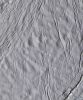
Enceladus~0.jpgEnceladus (close-up)57 visiteCaption NASA da "NASA - Picture of the Day" del 17 Marzo 2005:"The surface of Enceladus is as white as fresh snow. Still, an impressive variety of terrain is revealed in this contrast enhanced image. At a resolution of about 30 meters per pixel, the close-up view spans over 20 Km - recorded during the touring Cassini spacecraft's March flyby of the icy Saturnian moon. Enceladus is known to be the most reflective moon in the solar system and the recent Cassini encounters have also detected the presence of an atmosphere, making Enceladus the second moon of Saturn with such a distinction. In fact, Enceladus' fresh looking surface and significant atmosphere both indicate that the tiny, 500 Km diameter moon is active. Researchers suspect that ice volcanos or geysers coat the surface with fresh material and replenish the moon's atmosphere, ultimately providing the icy particles that compose Saturn's tenuous E-Ring".
(5 voti)
|
|

Enceladus-N00030073.jpgEnceladus, from approx. 21.000 Km56 visiteUn grande cratere da impatto (in alto) il quale presenta, sul suo fondo, i segni di un evidente accumulo di materiale - polveri e macigni? - il quale, probabilmente, è franato all'interno del cratere dai suoi stessi bordi (forse a causa di movimenti sismici o, magari, a seguito di processi di gravity-wasting). Potrebbe anche trattarsi, tuttavia, di quello che residua di un "central peak" il quale, nelle ere, si è quasi completamente disintegrato, lasciando al suo posto una collina di detriti.
(5 voti)
|
|

Enceladus-N00030063.jpgEnceladus, from approx. 25.000 Km57 visiteOsservate con molta attenzione gli innumerevoli "cracks" della superficie di Encelado: si tratta di canyons che sembrano essere il residuo visibile di un'intensissima attività sismica (?) occorsa qualche milione di anni fa.
Queste immagini comunque, sebbene enigmatiche, rispondono ad uno schema geologico che conosciamo e che abbiamo incontrato più volte nel Sistema Solare (pensate, p.e., alle lune Gioviane Ganimede ed Europa oppure alla stessa luna Saturniana Dione).
Certo, ogni corpo celeste fa "storia a sè", ma è altrettanto vero che c'è sempre la possibilità di sussumere corpi celesti aventi caratteri simili all'interno di categorie omogenee. Quello che ci è difficile interpretare ed "omogeneizzare", invece, è il canyon che vedrete nel prossimo frame: si tratta di qualcosa che non potrà non sorprenderVi...
(5 voti)
|
|

Rhea-N00029812.jpgRhea and the Rings, from about 2MKM58 visitenessun commento
(5 voti)
|
|

Dione-PIA06199.jpgDione and Rhea: full sequence of their "dance"57 visiteCaption NASA originale:"Rhea (1.528 Km across) is larger than Dione (1.118 Km), but also is farther away as seen here, which explains why the two moons appear to be roughly the same angular size.
The view shows principally the anti-Saturn side of Dione, and the Saturn-facing side of far-off Rhea.
The images in this mosaic were taken in visible light with the Cassini spacecraft narrow-angle camera on Feb. 20, 2005, at a distance of approximately 1,5 MKM (approx. 900.000 miles) from Dione and about 2,3 MKM (approx. 1,4 MMs) from Rhea.
The image scale is approximately 9 Km per pixel on Dione and 14 Km per pixel on Rhea".
(5 voti)
|
|
| 2244 immagini su 187 pagina(e) |
 |
|
|
|
|
73 | |
|
|
|
|





