| Piú votate - Saturn: the "Ringed Beauty" and His Moons |

Dione-N00098970.jpgDione is missing a piece...57 visiteCaption NASA:"N00098970.jpg was taken on December 19, 2007 and received on Earth December 20, 2007. The camera was pointing toward DIONE that, at the time, was approximately 243.552 Km away, and the image was taken using the P60 and UV3 filters.
This image has not been validated or calibrated".MareKromium
(6 voti)
|
|

Rhea-N00098758.jpgGibbous Rhea (natural colors; credits: Lunexit)58 visiteCaption NASA (relativa al frame di Sx):"Bright, wispy markings cover the Trailing Hemisphere of Rhea. The features are thought to be similar in nature to the bright, icy canyons seen on Dione.
North on Rhea is up and rotated 17° to the left.
The image was taken in visible green light with the Cassini spacecraft narrow-angle camera on July 22, 2007. The view was acquired at a distance of approx. 1,2 MKM (about 700.000 miles) from Rhea and at a Sun-Rhea-spacecraft, or phase, angle of 42°.
Image scale is roughly 7 Km (approx. 4 miles) per pixel".MareKromium
(6 voti)
|
|

Sky-N00097768.jpgStar-trail; moon-trail or in-transit UFO?59 visiteCaption NASA:"N00097768.jpg was taken on November 24, 2007 and received on Earth November 25, 2007. The camera was pointing toward JAPETUS that, at the time, was approx. 1.401.647 Km away, and the image was taken using the CL1 and IR1 filters. This image has not been validated or calibrated".MareKromium
(6 voti)
|
|

Dione-PIA09772.jpgThe "Face" of Dione (HR)58 visiteCaption NASA:"Canyons slink southward on Dione, while bright-walled craters gleam in the Sun. (...) This view is centered on 9° North Latitude and 51° West Longitude.
North on Dione is up.
The image was taken in polarized green light with the Cassini spacecraft narrow-angle camera on Sept. 30, 2007. The view was acquired at a distance of approx. 197.000 Km (such as about 122.000 miles) from Dione and at phase angle of 25°.
Image scale is roughly 1 Km (about 0,6 mile) per pixel".MareKromium
(6 voti)
|
|

Enceladus-N00093896.jpgThe Gem in the Sky of Saturn... (possible true colors; elab. Lunexit)55 visiteE così come è stato per Marte ed il Paving di Victoria Crater, oggi abbiamo il piacere e l'onore di proporVi quella che - ovviamente a nostro parere - riteniamo essere la migliore interpretazione dei Colori (e delle sfumature...) di Encelado: un'autentica Gemma di Neve che splende nel Cielo di Saturno.
Attendiamo i Vostri commenti!MareKromium
(6 voti)
|
|

Japetus-Orbit-00.jpgSide view of Japetus's orbit71 visiteThe orbit of Japetus is somewhat unusual. Although it is Saturn's third-largest moon, it orbits much farther from Saturn than the next closest major moon, Titan. It has also the most inclined Orbital Plane of the regular satellites; only the irregular outer satellites like Phoebe have more inclined orbits. The cause of this is unknown.
Because of this distant, inclined orbit, Japetus is the only large moon from which the Rings of Saturn would be clearly visible; from the other inner moons, the Rings would be edge-on and difficult to see.MareKromium
(6 voti)
|
|
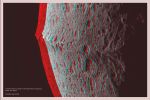
Japetus-3D.jpgJapetus in 3D57 visiteCaption NASA:"This bizarre, equatorial ridge extending across and beyond the dark, Leading Hemisphere of Japetus gives the two-toned Saturnian moon a distinct walnut shape. With red/blue glasses you can check out a remarkable stereo composition of this extraordinary feature -- based on close-up images from this week's Cassini Spacecraft flyby.
In fact, the ridge's combination of equatorial symmetry and scale, about 20 Km wide and reaching up to 20 Km above the surface, is not known to be duplicated anywhere else in our Solar System. The unique feature was discovered in Cassini images from 2004. It appears to be heavily cratered and therefore ancient, but the origin of the equatorial ridge on Iapetus remains a mystery".MareKromium
(6 voti)
|
|
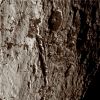
Japetus-N00092243.jpgA VERY deep scar on Japetus' Face (possible natural colors; elab. Lunexit)57 visiteCaption NASA:"N00092243.jpg was taken on September 10, 2007 and received on Earth September 12, 2007. The camera was pointing toward Japetus that, at the time, was approximately 23.404 Km away, and the image was taken using the CL1 and CL2 filters. This image has not been validated or calibrated".MareKromium
(6 voti)
|
|
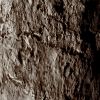
Japetus-N00092239.jpgRough Terrain and Canyons of Japetus (possible natural colors - elab. Lunexit)55 visiteCaption NASA:"N00092239.jpg was taken on September 10, 2007 and received on Earth September 12, 2007. The camera was pointing toward Japetus that, at the time, was approximately 22.984 Km away, and the image was taken using the CL1 and CL2 filters. This image has not been validated or calibrated".MareKromium
(6 voti)
|
|

Japetus-W00035220.jpgJapetus (possible natural colors - elab. Lunexit)56 visiteCaption NASA:"W00035220.jpg was taken on September 10, 2007 and received on Earth September 12, 2007. The camera was pointing toward Japetus that, at the time, was approximately 24.665 Km away, and the image was taken using the CL1 and CL2 filters. This image has not been validated or calibratedMareKromium
(6 voti)
|
|

Japetus-N00091974.jpgThe Mountains of Japetus (Transition Zone; possible natural colors - elab. Lunexit)56 visiteCaption NASA:"N00091974.jpg was taken on September 10, 2007 and received on Earth September 11, 2007. The camera was pointing toward Japetus that, at the time, was approx. 1646 Km away, and the image was taken using the CL1 and CL2 filters. This image has not been validated or calibrated".MareKromium
(6 voti)
|
|

Japetus-N00091998.jpgThe "Cassini Regio" of Japetus (2) - possible natural colors; elab. Lunexit56 visitenessun commentoMareKromium
(6 voti)
|
|
| 2244 immagini su 187 pagina(e) |
 |
|
|
|
|
32 | |
|
|
|
|





