| Piú votate - Saturn: the "Ringed Beauty" and His Moons |

Dione-N00048330.jpgThe Marvelous Face of Dione (possible True Colors; credits: Dr M. Faccin & Lunar Explorer Italia)55 visitenessun commentoMareKromium
(1 voti)
|
|
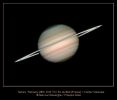
Saturn.jpgThe Lord of the Rings97 visiteCaption NASA, da "NASA - Picture of the Day" del giorno 4 Marzo 2009:"Very good telescopic views of Saturn can be expected in the coming days as the Ringed Planet nears "Opposition" on March 8th, its closest approach to Earth in 2009.
Of course, "Opposition" means opposite the Sun in planet Earth's sky - an arrangement that occurs almost yearly for Saturn. But while Saturn itself grows larger in telescopic images, Saturn's Rings seem to be vanishing as their tilt to our line-of-sight decreases.
In fact, the rings will be nearly invisible, edge-on from our perspective, by September 4, 2009.
Recorded on February 28, this sharp image was made with the 1 meter telescope at Pic Du Midi, a mountain top observatory in the French Pyrenees. The Rings are seen to be tilted nearly edge-on, but remarkable details are visible in the gas giant's cloud bands. The icy moon Tethys appears just beyond the Rings at the lower left".MareKromium
(1 voti)
|
|

Enceladus-PIA10562.jpgCrescent Enceladus55 visiteCaption NASA:"In the boundary between light and shadow on Enceladus, run the Anbar Fossae — a series of narrow, shallow depressions.
Like other features on this geologically active moon, the fossae are named after a location in The Arabian Nights. In this case, they are named after Anbar, Iraq.
Another Iraqi namesake, the Baghdad Sulcus, is one of several warm `Tiger Stripe' fractures at the moon's South Pole from which emanate heat and icy particles (see also PIA11114).
North is up in this image, and Julnar is the largest crater visible in the Northern Hemisphere. One of the women in The Arabian Nights lends her name to this crater which is about 20 Km (about 12 miles) wide.
Fewer craters mark the Southern Hemisphere because they have been erased by later tectonic forces.
The image was taken in Visible Light with the Cassini Spacecraft narrow-angle camera on Dec. 17, 2008. The view was obtained at a distance of approx. 385.000 Km (about 239.000 miles) from Enceladus and at a Phase Angle of 104°.
Image scale is roughly 2,5 Km (about 1,6 miles) per pixel".MareKromium
(1 voti)
|
|

Saturn-N00126685.jpgSaturnian Swirls (False Colors; credits: Lunar Explorer Italia)71 visiteCaption NASA:"N00126685.jpg was taken on December 16, 2008 and received on Earth December 17, 2008. The camera was pointing toward Saturn that, at the time, was approximately 655.610 Km away; the image was taken using the CL1 and CB2 filters.
This image has not been validated or calibrated".MareKromium
(1 voti)
|
|

Enceladus-PIA11133.jpgCrescent Enceladus (possible True Colors; credits: Lunar Explorer Italia)58 visiteCaption NASA:"On Oct. 5, 2008, just after coming within 25 kilometers (15.6 miles) of the surface of Enceladus, NASA's Cassini captured this stunning mosaic as the Spacecraft sped away from this geologically active moon of Saturn.
Craters and cratered terrains are rare in this view of the Southern Region of the moon's Saturn-facing Hemisphere. Instead, the surface is replete with fractures, folds, and ridges — all hallmarks of remarkable tectonic activity for a relatively small world. In this True Colors view, regions that appear blueish are thought to be coated with larger grains than those that appear white or gray.
Portions of the Tiger Stripe Fractures, or Sulci, are visible along the Terminator at lower right, surrounded by a circumpolar belt of mountains. The icy moon's famed jets emanate from at least 8 distinct Source Regions, which lie on or near the Tiger Stripes. However, in this view, the most prominent feature is Labtayt Sulci, the approximately one-kilometer (such as 0,6 miles) deep Northward-trending chasm located just above the center of the mosaic.
Near the top, the conspicuous ridges are Ebony and Cufa Dorsae. This mosaic was created from 28 images obtained at seven footprints, or pointing positions, by Cassini's narrow-angle camera. At each footprint, 4 images using filters sensitive to UltraViolet (UV), Visible (V) and InfraRed light (IR) - spanning wavelengths from 338 to 930 nanometers) were combined to create the individual frames. The mosaic is an orthographic projection centered at 64,49° South Lat. and 283,87° West Long., and it has an image scale of 196 Km (about 122,5 miles) per pixel. The original images ranged in resolution from 180 meters (594 feet) to 288 meters (950 feet) per pixel and were acquired at distances ranging from 30.000 to 48.000 Km (such as from about 18.750 to 30.000 miles) as the Spacecraft receded from Enceladus.
The view was acquired at a Sun-Enceladus-spacecraft, or phase, angle of 73°".MareKromium
(1 voti)
|
|

Enceladus-PIA11108.jpgBaghdad Sulcus84 visiteCaption NASA:"This Cassini image was the 4th 'skeet shoot' narrow-angle image captured during the Oct. 31, 2008, flyby of Saturn's moon Enceladus.
The source region for jet VI (see PIA08385) has been identified. The image was taken with the Cassini Spacecraft narrow-angle camera on Oct. 31, 2008, at a distance of approximately 3417 Km (about 2135 miles) from Enceladus and at a Sun-Enceladus-Spacecraft, or Phase, Angle of 75°.
Image scale is roughly 38 meters (125 feet) per pixel".MareKromium
(1 voti)
|
|

Enceladus-PIA11124.jpgThe Enceladus' "Tiger Stripes"58 visiteCaption NASA:"This Cassini image was the first and highest resolution 'skeet shoot' narrow-angle image captured during the Oct. 31, 2008, flyby of Saturn's moon Enceladus.
The image was taken with the Cassini Spacecraft narrow-angle camera on Oct. 31, 2008, at a distance of approximately 1691 Km (about 1056 miles) from Enceladus and at a Sun-Enceladus-Spacecraft, or Phase, Angle of 78°.
Image scale is roghly 9 meters (29 feet) per pixel.MareKromium
(1 voti)
|
|

Enceladus-PIA11125.jpgDamascus Sulcus67 visiteCaption NASA:"This Cassini image was the eight 'skeet shoot' narrow-angle image captured during the October 31, 2008, flyby of Saturn's moon Enceladus.
The source region for jets II and III (see PIA08385) has been identified. The image was taken with the Cassini Spacecraft narrow-angle camera on Oct. 31, 2008, at a distance of approximately 5568 Km (about 3480 miles) from Enceladus and at a Sun-Enceladus-Spacecraft, or Phase, Angle of 75°.
Image scale is roughly 33 meters (108 feet) per pixel".MareKromium
(1 voti)
|
|
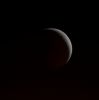
Enceladus-PIA10498.jpgNorthern Craters of Enceladus (natural colors; credits: Lunexit)59 visiteCaption NASA:"This image is part of an observation designed to view the moon's plume of icy particles at a moderately High Phase Angle.
The "Phase Angle" is the angle formed between the Sun, the target being imaged, and the Spacecraft, and it ranges from 0 to 180°. Tiny particles, like those in the plume, brighten substantially at high phase angles.
This view was taken from a vantage point 37° above the Equator of Enceladus (about 504 Km, or approx. 313 miles across). Reflected light from Saturn dimly illuminates the moon's dark side.
The image was taken in visible light with the Cassini Spacecraft narrow-angle camera on Sept. 17, 2008. The view was acquired at a distance of approx. 262.000 Km (such as about 163.000 miles) from Enceladus and at a Phase Angle of 140°.
Image scale is roughly 2 Km (5137 feet) per pixel".MareKromium
(1 voti)
|
|

Enceladus-PIA11123.jpgEnceladus Oct. 9, 2008 Flyby56 visiteCaption NASA:"The image was taken with the Cassini Spacecraft narrow-angle camera on Oct. 9, 2008, from a distance of approx. 47.000 Km (about 29.000 miles) from Enceladus.
Image scale is 279 meters (916 feet) per pixel".MareKromium
(1 voti)
|
|

Rhea-PIA10464.jpgSouthern View of Rhea54 visiteCaption NASA:"Rhea's bright ray crater features prominently in this southern view. The feature is surrounded by bright ejecta — material thrown outward by the impact that formed the crater.
The view looks toward High Southern Latitudes on Rhea from a perspective 49 degrees below the icy moon's Equator. Rhea's South Pole is at bottom center.
The image was taken in visible green light with the Cassini Spacecraft narrow-angle camera on July 29, 2008. The view was acquired at a distance of approx. 413,000 Km (such as about 257.000 miles) from Rhea and at a Sun-Rhea-Spacecraft, or Phase, Angle of 44°.
Image scale is roughly 2 Km (a little more than 1 mile) per pixel".MareKromium
(1 voti)
|
|
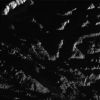
Enceladus-PIA11105.jpgSouth Polar Terrain near Cairo Sulcus61 visiteCaption NASA:"This image is the 1st skeet-shoot image taken during Cassini's very close flyby of Enceladus on Aug. 11, 2008. It captures a Region near the Cairo Sulcus on Enceladus' South Polar Terrain - that is littered with blocks of ice.
The image was taken with the Cassini spacecraft narrow-angle camera on Aug. 11, 2008, a distance of approx. 1288 Km (about 800 miles) above the surface of Enceladus.
Image scale is approximately 10 meters (33 feet) per pixel. MareKromium
(1 voti)
|
|
| 2244 immagini su 187 pagina(e) |
 |
|
|
|
|
172 | |
|
|
|
|





