| |

| Piú votate - Saturn: the "Ringed Beauty" and His Moons |

The Rings from approx. 137.000 Km.jpgThe Rings from app.x 137.000 Km57 visitenessun commento
(8 voti)
|
|

The Rings from approx. 143.000 Km.jpgThe Rings from app.x 143.000 Km57 visitenessun commento
(8 voti)
|
|

Enceladus.jpgEnceladus from Cassini/Huygens56 visitenessun commento
(8 voti)
|
|

Rhea-PIA14605-PCF-LXTT-IPF.jpgRhea (Absolute Natural Colors; credits for the additional process. and color.: Elisabetta Bonora and Marco Faccin - Lunar Explorer Italia)185 visiteCaption NASA:"Cassini looks over the heavily Cratered Surface of Rhea during the Spacecraft's Fly-By of this Saturnian moon that occurred on March 10, 2012. This view is centered on Terrain located at about 58° North Latitude and 84° West Longitude.
This image was taken in visible light with the Cassini spacecraft narrow-angle camera. The view was obtained at a distance of approximately 27.000 miles (such as about 43.000 Km) from Rhea and at a Sun-Rhea-Spacecraft, or Phase, Angle of 67°. Image scale is 827 feet (252 meters) per pixel".MareKromium
(7 voti)
|
|

Hyperion-PIA14580-PCF-LXTT.jpgFeatures of Hyperion (Absolute Natural Colors; credits for the additional process. and color.: Dr Paolo C. Fienga - Lunexit Team) 217 visiteCaption NASA:"The sponge-like Surface of Saturn's moon Hyperion is highlighted in this Cassini portrait, captured during the Spacecraft's Sept. 16, 2011, Fly-By. Hyperion (which is about 168 miles, or approx. 270 Km across) has an irregular shape, and it tumbles through its orbit: that is, it does not spin at a constant rate or in a constant orientation. (A standard reference latitude-longitude system has not yet been devised for this moon.)
Images such as this one extend previous coverage and allow a better inventory of the surface features, the satellite's shape and changes in its spin.
The image was taken in Visible Blue Light with the Cassini Spacecraft narrow-angle camera. The view was obtained at a distance of approx. 55.000 miles (such as about 88.000 Km) from Hyperion and at a Sun-Hyperion-Spacecraft, or Phase, Angle of 37°.
Image scale is roughly 1720 feet (524 meters) per pixel".MareKromium
(7 voti)
|
|

Helene-N00172780-N00172904-GB-LXTT.gifFlying around Helene (a GIF-Movie by Dr Gianluigi Barca - Lunexit Team)225 visitenessun commentoMareKromium
(7 voti)
|
|

Enceladus-PIA12765-PCF-LXTT-NASA.jpgThe Surface of Enceladus (Left Side: Absolute Natural Colors; credits for the additional process. and color.: Dr Paolo C. Fienga - Lunexit Team; Right Side: RAW Frame; credits: NASA/JPL Space Science Institute)337 visiteCaption NASA:"The Cassini Spacecraft surveys the surface of Saturn's moon Enceladus in this image, which shows newly Created Terrain in the upper right meeting older, Cratered Terrain in the lower left.
This view is centered on terrain at about 5° South Latitude and 200° West Longitude.
The image was taken in Visible Light with the Cassini Spacecraft narrow-angle camera on Dec. 21, 2010. The view was acquired at a distance of approx. 25.000 Km (such as 15.525 miles) from Enceladus and at a Sun-Enceladus-Spacecraft, or Phase, Angle of 14°. Image scale is roughly 148 meters (486 feet) per pixel".MareKromium
(7 voti)
|
|

Dione-Mosaic-EB-LXTT.jpgDione (an Image-Mosaic in Natural and Natural but enhanced Colors by Elisabetta Bonora - Lunexit Team)56 visitenessun commentoMareKromium
(7 voti)
|
|
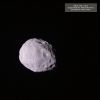
Janus-EB-LXTT.jpgJanus (credits: Elisabetta Bonora - Lunexit Team)55 visitenessun commentoMareKromium
(7 voti)
|
|

Dione-MF.jpgLike a Marble in the Saturnian System: Dione (possible True Colors; credits: Dr M. Faccin - Lunexit Team)55 visitenessun commentoMareKromium
(7 voti)
|
|

The_Sky_of_Saturn-4256690919_1c0b492298_o.gifIn the Sky of Saturn (GIF-Movie; credits: Dr M. Faccin)65 visitenessun commentoMareKromium
(7 voti)
|
|

Enceladus-N00145377-N00145387.gifFountains of Light and possible UFO (GIF-Movie; credits: Dr G. Barca)101 visiteQuesto splendido (e, per l'ennesima volta, assai intrigante) GIF-Movie realizzato dal nostro Dr Barca è stato ottenuto dal montaggio di 11 frames.
Qui di seguito, troverete le captions NASA originali relative a questi 11 quadri ed una nostra (assolutamente approssimativa, ce ne rendiamo conto) interpretazione del fenomeno.
Le captions in questione (inclusive dell'indirizzo http) sono le seguenti:
http://saturn.jpl.nasa.gov/photos/raw/rawimagedetails/index.cfm?imageID=205400
N00145377.jpg was taken on November 01, 2009 and received on Earth November 03, 2009. The camera was pointing toward ENCELADUS at approximately 200,423 kilometers away, and the image was taken using the CL1 and CL2 filters. This image has not been validated or calibrated. A validated/calibrated image will be archived with the NASA Planetary Data System in 2010.
http://saturn.jpl.nasa.gov/photos/raw/rawimagedetails/index.cfm?imageID=205401
N00145378.jpg was taken on November 01, 2009 and received on Earth November 03, 2009. The camera was pointing toward ENCELADUS at approximately 200,130 kilometers away, and the image was taken using the BL1 and CL2 filters. This image has not been validated or calibrated. A validated/calibrated image will be archived with the NASA Planetary Data System in 2010.
http://saturn.jpl.nasa.gov/photos/raw/rawimagedetails/index.cfm?imageID=205402
N00145379.jpg was taken on November 01, 2009 and received on Earth November 03, 2009. The camera was pointing toward ENCELADUS at approximately 199,946 kilometers away, and the image was taken using the RED and CL2 filters. This image has not been validated or calibrated. A validated/calibrated image will be archived with the NASA Planetary Data System in 2010.
http://saturn.jpl.nasa.gov/photos/raw/rawimagedetails/index.cfm?imageID=205403
N00145380.jpg was taken on November 01, 2009 and received on Earth November 03, 2009. The camera was pointing toward ENCELADUS at approximately 199,688 kilometers away, and the image was taken using the CL1 and IR1 filters. This image has not been validated or calibrated. A validated/calibrated image will be archived with the NASA Planetary Data System in 2010.
http://saturn.jpl.nasa.gov/photos/raw/rawimagedetails/index.cfm?imageID=205404
N00145381.jpg was taken on November 01, 2009 and received on Earth November 03, 2009. The camera was pointing toward ENCELADUS at approximately 199,385 kilometers away, and the image was taken using the CL1 and IR3 filters. This image has not been validated or calibrated. A validated/calibrated image will be archived with the NASA Planetary Data System in 2010
http://saturn.jpl.nasa.gov/photos/raw/rawimagedetails/index.cfm?imageID=205405
N00145382.jpg was taken on November 01, 2009 and received on Earth November 03, 2009. The camera was pointing toward ENCELADUS at approximately 198,621 kilometers away, and the image was taken using the CL1 and CL2 filters. This image has not been validated or calibrated. A validated/calibrated image will be archived with the NASA Planetary Data System in 2010.
http://saturn.jpl.nasa.gov/photos/raw/rawimagedetails/index.cfm?imageID=205406
N00145383.jpg was taken on November 01, 2009 and received on Earth November 03, 2009. The camera was pointing toward ENCELADUS at approximately 198,431 kilometers away, and the image was taken using the BL1 and CL2 filters. This image has not been validated or calibrated. A validated/calibrated image will be archived with the NASA Planetary Data System in 2010.
http://saturn.jpl.nasa.gov/photos/raw/rawimagedetails/index.cfm?imageID=205407
N00145384.jpg was taken on November 01, 2009 and received on Earth November 03, 2009. The camera was pointing toward ENCELADUS at approximately 198,090 kilometers away, and the image was taken using the RED and CL2 filters. This image has not been validated or calibrated. A validated/calibrated image will be archived with the NASA Planetary Data System in 201
http://saturn.jpl.nasa.gov/photos/raw/rawimagedetails/index.cfm?imageID=205408
N00145385.jpg was taken on November 01, 2009 and received on Earth November 03, 2009. The camera was pointing toward ENCELADUS at approximately 197,950 kilometers away, and the image was taken using the CL1 and IR1 filters. This image has not been validated or calibrated. A validated/calibrated image will be archived with the NASA Planetary Data System in 2010.
http://saturn.jpl.nasa.gov/photos/raw/rawimagedetails/index.cfm?imageID=205409
N00145386.jpg was taken on November 01, 2009 and received on Earth November 03, 2009. The camera was pointing toward ENCELADUS at approximately 197,494 kilometers away, and the image was taken using the CL1 and IR3 filters. This image has not been validated or calibrated. A validated/calibrated image will be archived with the NASA Planetary Data System in 2010.
http://saturn.jpl.nasa.gov/photos/raw/rawimagedetails/index.cfm?imageID=205410
N00145387.jpg was taken on November 01, 2009 and received on Earth November 03, 2009. The camera was pointing toward ENCELADUS at approximately 197,115 kilometers away, and the image was taken using the CL1 and CL2 filters. This image has not been validated or calibrated. A validated/calibrated image will be archived with the NASA Planetary Data System in 2010.
CONSIDERAZIONI
Come potete verificare Voi stessi, tra il primo frame (ottenuto quando CASSINI si trovava a 200.423 Km da Encelado) e l'ultimo (che vedeva CASSINI a 197.115 Km dalla "Luna di Neve") esiste uno scarto di 3.308 Km i quali, supponendo (la nostra è una valutazione arbitraria, lo sappiamo, ma è comunque una valutazione razionale) che la Sonda viaggiasse assecondando una traiettoria (sostanzialmente) lineare muovendosi nello Spazio ad una velocità media di circa 6 Km/sec., dovrebbero essere stati percorsi in circa 551”.
Se quanto sopra è vero (anche solo approssimativamnte), ne consegue che l'intera sequenza dovrebbe coprire un intervallo di tempo pari a poco più di 9 minuti.
L'oggetto scintillante (il Light Streak) appare in 6 frames (da 00145382 a 00145387), ergo da quando CASSINI era a 198.621 Km di distanza da Encelado e sino a quando la Sonda si è trovata a 197.115 Km dalla Luna Saturniana.
Lo spazio percorso da CASSINI durante l'ottenimento di questi frames è dunque fatto pari a (circa) 1506 Km, il che significa - in termini di tempo - che i frames rappresentativi del Light Streak sono stati ottenuti in un arco di tempo pari a (circa) 4 minuti.
Domanda: date queste premesse, è ammissibile che il Light Streak costituisca l'espressione visibile del transito - nello spazio visuale di CASSINI - di un'altra Luna Saturniana?
Ebbene la risposta è: NO.
Non è possibile poichè, qualora si fosse trattato - ragionando per assurdo - di un'altra Luna Saturniana (il che non è, dato che conosciamo la geometria esistente fra CASSINI ed il Sistema di Saturno durante la ripresa), allora aremmo dovuto supporre una sua Velocità Orbitale semplicemente impossibile (troppo elevata, alle soglie della "Fuga").
Questa riflessione si basa sulla circostanza per cui l'eventuale Luna Saturniana "responsabile" del Light Streak andrebbe collocata, visto il diametro angolare apparente dell'oggetto, ad una distanza pari o superiore ai 3/3,5 milioni di Km da CASSINI.
E, come Vi apparirà ovvio, osservando l'oggetto sconosciuto da una distanza simile, l'effetto "Light Streak", considerati i 4 minuti di intervallo di tempo tra l'inizio e la fine del transito, è un effetto impossibile - laddove riferito al (teorico) movimento di un Corpo Celeste appartenente al Sistema di Saturno (in altre parole: da oltre 3 miloni di Km di distanza, il transito completo di una Luna Saturniana QUALSIASI nello spazio visivo della Sonda CASSINI NON PUO' AVVENIRE in un intervallo di tempo di soli 4 minuti e, per giunta, producendo un fenomeno di aberrazione dell'immagine quale è il Light-Streak).
L'effetto Light Streak, inoltre, non è neppure imputabile ad un movimento brusco della Sonda CASSINI la quale, come il filmato mostra benissimo, procede in modalità steady, senza evidenziare oscillazioni o repentini mutamenti di velocità e/o di rotta.
Un'ultima considerazione (ma certo non la meno importante): se ingrandite il Light Streak, vedrete che esso è formato da un oggetto luminoso in movimento e da un artefatto da sovrasaturazione cagionato dall'oggetto stesso (il quale, ovviamente, è luminosissimo).
Ora, dato e premesso che l'oggetto più luminoso del Sistema Saturniano è proprio Encelado ed Encelado - che, durante questa ripresa, era (relativamente, come ovvio, ma) sicuramente più VICINO a CASSINI di quanto non lo fosse nè lo potesse essere un'altra ed ipotetica Luna Saturniana esistente sullo sfondo ed in transito nel campo visivo dell'Orbiter - NON PRESENTA l'esistenza di artifact da sovrasaturazione (sovraesposizione) su di sè, COME SARA' MAI POSSIBILE GIUSTIFICARE (logicamente e fisicamente, ergo "otticamente") l'esistenza di questi artifacts in un ALTRO OGGETTO CELESTE, DIVERSO DA ENCELADO - ma comunque roccioso -, MOLTO PIU' LONTANO E DI ALBEDO PER FORZA INFERIORE?
Risposta: NON E' POSSIBILE.
Conclusioni: il Light Streak è l'evidenza del transito, nel campo visivo della Sonda CASSINI (ed a distanza indeterminata dalla medesima), di un Oggetto Sconosciuto (OVNI o UFO, come volete) avente una luminosità elevatissima ed una traiettoria, come si può vedere esaminando il GIF ed i singoli frames che lo formano, NON lineare (non regolare).MareKromium
(7 voti)
|
|
| 2244 immagini su 187 pagina(e) |
|
|
|
|
|
16 | |
|
|
|
|
|
|





