| Piú votate - Saturn: the "Ringed Beauty" and His Moons |
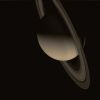
Saturn-W00003104-6-GB-LXTT.jpgThe "Lord of the Rings" (Natural Colors; credits: Dr G. Barca - Lunexit Team)58 visitenessun commentoMareKromium
(2 voti)
|
|

Janus_Epimetheus-N00150026-45.gifSaturnian Runners (GIF-Movie; credits: Elisabetta Bonora)59 visitenessun commentoMareKromium
(2 voti)
|
|

Pandora-091227-W00062229-31.jpgPandora perhaps? (an Image-Mosaic in False Colors, by Elisabetta Bonora - Lunexit Team)57 visitenessun commentoMareKromium
(2 voti)
|
|

Enceladus-PIA12517.jpgA "Pearl of Ice", in the Night of Saturn (possible Natural Colors; credits: Dr Paolo C. Fienga - Lunexit Team)58 visiteCaption NASA:"The Cassini Spacecraft looks toward the South Pole of Enceladus, with a glimpse of Saturns Rings in the distance, during the Spacecraft's close Fly-By of Nov. 2, 2009.
(see PIA08386 to learn more about the active South Pole of Enceladus)
This view looks toward the anti-Saturn side of Enceladus. The Rings have been brightened relative to Enceladus to increase visibility.
The image was taken in Visible Light with the Cassini Spacecraft wide-angle camera on Nov. 2, 2009. The view was acquired at a distance of approx. 10.400 Km (aout 6500 miles) from Enceladus and at a Sun-Enceladus-Spacecraft, or Phase, Angle of 6°.
Image scale is roughly 630 meters (2100 feet) per pixel".MareKromium
(2 voti)
|
|

Japetus-4230263249_738ebb224f_o.jpgIce Deposits on Japetus (Image-Mosaic - Possible Natural Colors; credits: Dr M. Faccin - Lunexit Team)85 visitenessun commentoMareKromium
(2 voti)
|
|
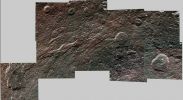
Rhea-Cracks-MF.jpgExtremely Long Tectonic Fracture on Rhea (possible True Colors; credits: Dr M. Faccin - Lunexit Team)59 visitenessun commentoMareKromium
(2 voti)
|
|
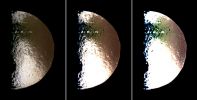
Japetus-PIA11689.jpgColor-Dichotomy on Japetus (False Colors; credits: NASA/JPL/Space Science Institute)61 visiteCaption NASA:"Three different false-color views of Saturn's moon Japetus show the boundary of the so-called global "Color Dichotomy" on the Hemisphere of this moon facing away from Saturn.
Such a "Color Dichotomy", which has been detected in images from the Cassini Imaging Team, is a second global pattern found on Japetus besides the well-known global "Brightness Dichotomy".
This image consists of three panels, each of which was contrast-enhanced in different ways to bring out Surface Features. Minimal enhancement was applied to the image on the left panel while those on the middle and right panels were enhanced more (with contrast increased by factors of two and four, respectively), making them appear brighter and overexposed.
In the case of Japetus' Brightness Dichotomy, the Dark Terrain extends towards its Trailing Side at Equatorial Regions, while the Bright Terrain extends towards Japetus' Leading Side in the Polar Regions (see PIA11116).
In the case of the Color Dichotomy seen here, its boundary is quite well correlated with the boundary between Japetus' Leading and Trailing Hemispheres. At Near-InfraRed wavelengths, the Bright Terrain on the Leading Side is redder than the one visible on the Trailing Side. This pattern is visible in the panel on the left, which uses normal contrast enhancement. The characteristic reddish distribution also appears on the dark material, as seen in the middle and right-hand panels that have been adjusted with even higher contrast.
Indeed, the otherwise uniformly dark material shows different color hues, depending on whether the viewer looks at the Leading vs. the Trailing Side.
Cassini scientists think this effect is caused by material falling onto Japetus from the outer irregular moons of Saturn. (see PIA06145 to learn more)
Images obtained with InfraRed, Green and UltraViolet Spectral Filters (centered at 953, 563 and 338 nanometers, respectively) were combined to create these False Color views. The color seen here is similar to that produced in (red, green and blue) Natural Color views.
North on Japetus is approx. up in these images. The images were taken with the Cassini Spacecraft narrow-angle camera on Oct. 15, 2004. The view was obtained at a distance of approx. 1,2 MKM (such as about 746.000 miles) from Japetus and at a Sun-Japetus-Spacecraft, or Phase, Angle of 88°.
Image scale is roughly 7 Km (a little more than 4 miles) per pixel".MareKromium
(2 voti)
|
|

Saturn-Exagon.jpgThe "Exagon" of Saturn's North Pole58 visiteIt is unclear how an unusual Hexagonal Cloud System that surrounds Saturn's North Pole was created, keeps its shape, or how long it will last.
Originally discovered during the Voyager flybys of Saturn in the 80s, nobody has ever seen anything like it elsewhere in the Solar System.
Although its IR glow was visible previously to the Cassini Spacecraft now orbiting Saturn, over the past year the mysterious Hexagonal Vortex became fully illuminated by Sunlight for the first time during the Cassini's visit. Since then, Cassini has imaged the rotating Hexagon in Visible Light enough times to create this full-view. (the North Pole center was not well imaged and has been excluded)
Planetary scientists are sure to continue to study this most unusual cloud formation for quite some time.MareKromium
(2 voti)
|
|
EnceladusSky-EB-N00148200-N00148225.gifIcy-Jets, Cosmic Rays and other UFO's in the Space of Saturn (GIF-Movie; credits: Elisabetta Bonora)73 visiteDalla nostra Amica e Partner, Elisabetta Bonora, un suggestivo GIF-Movie che ci porta nello Spazio circum-Enceladiano ad ammirare, ancora una volta, assieme alle Fontane di ghiaccio tipiche della "Luna di Neve", una serie di interssantissimi targets: dalla semplice "noise" (i puntini bianchi che tempestano il filmato e che assecondano patterns del tutto casuali) ai noti ed agevolmente riconoscibili "Cosmic Rays", passando dal transito di (MOLTI) altri OVNI - e cioè Oggetti Volanti Non Identificati - i quali, talora in coppia (porzione superiore del quadro), talora singolarmente (porzione inferiore), sfrecciano davanti alle ottiche di CASSINI.
Si tratta di Lune Saturniane? Sinceramente, noi ne dubitiamo...
Grandissimi Complimenti ad Elisabetta Bonora!
Technical Data: from N00148200 up to N00148229 ---> frames taken between 16:00 and 16:35 UTC; from this data we can derive that the average time-lap existing between each exposure was about 1' and 10" (in other words, the captioned pictures were taken about every 70" from each other). During that period of time the speed of the CASSINI Probe varied from 10,23 Km-per-sec up to 10,42 Km-per-sec.MareKromium
(2 voti)
|
|
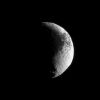
Japetus-PIA11632.jpgCrescent Japetus57 visiteCaption NASA:"Japetus shows off its puzzling light and Dark Terrain.
Scientists continue to investigate the nature of this moon's Surface. Lit Terrain seen here is on the Saturn-facing side of Japetus. North on Japetus is up and rotated 8° to the left. Scale in the original image was approx. 7 Km (about 4,5 miles) per pixel. The image has been magnified by a factor of 2 and contrast-enhanced to aid visibility.
The image was taken in Visible Light with the Cassini Spacecraft narrow-angle camera on Sept. 13, 2009. The view was obtained at a distance of approx. 1,2 MKM (such as about 746.000 miles) from Japetus and at a Sun-Japetus-Spacecraft, or Phase, Angle of 103°".MareKromium
(2 voti)
|
|

SaturnianAurora-PIA11681.jpgSaturnian Aurora66 visitenessun commentoMareKromium
(2 voti)
|
|
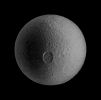
Tethys-PIA11624.jpgPenelope (additional process. by Lunexit)58 visiteCaption NASA:"The Cassini Spacecraft spies the large Penelope Crater on Tethys.
This view looks toward the Trailing Hemisphere of Tethys (approx. 1062 Km - or about 660 miles across). North on Tethys is up.
The image was taken with the Cassini Spacecraft narrow-angle camera on Oct. 14, 2009 using a spectral filter sensitive to wavelengths of UltraViolet Light centered at 338 nanometers.
The view was obtained at a distance of approx. 256.000 Km (about 159.000 miles) from Tethys and at a Sun-Tethys-Spacecraft, or Phase, Angle of 1°.
Image scale is roughly 2 Km (about 1,25 mile) per pixel".MareKromium
(2 voti)
|
|
| 2244 immagini su 187 pagina(e) |
 |
|
|
|
|
154 | |
|
|
|
|





