| Piú votate - Saturn: the "Ringed Beauty" and His Moons |

Saturnian_Inner_Moons-PIA13423.jpgThe (enhanced) "True Colors" of the Saturninan Inner Moons84 visiteThis set of enhanced-color maps made from data obtained by NASA's Cassini Spacecraft show Saturn's moons Mimas, Enceladus, Tethys, Dione and Rhea. The global maps show the colorful splotches and bands on the icy moons' Surfaces that scientists believe came from bombardments large and small.
Icy material sprayed by Enceladus, which makes up the misty E-Ring around Saturn, appears to leave a brighter, blue signature.
The pattern of bluish material on Enceladus, for example, indicates that the moon is covered by the fallback of its own "breath". Enceladean spray also appears to splatter the parts of Tethys, Dione and Rhea that run into the spray head-on in their orbits around Saturn. But scientists are still puzzling over the reason why the Enceladean Frost on the Leading Hemisphere of these moons bears a coral-colored, rather than bluish, tint.
On Tethys, Dione and Rhea, darker, rust-colored reddish hues paint the entire Trailing Hemisphere, or the side that faces backward in the orbit around Saturn. The reddish hues are thought to be caused by tiny particle strikes from circulating Plasma, a gas-like state of matter so hot that atoms split into an ion and an electron, in Saturn's magnetic environment. Tiny, iron-rich "nanoparticles" may also be involved, based on earlier analyses by the Cassini Visual and InfraRed Mapping Spectrometer Team.
Mimas is touched by the tint of Enceladean spray, but it appears on the trailing side of Mimas. This probably occurs because it orbits inside the path of Enceladus, or closer to Saturn, than Tethys, Dione and Rhea.
Mimas and Tethys also sport a dark, bluish band.
The bands match patterns one might expect if their Surface were being irradiated by high-energy electrons that drift in a direction opposite to the flow of Plasma in the magnetic bubble around Saturn. Scientists are still figuring out exactly what is happening on Mimas, but the electrons appear to be zapping the Surface in a way that matches the Pac-Man pattern detected by Cassini's Composite InfraRed Spectrometer.
On Rhea, a unique chain of bluish splotches appears where fresh, bluish ice has been exposed on older crater rims. Cassini imaging scientists recently reported that they did not see evidence in Cassini images of a ring around Rhea. However, scientists analyzing these new enhanced-color maps suggest the crash of orbiting material, perhaps a ring, to the surface of Rhea in the not too distant past, could explain the bluish splotches.
These new maps were made by processing raw images obtained by Cassini's imaging cameras from 2004 to 2009. Scientists analyzed frames shot through Visible-Light, UltraViolet and InfraRed filters. The processing enhanced our views of these moons beyond what could be seen by the human eye.
The maps are in a simple cylindrical projection from 90° South Latitude (bottom) to 90° North Latitude (top). From left to right, they cover 360° to - 2° West Longitude. The Leading Hemisphere appears on the right side of each map and Trailing Hemisphere appears on the left.MareKromium
(2 voti)
|
|

Saturn-PIA12721-PCF-LXTT.jpgThe "Oily Clouds" of Saturn (Natural Colors; credits for the additional process. and color.: Dr Paolo C. Fienga - Lunexit Team)96 visiteCaption NASA:"Clouds in Saturn's Upper Atmosphere create an intricate pattern reminiscent of whipped cream swirling in coffee. The view is centered on a region located about 15° South of the Planet's Equator. The image was taken with the Cassini Spacecraft narrow-angle camera on July 18, 2010 using a spectral filter sensitive to wavelengths of Near-InfraRed light centered at 727 nanometers.
The view was obtained at a distance of approx. 2,4 MKM (abput 1,5 MMs) from Saturn and at a Sun-Saturn-Spacecraft angle of 107°.
Image scale is roughly 14 Km (a little less than 9 miles) per pixel".MareKromium
(2 voti)
|
|

Enceladus-PIA12719-PCF-LXTT.jpgEnceladus (Absolute Natural Colors; credits for the additional process. and color.: Dr Paolo C. Fienga - Lunexit Team)123 visiteCaption NASA:"Two sources of light reveal the dramatic Surface of Saturn's moon Enceladus in this Cassini image in which geologic features give the appearance of the leathery skin of an elephant.
Geologically young and (relatively) smooth Terrain in the Southern and Middle Latitudes gives way to older, Cratered Terrain in the Northern Latitudes of the moon.
Sunlight illuminates the right of the image, and light reflected off Saturn ("Saturnshine") dimly illuminates the left. This view looks toward the Leading Hemisphere of Enceladus.
North on Enceladus is up.
The image was taken in Visible Light with the Cassini Spacecraft narrow-angle camera on April 7, 2010. The view was obtained at a distance of approx. 198.000 Km (such as about 123.000 miles) from Enceladus and at a Sun-Enceladus-Spacecraft, or Phase, Angle of 92°.
Image scale is roughly 1 Km (3300 feet) per pixel".MareKromium
(2 voti)
|
|

Saturn-EB-MF-LXTT.jpgLight Shades of Color... (Natural Colors; credits for te additional process. and color.: Elisabetta Bonora - Lunexit Team)95 visitenessun commentoMareKromium
(2 voti)
|
|

Saturnian_Space-N00161147.jpgCosmic Cleansing... (credits: Dr Marco Faccin - Lunexit Team)112 visiteUn modestissimo omaggio, da parte del Dr Faccin (Titanio44) e da TUTTA Lunexit, a coloro che pensano (pochi ed isolati, ma comunque da tenere e mantenere, se non altro, al loro posto ed a debita distanza da noi) che il Team Lunexit non sia in grado di "ripulire" gli orribili RAW-Frames NASA (ossìa, e tanto per intenderci: quelli rilasciati al Pubblico che li guarda, ammira e commenta MA senza capirli) sino al punto da mostrare quello che essi EFFETTIVAMENTE contengono.
E cioè, spessissimo (come in questo caso), assolutamente nulla. Oppure, allorchè si sa come operare, dove guardare e che cosa cercare, TUTTO.
E come diceva una vecchia pubblicità: "Meditate, gente, meditate...".MareKromium
(2 voti)
|
|

Japetus-PIA12697.jpgJapetus77 visiteCaption NASA:"With its light and dark Surface, Japetus appears almost like a "Yin & Yang" symbol or a comma punctuation mark in this Cassini image. This view looks toward the Saturn-facing side of Japetus. North on is up and rotated 41° to the right.
The image was taken in VL with the Cassini Spacecraft narrow-angle camera on May 12, 2010. The view was acquired at a distance of approx. 1,5 MKM (about 932.000 miles) from Japetus and at Phase Angle of 74°. Image scale is roughly 9 Km (about 5,8 miles) per pixel".MareKromium
(2 voti)
|
|

Japetus-PIA12706.jpgJapetus71 visiteCaption NASA:"Some of Japetus' Dark Surface interrupts the moon's lighter Terrain in this Cassini view.
Scientists continue to investigate the nature of this moon's dark and light Surface. Lit Terrain seen here is on the Trailing Hemisphere of Japetus. North on Japetus is up and rotated 10° to the right.
The image was taken in visible light with the Cassini Spacecraft narrow-angle camera on May 9, 2010. The view was acquired at a distance of approx. 1,3 MKM (about 808.000 miles) from Iapetus and at a Phase Angle of 95°.
Image scale is roughly 8 Km (about 5 miles) per pixel".MareKromium
(2 voti)
|
|

Tethys-HD3D-MF-LXTT.jpgCrescent Tethys (Hi-Def-3D; credits for the additional process.: Dr Marco Faccin - Lunexit Team)59 visitenessun commentoMareKromium
(2 voti)
|
|

Enceladus-N160990-91-93-EB-LXTT.jpgIs there any "Luminescence" over the "Tiger Stripes"? (Superdefinition; credits for the additional process. and color.: Elisabetta Bonora - Lunexit Team)68 visitenessun commentoMareKromium
(2 voti)
|
|
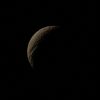
Tethys-PIA12686.jpgCrescent Tethys (Natural Colors; credits for the additional process. and color.: Dr Paolo C. Fienga - Lunexit Team)58 visiteCaption NASA:"Sunlight illuminates the deep cut of Ithaca Chasma on Saturn's moon Tethys. Ithaca Chasma runs roughly North-South for more than about 1000 Km (approx. 620 miles) on Tethys.
Lit Terrain seen here is on the Saturn-facing side of Tethys. North on Tethys is up and rotated 18° to the right.
The image was taken in visible light with the Cassini Spacecraft narrow-angle camera on June 2, 2010. The view was obtained from a distance of approx. 477.000 Km (about 296.000 miles) from Tethys and at a Sun-Tethys-Spacecraft, or Phase, Angle of 127°.
Image scale is roughly 3 Km (a little less than 2 miles) per pixel".MareKromium
(2 voti)
|
|
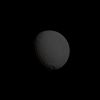
Tethys-PIA12676.jpgTethys (Natural Colors; credits for the additional process. and color.: Dr Paolo C. Fienga - Lunexit Team)58 visiteCaption NASA:"The Cassini Spacecraft looks toward an area between the Trailing Hemisphere and anti-Saturn side of Tethys and spies the large crater Melanthius near the moon's South Pole and, in this picture, near the Terminator.
Melanthius is about 250 Km (approx. 155 miles) wide on Tethys. North on Tethys is up and rotated 19° to the right.
The image was taken in Visible Light with the Cassini Spacecraft narrow-angle camera on April 29, 2010. The view was acquired at a distance of approx. 670.000 Km (such as about 416.000 miles) from Tethys and at a Sun-Tethys-Spacecraft, or Phase, Angle of 41°.
Image scale is roughly 4 Km (approx. 2,5 miles) per pixel".MareKromium
(2 voti)
|
|

Helene-PIA12653.jpgHelene61 visitenessun commentoMareKromium
(2 voti)
|
|
| 2244 immagini su 187 pagina(e) |
 |
|
|
|
|
152 | |
|
|
|
|





