| Piú votate - Saturn: the "Ringed Beauty" and His Moons |

Saturn-PIA12824.jpgSaturnian Storm (Natural Colors; credits: NASA/JPL-Caltech/Space Science Institute)68 visiteCaption NASA:"The huge storm churning through the Atmosphere in Saturn's Northern Hemisphere overtakes itself as it encircles the Planet in this Natural Colors view from NASA's Cassini Spacecraft.
This picture, captured on Feb. 25, 2011, was taken about 12 weeks after the storm began, and the clouds by this time had formed a tail that wrapped around the Planet. Some of the clouds moved south and got caught up in a current that flows to the East (to the right) relative to the storm head. This tail, which appears as slightly blue clouds South and West (left) of the storm head, can be seen encountering the storm head in this view.
This storm is the largest, most intense storm observed on Saturn by NASA's Voyager or Cassini Spacecraft. It is still active today. As scientists have tracked this storm over several months, they have found it covers 500 times the area of the largest of the Southern Hemisphere storms observed earlier in the Cassini Mission (see PIA06197).
The shadow cast by Saturn's Rings has a strong seasonal effect, and it is possible that the switch to powerful storms now being located in the Northern Hemisphere is related to the change of seasons after the Planet's August 2009 Equinox.
Huge storms called Great White Spots have been observed in previous Saturnian years (each of which is about 30 Earth years), usually appearing in late Northern Summer. Saturn is now experiencing early Northern Spring, so this storm, if it is a Great White Spot, is happening earlier than usual. This storm is about as large as the largest of the Great White Spots, which also encircled the planet but had latitudinal sizes ranging up to approx. 20.000 Km (roughly 12.000 miles). The Voyager and Cassini Spacecrafts were not at Saturn for previous Great White Spot appearances.
The storm is a prodigious source of radio noise, which comes from lightning deep in the Planet's Atmosphere. The lightning is produced in the water clouds, where falling rain and hail generate electricity. The mystery is why Saturn stores energy for decades and releases it all at once. This behavior is unlike that at Jupiter and Earth, which have numerous storms going on at all times.
This view looks toward the sunlit side of the Rings from just above the Ring-Plane. Images taken using red, green and blue spectral filters were combined to create this Natural Color view. The images were acquired with the Cassini Spacecraft wide-angle camera at a distance of approx. 1,4 MMs (such as about 2,2 MKM) from Saturn. Image scale is roughly 80 miles (128,7472 Km) per pixel".MareKromium
(2 voti)
|
|

Janus-PCF-LXTT.jpgJanus (Absolute Natural Colors; credits for the additional process. and color.: Dr Paolo C. Fienga - Lunexit team)93 visitenessun commentoMareKromium
(2 voti)
|
|

Enceladus-PIA12762-PCF-LXTT.jpgFountains of Light (Enhanced Natural Colors; credits for the additional process. and color.: Dr Paolo C. Fienga - Lunexit Team)149 visiteCaption NASA:"A crescent Enceladus, imaged from its night side, shows off spectacular Water Ice Plumes emanating from its South Polar Regions. This image was captured at a Phase, or Sun-Enceladus-Spacecraft, angle of 157° so that Sunlight would reveal the backlit Plumes. Terrain near the South Pole is now dark as Spring has come to the Northern Hemisphere of the Celestial Body. Lit Terrain seen here is on the Trailing Hemisphere of Enceladus. North is up.
The image was taken in Visible Light with the Cassini Spacecraft narrow-angle camera on Jan. 30, 2011. The view was obtained at a distance of approx. 228.000 Km(such as 141.588 miles) from Enceladus. Image scale is roghly 1 Km (0,621 miles) per pixel".MareKromium
(2 voti)
|
|

Phoebe-PIA07775.jpgPhoebe's Global Digital Map130 visiteCaption NASA:"This Global Digital Map of Saturn's moon Phoebe was created using data taken during the Cassini Spacecraft's close Fly-By of the small moon that occurred in June 2004. The Map is an "Equidistant Projection" and has a scale of 233 meters (764 feet) per pixel.
The Mean Radius of Phoebe used for projection of this Map is approx. 107 Km (such as 66,447 miles). The resolution of the Map is 8 pixels per degree".MareKromium
(2 voti)
|
|

Phoebe-PIA07795.jpgPhoebe: Cartographic Projections (Mercator Projection)141 visiteCaption NASA:"This Map is part of a group release of Mercator and Polar Stereographic Projections of Saturn's moon Phoebe.
A "Mercator Projection" is a map that preserves directions on a body, but distorts sizes, especially near the Poles. This Global Digital Map of Phoebe was created using data taken during Cassini's close Fly-By of the small moon that occurred in June 2004.
The mosaic is projected into the Mercator Projection within the Latitude range from 57° South to 57° North; the Stereographic Projections represent Latitudes greater and lower than + or - 55°. Thus, this map meets the standard scale of 1:1.000.000, as recommended by the U.S.G.S.
The projections are conformal, the quadrangles overlap and the scale of the Poles was chosen such that the circumference of the Stereographic Projection is identical to the width of the Mercator Projection.
The nomenclature was proposed by the Cassini imaging team and has yet to be validated by the International Astronomical Union. Resolution of the digital mosaic is 233 meters (764 feet) per pixel, although the highest resolution images have resolutions of 70 meters (230 feet) per pixel. The Mean Radius of Phoebe is approx. 107 Km (such as 66,447 miles)".MareKromium
(2 voti)
|
|
Phoebe-PIA06065.gifRevolving Phoebe (a GIF-Movie by NASA/JPL/Space Science Institute)130 visiteCaption NASA:"Phoebe rotates through nearly one full rotation in this GIF sequence of 9 frames, taken on Cassini's approach to the small Celestial Body on June, 10, 2004. Phoebe rotates on its axis once every 9 hours and 16 minutes; this sequence spans 8 hours and 14 minutes; all 360° of Longitude on Phoebe are visible in the sequence.
The Surface is clearly covered by impact craters of a wide range of sizes, up to 40% of the diameter of the moon, creating rugged topography, illustrated dramatically along the Terminator and Limb.
The images that make up this sequence were obtained at a Sun-Phoebe-Spacecraft angle of 87° and from distances ranging from 877.453 Km (544.898 miles) to 688.924 Km (427,822 miles). The image scale in this sequence ranges from 5,3 to 4,1 Km per pixel. To aid visibility, the images were magnified three times via linear interpolation; no contrast enhancement was performed".MareKromium
(2 voti)
|
|

Saturnian_Sky-N00166739-47-EB-LXTT.jpgSaturnian Sky (Superdefinition - credits for the additional process.: Elisabetta Bonora - Lunexit Team)57 visitenessun commentoMareKromium
(2 voti)
|
|

Dione_and_Tethys-MF-LXTT.jpgNightlights in the Sky of Saturn (Natural Colors; credits for the additonal process. and color.: Dr Marco Faccin - Lunexit Team)88 visitenessun commentoMareKromium
(2 voti)
|
|

Hyperion-MF-PCF-LXTT-1.jpgHyperion and its Surfacing Hydrocarbons (Absolute Natural Colors; credits for the additional process. and color.: Drr Marco Faccin and Paolo C. Fienga)86 visiteNota: questa colorizzazione "Naturale Assoluta" (e cioè che risponde a quello che, a nostro parere, un essere umano vedrebbe se si trovasse a bordo della Sonda CASSINI) è un prodotto UNICO ed ESCLUSIVO del "Lunexit Team". MareKromium
(2 voti)
|
|

Hyperion-MF-PCF-LXTT-3.jpgHyperion and its Surfacing Hydrocarbons (Absolute Natural Colors; credits for the additional process. and color.: Elisabetta Bonora and Paolo C. Fienga)74 visiteNota: questa colorizzazione "Naturale Assoluta" (e cioè che risponde a quello che, a nostro parere, un essere umano vedrebbe se si trovasse a bordo della Sonda CASSINI) è un prodotto UNICO ed ESCLUSIVO del "Lunexit Team". MareKromium
(2 voti)
|
|
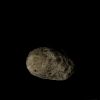
Hyperion-MF-PCF-LXTT-6.jpgHyperion and its Surfacing Hydrocarbons (Absolute Natural Colors; credits for the additional process. and color.: Elisabetta Bonora and Paolo C. Fienga)66 visiteNota: questa colorizzazione "Naturale Assoluta" (e cioè che risponde a quello che, a nostro parere, un essere umano vedrebbe se si trovasse a bordo della Sonda CASSINI) è un prodotto UNICO ed ESCLUSIVO del "Lunexit Team". MareKromium
(2 voti)
|
|

Rhea-EB-LXTT2.jpgLarge Crater and Crater Clusters (Absolute Natural Colors; credits for the additional process. and color.: Elisabetta Bonora and Paolo C. Fienga - Lunexit Team)60 visitenessun commentoMareKromium
(2 voti)
|
|
| 2244 immagini su 187 pagina(e) |
 |
|
|
|
|
151 | |
|
|
|
|





