| Piú votate - Saturn: the "Ringed Beauty" and His Moons |
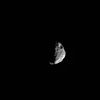
Epimetheus-N00037090.jpgEpimetheus, from about 87.000 Km56 visitenessun commento
(3 voti)
|
|

Enceladus-N00037086.jpgLights on Enceladus?57 visiteQuesta volta, nella zona di Encelado su cui regna la notte, non riusciamo proprio a distinguere alcun rilievo, così come era invece avvenuto nei frames precedenti (siamo a circa 44.546 Km dal Pianeta adesso).
Tuttavia, a ben guardare, ci sembra di vedere delle sorgenti luminose puntiformi nella notte di Encelado.
Difetto del frame, raggi cosmici o che cosa? Noi non lo sappiamo, ma alcuni di quei "punti luminosi" non sembrano nulla di tutto ciò...
(3 voti)
|
|

Enceladus-N00037080.jpgGood-bye Enceladus! (2)57 visitenessun commento
(3 voti)
|
|

Enceladus-N00037076.jpgGood-bye Enceladus! (1)59 visiteEncelado è ormai una splendida "falce" nel cielo e questo ci fa capire che la Sonda Cassini ha ormai superato il suo punto di maggior vicinanza a questo mondo di ghiaccio e di neve, i cui caratteri superficiali terranno impegnati Scienziati e Ricercatori per mesi (o forse anni...).
Cassini si allontana rapidamente ed ora si sta proiettando, ancora una volta, verso lo Spazio di Saturno.
Ma ritornerà...
(3 voti)
|
|

Enceladus-N00037052.jpgEnceladus fly-by (17) - from approx. 15.000 Km57 visiteUna serie di grandi crepacci che mostrano la presenza di ulteriori rilievi - alcuni interpretabili, usando qualche ingrandimento, altri completamente inesplicabili - sui loro fianchi e sul fondo. Siamo ancora a 15.000 Km di distanza dalla superficie di Encelado, ma la quantità di particolari che ora emerge ci permette di stabilire una certa similitudine fra quanto vediamo in questo frame e le "Chevron Grooves" di Miranda (una delle Grandi Lune di Urano). Molto curiosi (e cerchiati in grigio) i "blocchi squadrati" che vediamo sul lato Dx dell'immagine e che ci ricordano un pò (non tanto nella forma, quanto nella loro - apparente - geologia di base) i rilievi della Maggiore delle Lune di Urano: Ariel.
(3 voti)
|
|

Epimetheus-PIA07531.jpgEpimetheus57 visiteCaption NASA originale:"Cassini continues to survey the small worlds that orbit near Saturn's Rings, capturing this view of Epimetheus.
The moon's lumpy, irregular topography can be seen here, along with several impact craters. The image was taken in visible light with the Cassini spacecraft narrow-angle camera on May 20, 2005, at a distance of about 345.000 Km from Epimetheus and at a phase angle of 26°.
Resolution in the original image was 2 Km per pixel.
The view was also magnified by a factor of two and contrast-enhanced to aid visibility of the moon's surface".
(3 voti)
|
|

DioneandEpimetheus-PIA07525.jpgDione and Epimetheus60 visiteCaption NASA originale:"Cassini looks toward Saturn's night side in this view, capturing a glimpse of Dione's tortured surface in the foreground and a far-off view of Epimetheus, beyond Saturn. The spacecraft was just 1/10th of a degree above the ring-plane when this image was taken.
Parts of Dione's surface have been stretched and ripped apart by tectonic forces. Some of these faults are visible here, as is a large impact basin (not seen in NASA Voyager spacecraft images) near the moon's South Pole. Although this crater's diameter has not yet been measured by imaging scientists, it appears to be wider than 250 Km, which would make it the largest impact structure yet identified on this moon.
The image was taken in visible light with the Cassini spacecraft narrow-angle camera on May 5, 2005, at a distance of approx. 910.000 Km from Dione; 1,28 MKM from Epimetheus and 1,42 MKM from Saturn. The image scale is 5 Km per pixel on Dione and 9 Km per pixel on Epimetheus".
(3 voti)
|
|

Dione-PIA07511.jpgDione unmagnified57 visiteCaption NASA originale:"This unmagnified view of Saturn's moon Dione shows the moon's bright, wispy terrain, along with several large impact craters. Two of the craters have central peaks. North on Dione is up.
This view shows principally the anti-Saturn hemisphere on Dione.
It is now clear why low-resolution NASA Voyager spacecraft images gave the impression that the Dionian wispy terrain might be bright ice deposits: HR Cassini images have shown these to be complex systems of braided (to braid--->intrecciare) tectonic fractures.
The image was taken in visible light with the Cassini spacecraft narrow-angle camera on April 25, 2005, at a distance of approx. 2,8 MKM (such as approx 1,7 MMs) from Dione and at a phase angle of 60°.
The image scale is 17 Km (approx. 11 miles) per pixel".
(3 voti)
|
|

Epimetheus-PIA06640.jpgEpimetheus from 1,8 MKM88 visiteCaption NASA originale:"Small and asteroid-like in appearance, Epimetheus is seen here with Saturn's nearly edge-on rings in the distance. Epimetheus (that has been defined by NASA as a "rubble" moon - rubble----->macerie/detriti) has a mean density that is less than that of water, suggesting that it might be somewhat porous.
The image was taken in visible light with the Cassini spacecraft narrow-angle camera on March 12, 2005, at a distance of approx. 1,8 MKM (such as 1,1 MMs) from Saturn and at a phase angle of 90°. Resolution in the original image was 10 Km per pixel. The image has been contrast-enhanced and magnified by a factor of two to aid visibility".
(3 voti)
|
|
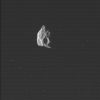
Epimetheus-N00030856.jpgEpimetheus, from approx. 75.000 Km60 visiteLa forma di Epimetheus, assolutamente irregolare, ci suggerisce una sua possibile origine "traumatica": forse si tratta, infatti, di un semplice frammento di un corpo celeste più grande il quale, in tempi lontani, andò in pezzi a seguito di una collisione con un grande asteroide. Non è neppure da escludere che Epimetheus sia un residuo di cospicue dimensioni della collisione che generò gli stessi Anelli di Saturno e questa ipotesi, laddove (in un futuro) venisse verificata ed accolta, ci spiegherebbe, in parte, le cause dell'attuale posizione e del ruolo di questa luna negli equilibri del complesso Sistema Saturniano. La superficie di Epimetheus, fortemente craterizzata, ci suggerisce un'età molto avanzata per questa luna; in primo piano, poi, notiamo un grande cratere da impatto che ricorda, per forma e dimensioni, lo Stickney Crater di Phobos.
(3 voti)
|
|

Epimetheus-N00030849.jpgEpimetheus, from approx. 73.000 Km59 visiteE' inevitabile: una dopo l'altra, grazie alla permanenza della Sonda Cassini nel "ricco" Spazio di Saturno, tutte le lune del Gigante Anellato, prima o poi, vengono 'sfiorate' e riprese da angoli visuali sempre migliori. Anche la misteriosa e minuscola Epimetheus non è sfuggita a questa regola: siamo solo a 73.000 Km da questa piccolissima luna (uno spazio davvero risibile, nella logica delle distanze cosmiche) e, sebbene la qualità del frame non sia perfetta - notate gli innumerevoli artefatti fotografici che costellano l'immagine e che verranno "ripuliti" solo in un secondo momento - già possiamo farci un'idea pittosto precisa delle caratteristiche e, quindi, della storia di questo corpo celeste.
(3 voti)
|
|

Epimetheus-PIA06614.jpgEpimetheus, from approx. 1,1 MKM58 visiteCaption NASA originale:"Epimetheus is one of Saturn's "co-orbital moons" because it shares nearly the same orbit as Janus at a distance of approximately 151.000 Km (such as 94.000 miles) from Saturn. Epimetheus is about 116 Km (72 miles) across while Janus is 181 Km (113 miles) across.
The image was taken in visible light with the Cassini spacecraft narrow-angle camera on Feb. 18, 2005, at a distance of approx. 1,1 MKM (684,000 miles) from Epimetheus and at a phase angle of 96°. Resolution in the original image was 6 Km (4 miles) per pixel. The image has been contrast-enhanced and magnified by a factor of four to aid visibility".
(3 voti)
|
|
| 2244 immagini su 187 pagina(e) |
 |
|
|
|
|
146 | |
|
|
|
|





