| Piú votate - Saturn: the "Ringed Beauty" and His Moons |

Janus-N00066645.jpgMoments of "Janus" (3)59 visitenessun commento
(3 voti)
|
|

Janus-N00066628.jpgMoments of "Janus" (2)57 visitenessun commento
(3 voti)
|
|

Janus-N00066626.jpgMoments of "Janus" (1)59 visitenessun commento
(3 voti)
|
|

Saturn-W00018136.jpgFrom "A" to "E"!58 visitenessun commento
(3 voti)
|
|

Saturn-PIA08272.jpgA "Clash of Clouds" in Saturn's upper atmosphere57 visiteCaption NASA originale:"The Cassini spacecraft presents a tempestuous scene in which the clouds of Saturn's bright Equatorial Region entwine with those in darker, Southerly Latitudes.
The image was taken using a filter sensitive to wavelengths of infrared light centered at 890 nanometers. The image was acquired with the Cassini spacecraft wide-angle camera on Aug. 16, 2006 at a distance of approx. 289.000 Km (about 180.000 miles) from Saturn. Image scale is roughly 14 Km (such as about 8 miles) per pixel".
(3 voti)
|
|
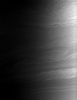
Saturn-PIA08263.jpgSaturn's Terminator56 visiteCaption NASA originale:"Saturn's clouds billow and swirl in the turbulent zones of shear between Eastward- and Westward-flowing jets. This view looks toward the Terminator on Saturn, where night gives way to day.
The image was taken using a spectral filter sensitive to wavelengths of infrared light centered at 728 nanometers.
The image was obtained with the Cassini spacecraft wide-angle camera on Aug. 16, 2006 at a distance of approx. 338.000 Km (about 210.000 miles) from Saturn and at a Sun-Saturn-spacecraft, or phase, angle of 67°.
Image scale is roughly 17 Km (about 10 miles) per pixel".
(3 voti)
|
|

Saturn-PIA08270.jpgNight-flight around Saturn...58 visiteCaption NASA originale:"Saturn's shadow cuts sharply across the Rings in this remarkable night side view.
The Planet's Northern Latitudes are in darkness in the upper portion of this scene, while the Southern reaches are bathed in Ringshine. On the left, Sunlight filters through the Rings, and on the right the Rings are blocking the reflected Ringshine in the shadow of Saturn. The overexposed, sunlit crescent at lower left marks the transition from Saturnian day to night.
Mimas hovers below center - a tiny bauble, ornamenting the Ringed Giant.
The image was taken in visible green light with the Cassini spacecraft wide-angle camera on August 19, 2006 at a distance of approx. 1,5 MKM (about 1 MMs) from Mimas and 1,7 MKM (about 1,1 MMs) from Saturn.
Image scale is roughly 92 Km (about 57 miles) per pixel on Mimas and approx. 103 Km (about 64 miles) on Saturn".
(3 voti)
|
|

Saturn-PIA08271.jpgThe "Ringed Beauty" in natural colors57 visiteCaption NASA originale:"This moody true color portrait of Saturn shows a world that can, at times, seem as serene and peaceful as it is frigid and hostile. Saturn's unlit-side Rings embrace the Planet while their shadows caress the Northern Hemisphere.
The view was obtained from about 15° above the Ring-Plane as Cassini continued its climb to higher orbital inclinations.
Images taken using red, green and blue spectral filters were combined to create this natural color view. The image was acquired with the Cassini spacecraft wide-angle camera on Aug. 18, 2006 at a distance of approximately 1,3 MKM (such as about 800.000 miles) from Saturn and at a Sun-Saturn-spacecraft, or phase, angle of 137°.
Image scale is roughly 76 Km (about 47 miles) per pixel".
(3 voti)
|
|

Saturn-PIA08734.jpgInner Warmth, Hidden Light...57 visiteCaption NASA originale:"This false-color image of Saturn shows Ring shadows running across the upper portion of the Planet, and sunlight illuminating the lower portion of the Planet.
The upper area, in the Ring shadow, would be black in visible light but glows red in infrared because Saturn is warm inside. This light shines out through the clouds, giving scientists a look at some of Saturn's interesting atmospheric structure.
This image was taken on June 30, 2006, with Cassini's VIMS. It was constructed from images taken at wavelengths of 0,91 microns (blue); 2,25 microns (green) and at 5,01 (red).
The distance from Cassini to Saturn's center in this image is aspprox. 335.000 Km (about 208.159 miles)".
(3 voti)
|
|

Daphnis-PIA07809-1.jpgDaphnis and Keeler (context image)57 visiteCaption NASA originale:"Daphnis, the tiny moon that inhabits the Keeler Gap in the outer edge of Saturn's A-Ring, is captured here in remarkable detail with its entourage of waves.
The edge waves are especially bright in places where Ring material piles up, a characteristic that has been seen in computer simulations of the interactions between gap-embedded moons and the surrounding ring particles.
The 7 Km-wide (about 4,3 mile) moon appears to have an unusual shape in this image. It is not simply a bright dot, but instead exhibits a dimmer component immediately to its left. Though it is far from certain, this component may be Ring material caught in the act of accreting onto Daphnis, a process currently being studied by imaging scientists.
The image was taken in visible light with the Cassini spacecraft narrow-angle camera on Sept. 9, 2006, at a distance of approx. 422.000 Km (such as about 262.000 miles) from Saturn. Image scale is roughly 2 Km (a little more than 1 mile) per pixel".
(3 voti)
|
|
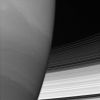
Saturn-PIA08265.jpgThe limb of Saturn58 visiteCaption NASA originale."Saturn's B and C-Rings disappear behind the immense Planet. Where they meet the limb, the Rings appear to bend slightly owing to upper-atmospheric refraction.
Crenulations - such as the irregularly wavy or serrated features - in the Planet's clouds denote the locations of turbulent belt/zone boundaries.
The image was taken using a spectral filter sensitive to wavelengths of infrared light centered at 728 nanometers. The view was obtained with the Cassini spacecraft wide-angle camera on Aug. 16, 2006 at a distance of approx. 256.000 Km (about 159.000 miles) from Saturn. Image scale is roughly 12 Km (about 7 miles) per pixel".
(3 voti)
|
|

Tethys-N00065796.jpgTethys (HR)56 visitenessun commento
(3 voti)
|
|
| 2244 immagini su 187 pagina(e) |
 |
|
|
|
|
137 | |
|
|
|
|





