| Piú votate - Saturn: the "Ringed Beauty" and His Moons |

Dione-PIA12729-PCF-LXTT.jpgDione (Natural Colors; credits for the additional process. and color.: Dr Paolo C. Fienga - Lunexit Team)82 visitenessun commentoMareKromium
(3 voti)
|
|

Dione-EB-LXTT4.jpgDeep inside the "Scars" of Dione (possible Natural Colors; credits for the additional process. and color.: Elisabetta Bonora - Lunexit Team)82 visitenessun commentoMareKromium
(3 voti)
|
|

Dione-EB-LXTT5.jpgDeep inside the "Scars" of Dione (possible Natural Colors; credits for the additional process. and color.: Elisabetta Bonora - Lunexit Team)90 visitenessun commentoMareKromium
(3 voti)
|
|

Dione-PIA12711.jpgA beautiful crescent Dione (with a "Small Companion", maybe...)83 visiteCaption NASA:"A thin crescent of highly Cratered Terrain is illuminated on Saturn's third largest moon, Dione. Lit Terrain seen here is on the Saturn-facing side of Dione. North is up.
The image was taken in Visible Light with the Cassini Spacecraft narrow-angle camera on May 17, 2010.
The view was acquired at a distance of approx. 394.000 Km (about 245.000 miles) from Dione and at a Sun-Dione-Spacecraft, or Phase, Angle of 151°.
Image scale is roughly 2 Km (about 1,2 miles) per pixel".MareKromium
(3 voti)
|
|

Dione-N00160857-60-EB-LXTT.jpgJust a "Slice" of Dione (Superdefinition and Natural Colors; credits for the additional process. and color.: Elisabetta Bonora - Lunexit Team)66 visitenessun commentoMareKromium
(3 voti)
|
|

Dione-N160934-48-EB-PCF-LXTT.jpgDione (an Image-Mosaic in Absolute Natural Colors by Elisabetta Bonora - Lunexit Team)64 visitenessun commentoMareKromium
(3 voti)
|
|

Saturn-W00064795-5-6-EB-LXTT.jpgFather and Son n. 2 (An Image-Mosaic in Natural Colors; credits for the additional process. and color.: Elisabetta Bonora - Lunexit Team)93 visitenessun commentoMareKromium
(3 voti)
|
|
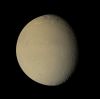
Enceladus-PIA12673.jpgEnceladus (possible Natural Colors; credits for the additional process. and color.: Dr Paolo C. Fienga - Lunexit Team)57 visiteCaption NASA:"The Cassini Spacecraft examines old and new terrain on Saturn's fascinating Enceladus, a moon where jets of water ice particles and vapor spew from the South Pole.
Newly created terrain is at the bottom, in the center and on the left of this view. Older, cratered terrain is on the right. See PIA11685 for another view of this area and more information about its geology. This image was captured during Cassini's Nov. 21, 2009, flyby of the moon. This view looks toward the Leading Hemisphere of Enceladus.
North on Enceladus is up and rotated 3° to the right.
The image was taken in Visible Light with the Cassini Spacecraft narrow-angle camera. The view was obtained at a distance of approx. 133.000 Km (such as about 83.000 miles) from Enceladus and at a Sun-Enceladus-Spacecraft, or Phase, Angle of 46°.
Image scale is roughly 796 meters (2612 feet) per pixel".MareKromium
(3 voti)
|
|
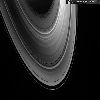
The_Rings-W00064666-W00064680-GB-LXTT.gifClosing-up on the Rings (a GIF-Movie by Dr Gianluigi Barca - Lunexit Team)61 visitenessun commentoMareKromium
(3 voti)
|
|

Daphnis-N00156646-48-EB-LXTT.jpgGravitational Pulls from Daphnis (an Image-Mosaic in Natural Colors by Elisabetta Bonora - Lunexit Team)61 visitenessun commentoMareKromium
(3 voti)
|
|

The_Rings-N00154606-610-EB-LXTT.jpgLike a "Neon-Light"! (an Image-Mosaic by Elisabetta Bonora - Lunexit Team)104 visitenessun commentoMareKromium
(3 voti)
|
|

Rhea-PIA12648.jpgGibbous Rhea (Natural Colors; credits for the additional process. and color.: Dr Paolo C. Fienga - Lunexit Team)133 visiteCaption NASA:"The Cassini Spacecraft looks toward the cratered plains of the Trailing Hemisphere of Rhea.
Some of the moon's fractures, appearing like wispy bright lines, can be seen on the left of the image. Rhea's North Pole is up and rotated 3° to the right.
This Celestial Body is about 1528 Km (approx. 949 miles) across.
The image was taken in Visible Light with the Cassini Spacecraft wide-angle camera on Nov. 21, 2009. The view was obtained at a distance of approx. 30.000 Km (about 19.000 miles) from Rhea and at a Sun-Rhea-Spacecraft, or Phase, Angle of 27°.
Image scale is roughly 2 Km (a little more than 1 mile) per pixel.
MareKromium
(3 voti)
|
|
| 2244 immagini su 187 pagina(e) |
 |
|
|
|
|
118 | |
|
|
|
|





