| Piú votate - Deep Sky Objects |

Magellan Large Cloud.jpgThe Large Cloud of Magellan87 visite"...Il Tempo e la Distanza sono concetti molto più cari (e più chiari) a Poeti e Filosofi, piuttosto che ad Astronomi e Matematici..."
Paolo C. Fienga
(12 voti)
|
|
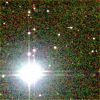
Gliese 570 D-1.jpgGliese 570 D90 visite"...Impia sub dulci melle venena latent..."
(Ovidio)
"...Sotto il dolce miele, malvagi si nascondono i veleni..."
(12 voti)
|
|

NGC-2207-PIA08098.jpgNGC 2207 and IC 2163 (Colliding Galaxies)75 visite"...I'm your Eyes in the Sky,
Looking at you,
I can see your mind..."
Alan Parsons Project - "Eyes in the Sky"
(12 voti)
|
|

Extreme Planets-PIA08042_modest.jpgDeep Space...115 visite"...Tristis eris si solus eris..."
(Ovidio)
"...Sarai triste se sarai solo..."
(12 voti)
|
|

NGC-0869_and_0884.jpgNGC 869 ("h" Persei) and NGC 884 ("chi" Persei)82 visite"...C'è solo un interrogativo che mi fa davvero impazzire, ed è questo: sono io quello che è pazzo, o lo sono tutti quelli che mi circondano?..."
Albert Einstein
(12 voti)
|
|

Redshift-PIA02038.jpgIn the midst of Time...73 visiteLike great friends, galaxies stick together. Astronomers using NASA's SST have spotted a handful of great galactic "pals" bonding back when the universe was a mere 4,6 BY old (note: the universe is believed to be 13,7 BY old!).
Collectively, these great galactic buddies are called "Galaxy Clusters".
A typical galaxy cluster can contain hundreds of galaxies and trillions of stars. In this false-color composite, some of the oldest galaxy clusters in the universe pose for SST's infrared array camera. The individual galaxies that make up the distant clusters are shown as red dots in all images.
The green blobs are Milky Way stars along the line of sight, and the blue specks are faint galaxies at various distances along the line of sight. The green and blue data are from a visible-light, ground-based telescope.
The cluster at 9,1 BLY away (lower right panel) is currently the most distant galaxy cluster ever detected.
These images are three-color composites, in which blue represents visible light with a wavelength of 0.4 microns, and green indicates visible light of 0.8 microns. The visible data were captured by the ground-based Mosaic I camera at the Kitt Peak National Observatory in Tucson, Ariz. Red represents infrared light of 4.5 microns, captured by Spitzer's infrared array camera.
(12 voti)
|
|

Eta Carinae - HST-1.jpgEta Carinae (HR-HST)80 visite"...Si charta cadit, tota scientia vadit..."
(anonimo medioevale)
"...Se la carta cade, la scienza evade..."
Frase fortemente ironica usata per indicare coloro che non sono capaci né di improvvisare, né di "spiccicare quattro parole" su un qualsiasi tema senza essere dotati di note, cartelle ed appunti vari, per lo più preparati da altri.
(12 voti)
|
|

GRB-060218.jpgA "Transient" Gamma Ray Burst (GRB-060218)109 visiteSomething is happening in a small portion of the sky toward the constellation of Aries and telescopes around the globe are tracking an unusual Transient there as it changes day by day. No one is sure what it will do next. The entire space mystery began on Feb. 18 when the Earth-orbiting Swift Satellite noticed an unusual Transient began to glow dimly in Gamma Rays. Dubbed GRB-060218, the object is a type of GRB but the way its brightness changes is very unusual. Since detection, GRB-060218 has been found to emit light across the whole electromagnetic spectrum, including radio waves and visible light. Above: Sx -> the Sloan Digital Sky Survey image of the field of GRB-060218 well prior to its Swift trigger and Dx -> the same field, taken by the orbiting Swift Satellites' UV-Telescope after the Swift trigger.
The oddball GRB is visible in the center of the right image. Subsequent observations found a redshift for the transient of z=0.033, showing it to be only about 440 MLY away, relatively nearby, compared to typical GRBs. Whether GRB 060218 represents a new type of gamma ray burst, a new type of supernova, or an unusual link between the GRBs and supernovas has become an instant topic of research.
(12 voti)
|
|

RS-Ophiuci-1.jpgNova RS-Ophiuci71 visite"...Ormai gli spazi in cui la volontà individuale può ancora esercitarsi sono così rari e angusti che il nostro buon Italiano Medio non li affida al suo padrone di turno, ma ne pretende la determinazione: almeno sul pollo decido io! esclama il nostro Signor X medio.
Bombardato da puro terrorismo mediatico, vessato da leggi e decreti come neppure in epoca carolingia, umiliato da una politica fatta da una minoranza di onnipotenti e intoccabili, straziato da un carovita che farebbe urlare di dolore un mugik, istupidito da una sistematica demolizione della libera cultura, il povero Signor X non è più in grado di progettare il suo futuro, non sa vedere oltre la fine del mese, non può più sperare in un felice avvenire per i suoi figli.
Schiavo sotto i Romani, servo della gleba nel Medioevo, operaio sottopagato nella Rivoluzione Industriale, carne da cannone in due Guerre Mondiali, burattino decerebrato sotto la dittatura fascista, carne da radiazione nella Guerra Fredda, carne da tv adesso, il povero Signor X si guarda attorno e, a fatica, esce dal torpore muto in cui lo tiene immerso, come in formalina, il padrone di turno…Esce dal torpore e comincia a temere che ci sia qualcosa che forse non va…
E non compra più il pollo che prima mangiava di gusto..."
P. Cortesi - "Chi Crede A Chi?"
(12 voti)
|
|

NGC-2237_and_NGC-2244-3.jpgNGC 2237 - The "Rosette Nebula", and Globular Star Cluster NGC 224473 visite"...Omnia leviora accident expectantibus..."
(Seneca)
"...Tutte le digrazie che sopraggiungono allorché già attese, feriscono in maniera minore..."
"...Ché saetta previsa vien più lenta..."
(Dante - Paradiso 17, 27)
(12 voti)
|
|
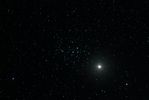
M 44 and Saturn.jpgM 44 and Saturn71 visite"...Silent Leges inter arma..."
(Cicerone)
"...In tempo di guerra - o, comunque, "nel corso di brutti tempi" - le Leggi (da intendersi nel senso più ampio di "principii, ordine e voce della ragione") tacciono..."
(12 voti)
|
|
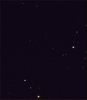
KappaCrucis.jpgThe "Jewel Box" (alias Kappa Crucis)72 visiteThis image of part of the Jewel Box, an open star cluster, was acquired by the HiRISE camera, an instrument on the Mars Reconnaissance Orbiter, on December 14, 2005 as part of a calibration sequence while en route to the Red Planet. The Jewel Box was so named by Sir John Herschel because of the variety of star colors in the cluster, including the large red giant star seen near the bottom of this image. The Jewel Box, also called Kappa Crucis, is about 10 MY old, so it is much younger than our Sun which is about 4.600 MY old. This cluster lies about 7.500 LY away, so the light we see today left the stars in the Neolithic Ages of Earth, when farming was first being practiced by our ancestors.
HiRISE can image in three colors, green, red, and near-infrared, so the colors are not exactly as we see them with our eyes.
The Jewel Box cluster lies in the Crux constellation, also called the Southern Cross, the most compact constellation in the sky.
(12 voti)
|
|
| 1039 immagini su 87 pagina(e) |
 |
|
|
|
|
33 | |
|
|
|
|








