| Piú votate - Mars Spirit Anomalies and Maps |

SOL445-446-MF-2.jpgIs that a "Drawing"?!? - Sol 445 and 446 (photo-mosaic and comparison - negative; credits: Lorenzo Leone)170 visiteUno strumento spesso decisivo non solo per l'individuazione e la definizione degli image-artifacts, ma anche per operare una distinzione tra corpi/oggetti reali ed ombre, è nella osservazione "negativa" del frame.
In questo modo, il nostro Carissimo Amico e Collaboratore Esterno, Lorenzo Leone, ci ha risottoposto il frame (rectius: la coppia di frames) individuato/i dal nostro Dr Faccin ed ha quindi riproposto la domanda essenziale: il "disegno" che sembra affiorare dalle sabbie è un disegno reale, oppure è solo un riflesso, un'ombra (di qualcosa e di un qualche tipo)? Ebbene, come si conviene ai misteri che, almeno per qualche tempo ulteriore (forse moltissimo, ahinoi...), sono destinati a rimanere tali, il processo posto in essere da Lorenzo ha dato due risultati, uguali e contrapposti.
Osservate con noi: il frame negativizzato relativo al Sol 445 mostra - piuttosto bene - le linee del "disegno" mentre si sovrappongono alla roccia che dovrebbe situarsi al di sopra di esso. Quindi, in accordo all'esito dell'esperimento, dovremmo concludere che si tratta di un'ombra. Di un riflesso.
Ma poi chiediamo la controprova ed andiamo a visionare il frame negativizzato relativo al Sol successivo: il 446. Ed il risultato cambia: la roccia non mostra sulla propria superficie alcuna traccia del "disegno", il quale appare NETTAMENTE come un qualcosa che si trova al di sotto della roccia stessa (e, quindi, anche al di sotto di un sottile - riteniamo - strato di sabbia e polvere).
Il detail mgnf del frame relativo al Sol 446 (ultimo quadro del fotomosaico), una volta negativizzato, sembra difficile da contestare: il "disegno" è SOTTO la pietra e, dunque, sotto la sabbia.
La risposta "definitiva"? Non c'è. Comunque si ponga il problema, l'evidenza in un senso (come estrapolata dal frame relativo al Sol 445) viene nullificata dall'evidenza estrapolata dall'immagine del Sol 446. E questa evidenza, anche se è indubbiamente più suggestiva, viene (come ovvio) nullificata da quanto si vede nel dettalio di cui al Sol 445.
Non esiste (o, comunque, noi non possiamo stabilire) una "gerarchia" tra le fonti disponibili, poichè esse sono di PARI LIVELLO - e cioè posseggono le STESSE, IDENTICHE, caratteristiche tecniche (dalla Camera usata al filtro/colore adottato).
L'unica differenza? Il momento dello scatto: c'è infatti uno scarto di 2' e 20" tra l'ora del frame ottenuto durante il Sol 445, rispetto all'ora di scatto del Sol 446. Le condizioni di illuminazione erano tuttavia le stesse e per entrambi i Soles eravamo in presenza di una giornata serena e soleggiata.
Morale: a noi piacerebbe credere e dire al Mondo: "Ecco la Scoperta Epocale!"...Ma non possiamo farlo: e non è solo una questione di Onestà Intellettuale e di Pragmatismo, credeteci.
E' una questione di FATTI, come crediamo di aver dimostrato ampiamente e correttamente: esistono due evidenze le quali, una volta processate, mostrano risultati contrapposti.
E Voi sapete benissimo, così come recita la Sesta Regola della Ricerca, che "Quando ci si trova in una situazione di dissenso, Oggettiva o Soggettiva, può darsi che entrambe le Parti sìano in torto (o che entrambe le Ipotesi sìano errate); ma è comunque difficile (se non impossibile) che entrambe le Parti abbiano ragione (o che entrambe le Ipotesi sìano corrette)".
Ed ora, giustamente, pensate e decidete quello che volete...MareKromium
(3 voti)
|
|

SOL288-2P151930685EFF8987P2418L7M1-3.jpgUnbelievable "Pseudo-Balance" - Sol 288 (credits: Dr G. Barca)186 visiteO la roccia individuata dal Dr Barca (e magnificata nell'inset) sta rotolando (e, se così fosse, ci viene da chiederci quanto - poco - possa pesare...), oppure la sua configurazione superficiale costituisce un nuovo - l'ennesimo ed eclatante - caso di Pseudo-Equilibrio - o Equilibrio Impossibile.
Giudicate Voi...MareKromium
(3 voti)
|
|

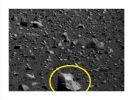
SOL069-NavCam-Spirit-2.jpgExtremely Unusual Surface Feature: the Solution (by Carlo Contu)189 visiteUn ottimo fotomosaico, l'evidenziazione di particolari intriganti e la soluzione di un enigma: lo strano rilievo che ci aveva fatto pensare a qualcosa di artificiale è solo una dunetta, tagliata sul suo lato Dx (Sx per l'Osservatore) dal passaggio del Rover.
Congratulazioni al Sig. Contu per il Lavoro svolto e per l'aiuto - essenziale - che ci ha dato per la soluzione del nostro piccolo mistero!MareKromium
(3 voti)
|
|
SOL523-2P172799154EFFABGZP2437R1M1523-02.jpgExtremely Unusual Surface Feature (extra-detail mgnf)180 visitenessun commentoMareKromium
(3 voti)
|
|

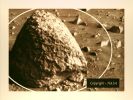
SOL440-1_6-00.jpgThe "Egg-like" Rock is just a peculiar Stone? - Sol 440 (context frame)134 visiteSu segnalazione del nostro Caro Amico e Partner, "Roby", facciamo un passo indietro, sino al Sol 440 di Spirit.
La roccia in questione - a nostro parere un "guscio", come originariamente scritto - viene ora rivista grazie al contributo di Roby ed effettivamente sembra essere (come ben pare mostrare il detail mgnf che segue) un semplice macigno con una crepa alla base.
Nessun "Uovo Marziano", quindi. Nessun "guscio": almeno in questo caso.
Un Caro Saluto e Grazie, di Cuore, all'Amico Roby per la puntualizzazione!
MareKromium
(3 voti)
|
|
SOL440-1_6-01.jpgTThe "Egg-like" Rock is just a peculiar Stone? - Sol 440 (detail mgnf)149 visite...Dimenticavamo: qui, su Lunar Explorer Italia, nessuno ha paura di dire "Ho sbagliato"!
(precisazione fatta per rispondere a coloro - e sono tantissimi - che, pur di non ammettere i propri errori e, spesso, la propria ignoranza, si attaccano agli specchi o si limitano ad insultare)MareKromium
(3 voti)
|
|
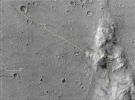
ZP-H-PIA10126.jpgSpirit's Traverse Map, from Sol 1 up to Sol 1386115 visiteCaption NASA:"NASA's MER Spirit was crossing Northward on a low plateau called Home Plate on the 1386th Sol (such as Nov. 26, 2007) of Spirit's time on Mars.
By that time, nearly 47 months into a mission originally planned to last 3 months, Spirit had driven 7435 mt (4,62 miles).
From its Landing Site near the North-Western corner of this map, Spirit crossed a plain to reach the Columbia Hills, climbed over the Summit of Husband Hill, and then descended into the Inner Basin of the range, near the South-Eastern corner of the map.
For this map, the yellow line indicating Spirit's route has been overlaid onto a portion of an image taken by the High Resolution Imaging Science Experiment on NASA's Mars Reconnaissance Orbiter on Nov. 22, 2006, That image is catalogued as PSP_001513_1655 (see also PIA01897). The scale bar on the map is 500 mt (1640 feet) long.
North is up".MareKromium
(3 voti)
|
|

ZP-E-MERA_A960_1.jpgWhere's Spirit? (3)164 visitenessun commento
(3 voti)
|
|
ZP-C-MERA_A960_3.jpgWhere's Spirit? (1)165 visitenessun commento
(3 voti)
|
|

VI-11-db-1-temp-B019R1_br2.jpgTemperature's fluctuations at 30 and over 500 mt above Martian G.C. Datum181 visiteCaption NASA originale:"This graph shows that the air 30 mt above the surface of Mars at Gusev Crater, MER Spirit's landing site, is hotter and fluctuates in temperature to a larger degree than the air higher up at 500 meters. These data, acquired by the Rover's Miniature Thermal Emission Spectrometer, help scientists understand how the bottom layer of air closest to the surface behaves and interacts with global winds".
(3 voti)
|
|
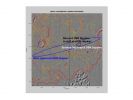
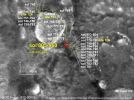
VC-nav1-A11R1.jpgWhere's Spirit? (1)210 visiteCaption NASA originale:"This map shows the estimated location of the Mars Exploration Rover Spirit within Gusev Crater, Mars. Engineers targeted Spirit for the center of the blue ellipse. Measurements taken during the Rover's descent by the Deep Space Network predicted its landing site to be the spot marked with a black dot. Later measurements taken on the ground by both the Deep Space Network and the Orbiter Mars Odyssey narrowed the predicted landing site to a spot marked with a white dot.
When initially choosing a landing site for the Rover, engineers avoided hazardous terrain outlined here in yellow and red. This map consists of data from Mars Odyssey and MGS".
(3 voti)
|
|
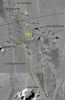
VB-SOL011-Horizon_hills_azimuths-A11R1_br2.jpgThe Martian Land around Spirit: distant hills and many craters237 visiteCaption NASA originale:"This overhead view maps the Mars Exploration Rover Spirit's approximate location in relation to nearby craters and hills. By combining images from both the cameras on MGS and DIMESC - this located on the bottom of the Rover's Lander - scientists and engineers can tell how far away the hills are from the Rover. This information would be more difficult to obtain from the panoramic images. The hills and hill ranges are marked by yellow lines and the Rover is located where the yellow lines intersect.
Black arrows locate the east hill complex, a potential Rover destination".
(3 voti)
|
|
| 274 immagini su 23 pagina(e) |
 |
|
|
|
|
14 | |
|
|
|
|








