| Piú votate - Curiosity and the Exploration of Gale Crater |

SOL0472-EB-MF-LXTT-IPF-00.jpgGold?!? - Sol 472 (an Image-Mosaic in Natural Colors; credits for the additional process. and color.: Elisabetta Bonora and Marco Faccin/Lunar Explorer Italia/Italian Planetary Foundation)94 visiteIl titolo del frame è una "provocazione", e non lo è. Mi è capitato, infatti, nella Vita, di vedere dell'Oro sia "libero" (le classiche "pepite" di fiume, ad esempio), sia ancora "incastonato" nella roccia (come è quello che viene estratto dalle miniere). L'elaborazione del frame, è in Colori Naturali, ed il Colore Naturale dell'Oro è proprio quello che caratterizza il dettaglio posto sul margine superiore dell'immagine. Sarà Oro davvero? Beh, su Marte, a quanto pare (ed in accordo a recentissime scoperte, ancora non pubblicizzate), esistono (o meglio: esisterebbero) Diamanti - anche di cospicue dimensioni - sparpagliati sulla Superficie. Se questo è vero, allora perché escludere la possibilità che vi sia anche dell'Oro (o altri Minerali, per noi Terrestri, preziosi) in bella vista, sulla Superficie di Marte?...MareKromium
(9 voti)
|
|

SOL3724-27338_PIA25740-web.jpgIcy Feather - Sol 3724148 visiteNASA’s Curiosity Mars rover captured this feather-shaped iridescent cloud just after sunset on Jan. 27, 2023, the 3,724th Martian day, or sol, of the mission. Studying the colors in iridescent clouds tells scientists something about particle size within the clouds and how they grow over time.
These clouds were captured as part of a follow-on imaging campaign to study noctilucent, or "night-shining" clouds, which started in 2021. While most Martian clouds hover no more than 37 miles (60 kilometers) above the ground and are composed of water ice, these clouds appear to be higher in elevation, where it’s very cold. That suggests these clouds are made of carbon dioxide, or dry ice.
This scene is made up of 28 individual images captured by the rover’s Mast Camera, or Mastcam. The images have been processed to emphasize the highlights.MareKromium
(8 voti)
|
|

SOL0738-1581_PIA25821-web.gif153 visiteNASA’s Perseverance Mars rover used one of its navigation cameras to take a series of images of drifting clouds just before sunrise on March 18, 2023, the 738th Martian day, or sol, of the mission.
Scientists on both the Perseverance mission and NASA's Curiosity rover mission are studying the formation process of Martian clouds.
A key objective for Perseverance's mission on Mars is astrobiology, including the search for signs of ancient microbial life. The rover will characterize the planet's geology and past climate, pave the way for human exploration of the Red Planet, and be the first mission to collect and cache Martian rock and regolith (broken rock and dust).
Subsequent NASA missions, in cooperation with ESA (European Space Agency), would send spacecraft to Mars to collect these sealed samples from the surface and return them to Earth for in-depth analysis.
The Mars 2020 Perseverance mission is part of NASA's Moon to Mars exploration approach, which includes Artemis missions to the Moon that will help prepare for human exploration of the Red Planet.MareKromium
(8 voti)
|
|
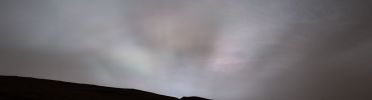
SOL3730-27337_PIA25739-web.jpgMartian Twilight - Sol 3730147 visiteNASA’s Curiosity Mars Rover captured these "Sun Rays" shining through clouds at sunset on Feb. 2, 2023, the 3,730th Martian Day, or Sol, of the mission. It was the first time that sun rays, also known as crepuscular rays, have been viewed so clearly on Mars. Crepuscular is taken from the Latin word for “Twilight,” as these rays appear near Sunset or Sunrise.
These clouds were captured as part of a follow-on imaging campaign to study noctilucent, or "night-shining" clouds, which started in 2021. While most Martian clouds hover no more than 37 miles (60 kilometers) above the ground and are composed of water-ice, these clouds appear to be higher in elevation, where it’s very cold. That suggests these clouds are made of carbon dioxide, or dry ice.
This scene made up of 28 individual images captured by the rover’s Mast Camera, or MastCam. The images have been processed to emphasize the highlights.MareKromium
(8 voti)
|
|

SOL3466-mars_nasa_gov_msl-raw-images_msss_03466_mcam_3466MR1019650291602657C00_DXXX-5.jpgInteresting, but this is NOT a "Door"! (Credits: NASA/JPL and Lorenzo Leone for the add. process.)155 visiteI commenti a seguire. Siamo davanti ad un rilievo superficiale "curioso". Un Grande Complimento a Lorenzo Leone per l'elaborazione ulteriore. Un'unica nota: se "porta" fosse, è "cieca". Come una strada senza via di uscita/sbocchi. Il "soffitto" si abbassa e chiude, quasi subito. Almeno apparentemente. La "macchia" sul fondo "sembra" umidità. Ma questa asserzione è azzardata. Parola a Voi! E Grazie ancora a Lorenzo Leone!MareKromium
(8 voti)
|
|

SOL3466-mars_nasa_gov_msl-raw-images_msss_03466_mcam_3466MR1019650291602657C00_DXXX-4.jpgInteresting, but this is NOT a "Door"! (Credits: NASA/JPL and Neville Thompson for the add. process. and mosaicking)143 visitenessun commentoMareKromium
(8 voti)
|
|

SOL1429-29129132955_060e95f49c_k.jpgPostcard from Mars - Sol 1429 (Image-composite; credits for the additional process. and color.: Marco Faccin & Elisabetta Bonora)133 visitenesun commentoMareKromium
(8 voti)
|
|

SOL2453.jpgSol 2453 - Interesting... (Credits: Marco Faccin and Elisabetta Bonora)165 visiteNessun commento (anzi si: cosa c'é di "interessante" qui, secondo Voi?!?)MareKromium
(8 voti)
|
|

SOL2477.jpgSol 2477 - Bright Rocks (Credits: Marco Faccin and Elisabetta Bonora)175 visiteBellissima, ma non so commentarla. Provateci Voi...MareKromium
(8 voti)
|
|
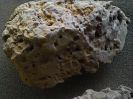
SOL2564-48957940073_219f2783cb_c.jpgSol 2564 - What do you think about the "holes"? (Credits: Marco Faccin and Elisabetta Bonora)178 visite...a me sembra tanto una pietra che viene dal fondo di un qualche tipo di "Mare" (o "Lago"). Con tanto di "Predatory Boreholes".MareKromium
(8 voti)
|
|

SOL1505.jpgIron? - Sol 1505 (Credits: Dr Marco Faccin and Elisabetta Bonora)144 visiteSo? What are we looking at?!?MareKromium
(8 voti)
|
|

SOL0710-0710MR0030150070402501E01_DXXX-002.jpgThe "Crab/Octopus-like Feature": the best image we can have (SEDM) - Sol 710193 visiteAllora: che si tratti di una "Creatura Marziana" non lo possiamo dire ed é pure impossibile dirlo, a questo livello di definizione.
Ma che si tratti di "qualcosa" che SEMBRA essere "attaccata/appiccicata" alla parete rocciosa, non vi sono dubbi. Perché? Perché la "texture" ed il colore é/sono completamente diversa/i (e questo é un fatto).
Noi distinguiamo nettamente una "Struttura Tentacolare" (che ci ricorda "Alien", in verità...). Sembra una sorta di "polpo" (od un "Ragno", od anche un "Granchio", ma di un qualche tipo "Esotico" - NON Terrstre) che sta attaccato alla roccia.
Come sempre: é una svista? Un gioco (pazzesco) di luci ed ombre? E' un'Anomalia della roccia stessa? O é "qualcosa" d'altro?!? Scrivete...MareKromium
(8 voti)
|
|
| 261 immagini su 22 pagina(e) |
 |
|
|
5 | |
|
|
|
|
|
|








