| Piú votate - Curiosity and the Exploration of Gale Crater |

SOL0001-PIA15971.jpgWelcome to Gale Crater! (First Light) - Sol 1 (RAW b/w Original NASA Frame; credits: NASA/JPL-Caltech)117 visiteNASA's most advanced Mars Rover Curiosity has landed on the Red Planet. The one-ton Rover, hanging by ropes from a Rocket Backpack, touched down onto Mars Sunday to end a 36-week flight and begin a two-year investigation. The Mars Science Laboratory (MSL) Spacecraft that carried Curiosity succeeded in every step of the most complex landing ever attempted on Mars, including the final severing of the bridle cords and flyaway maneuver of the Rocket Backpack.
"Today, the wheels of Curiosity have begun to blaze the trail for human footprints on Mars. Curiosity, the most sophisticated Rover ever built, is now on the Surface of the Red Planet, where it will seek to answer age-old questions about whether life ever existed on Mars - or if the Planet can sustain life in the future", said NASA Administrator Charles Bolden. "This is an amazing achievement, made possible by a team of scientists and engineers from around the world and led by the extraordinary men and women of NASA and our Jet Propulsion Laboratory. President Obama has laid out a bold vision for sending humans to Mars in the mid-2030's, and today's landing marks a significant step toward achieving this goal".
Curiosity landed at 10:32 p.m. Aug. 5, PDT, (01:32 a.m. EDT Aug. 6, 2012) near the foot of a Mountain 3 (three) miles tall and 96 miles in diameter inside Gale Crater. During a nearly two-year prime mission, the rover will investigate whether the region ever offered conditions favorable for microbial life.
"The Seven Minutes of Terror has turned into the Seven Minutes of Triumph", said NASA Associate Administrator for Science John Grunsfeld. "My immense joy in the success of this mission is matched only by overwhelming pride I feel for the women and men of the mission's team".
Curiosity returned its first view of Mars, a wide-angle scene of Rocky Ground near the front of the Rover. More images are anticipated in the next several days as the mission blends observations of the Landing Site with activities to configure the Rover for work and check the performance of its instruments and mechanisms.
"Our Curiosity is talking to us from the surface of Mars", said MSL Project Manager Peter Theisinger of NASA's Jet Propulsion Laboratory in Pasadena, Calif. "The landing takes us past the most hazardous moments for this project, and begins a new and exciting mission to pursue its scientific objectives."
Confirmation of Curiosity's successful landing came in communications relayed by NASA's Mars Odyssey orbiter and received by the Canberra, Australia, antenna station of NASA's Deep Space Network.
Curiosity carries 10 science instruments with a total mass 15 times as large as the science payloads on the Mars rovers Spirit and Opportunity. Some of the tools are the first of their kind on Mars, such as a laser-firing instrument for checking elemental composition of rocks from a distance. The rover will use a drill and scoop at the end of its robotic arm to gather soil and powdered samples of rock interiors, then sieve and parcel out these samples into analytical laboratory instruments inside the Rover.
This is the first image taken by NASA's Curiosity Rover, which landed on Mars the evening of Aug. 5 PDT (morning of Aug. 6 EDT). It was taken through a "fisheye" wide-angle lens on one of the Rover's Rear Left Hazard-Avoidance Cameras at one-quarter of full resolution. The camera is the left eye of a stereo pair positioned at the back left, or port, side of the Rover.
The Clear Dust Cover on the camera is still on in this view, and dust can be seen around its edge, along with three cover fasteners. One of the Rover's wheels is in the lower right corner. As planned, the Rover's early engineering images are lower resolution. Larger color images are expected later in the week when the Rover's Mast, carrying high-resolution cameras, is deployed.MareKromium
(3 voti)
|
|

SOL0001-673560main_msl5_full.jpgWelcome to Gale Crater! - Sol 1 (RAW Natural Colors; credits for the additional process. and color.: Dr Paolo C. Fienga - Lunexit Team/IPF)110 visiteCaption NASA:"About two hours after landing on Mars and beaming back its first image, NASA's Curiosity Rover transmitted a higher-resolution image of its new Martian home, Gale Crater. Mission Control at NASA's Jet Propulsion Laboratory in Pasadena, Calif., received the image, taken by one of the vehicle's lower-fidelity, black-and-white Hazard Avoidance Cameras (or "HazCams").
"Curiosity's Landing Site is beginning to come into focus", said John Grotzinger, Project Manager of NASA's Mars Science Laboratory mission, at the California Institute of Technology in Pasadena. "In the image, we are looking to the North/West. What you see on the Horizon is the Rim of Gale Crater. In the foreground, you can see a Gravel Field. The question is, where does this Gravel come from? It is the first of what will be many scientific questions to come from our new home on Mars".MareKromium
(3 voti)
|
|

SOL4992-Turtl_Rock.jpgTurtle Rock (Credits: NASA/JPL-Caltech/MSSS; Processing & License: Thomas Thomopoulos)129 visiteIs this a fossilized turtle on Mars? No. Although resembling a large Earth tortoise, this is a layered rock outcrop on Mars that is estimated to span about 15 meters, making it much larger than turtles on Earth. NASA’s robotic Curiosity rover came across this unusual mound, dubbed Miraflores, last month during its 4922nd Martian day exploring Mars. The small butte may survive because it was somehow more resistant to erosion than surrounding rock. More recent wind has now covered its top with orange Martian sand. Below the top shell, many layers of stratified rock are visible, possibly indicating a long history of intermittent wind-blown sand being deposited and then hardened by ground water. Similar wind-eroded layered landforms, such as yardangs in the Qaidam Desert of China, exist here on Earth. Curiosity and its companion rover Perseverance continue to investigate the ancient history of Mars as well as searching for signs of primeval life.
(Note: It's with great pain that I note the increasingly ridiculous color processing of images coming from Mars. However, if they and the Space Enthusiasts are happy, that's fine...)MareKromium
(2 voti)
|
|

SOL2602-mars_jpl_nasa_gov_msl-raw-images_proj_msl_redops_ods_surface_sol_02602_opgs_edr_ncam_NLB_628498111EDR_F0772954NCAM00290M_.JPGHorizon - Sol 2602147 visitenesun commentoMareKromium
(9 voti)
|
|
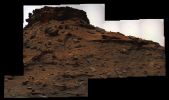
SOL1433.jpgDeep inside Gale Crater - Sol 1433 (Credits: Dr Marco Faccin and Elisabetta Bonora)143 visiteSimply wonderful.MareKromium
(8 voti)
|
|

SOL0710-0710MR0030150070402501E01_DXXX-000.jpgThe "Crab/Octopus-like Feature" (CTX Frame) - Sol 710152 visiteUn'immagine bella ma, apparentemente, insignificante per gli Anomaly Hunters. Eppure...
MareKromium
(7 voti)
|
|

SOL0488-EB-MF-LXTT-IPF.jpgWheels... - Sol 488 (an Image-Mosaic in Natural Colors by Elisabetta Bonora and Marco Faccin/LXTT/IPF)87 visitenessun commentoMareKromium
(7 voti)
|
|

SOL0003-0003ML0000010000E1_DXXX-PCF-LXTT.jpgExtremely Foggy Horizon at Gale Crater - Sol 3 (Absolute Natural Colors; credits for the additional process. and color.: Dr Paolo C. Fienga/Lunar Explorer Italia/Italian Planetary Foundation)118 visitenessun commentoMareKromium
(5 voti)
|
|

SOL0002-676027main_pia16052-color-43_946-710-PCF-LXTT.jpgThe very distant Rim of Gale Crater - Sol 2 (Credits: NASA/JPL-Caltech)162 visitenessun commentoMareKromium
(3 voti)
|
|
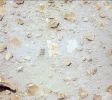
SOL0382-MF-EB-LXTT-IPF.jpg"Laser" effects on Morning "Frost" at Gale? - Sol 382 (Natural Colors; credits for the additional process. and color.: Elisabetta Bonora and Marco Faccin/Lunar Explorer Italia/Italian Planetary Foundation)130 visitenessun commentoMareKromium
(12 voti)
|
|

SOL0379-MF-EB-LXTT-IPF.jpgMorning "Frost" at Gale? - Sol 379 (Natural Colors; credits for the additional process. and color.: Elisabetta Bonora and Marco Faccin/Lunar Explorer Italia/Italian Planetary Foundation)122 visiteSia detto senza polemica, le immagini NASA in Natural, Approximately and Almost True/Natural Colors del Pavimento (Floor) di Gale Crater ci hanno abituato ad un giallo opaco, con pressocchè zero sfumature e zero colorazioni diverse. uUna colorazione - a parere di chi scrive - veramente innaturale.
Ma è davvero così? A noi, come Gruppo Lunexit/IPF, sembra poco credibile.
Ed il dubbio cresce di molto, una volta che si sia adottato lo stesso Image and Color Processing usato dalla NASA, ma ottenendo risultati RADICALMENTE differenti. Molti di Voi ricorderanno lo strato di "Brina" (---> Frost) che, tutto intorno al Viking Lander 2, caratterizzava la Pianura di Utopia, durante i lunghi mesi del gelido Inverno Marziano. Ora, perché escludere a priori che, anche all'interno del Cratere Gale, possano verificarsi delle "brinate"?
Ma siamo realmente sicuri che, negli strati più bassi dell'Atmosfera Marziana (a ridosso del suolo, praticamente), non vi sia del vapore acqueo che, ad alcune ore della giornata, congela e si deposita, colorando di bianco/grigio i rilievi giallastri dell'interno del Cratere Gale?
Ci hanno chiamati "complottisti" ed "incompetenti". Sarà anche così. Ma immagini come questa, NON "taroccate" e NON "alterate" in alcun modo, le quali ci fanno nascere dei legittimi dubbi e dunque ci fanno pensare (l'attività più ALTA - e meno usata... - dagli "umani), dove altro pensate di trovarle, se non qui?!? Quale Sito "Dedicato" e NON SCHIERATO, oltre a Lunar Explorer Italia, potete trovare sulla Rete?!?
Si, lo sappiamo: la NASA è la NASA. Ma l'Uomo, l'Essere Umano, con la sua Intelligenza e Capacità di discernimento e di critica, è sempre e comunque di più. Noi Vi offriamo il massimo che possiamo ottenere, con i nostri mezzi e le nostre capacità e competenze. E lo facciamo in Buona Fede, SEMPRE. Non Vi piace? Girate pagina. Ma se non sapete far nulla di realmente Vostro e di realmente valido, almeno evitate di criticare e di parlare a vanvera. Per favore. Lo diciamo per Voi, perché la "figura" che fanno i nostri (ignoti, incappucciati ed ignorantissimi) detrattori, è veramente patetica....MareKromium
(12 voti)
|
|

SOL2255-1.jpgSol 2255 - A Truly Beautiful Panorama (credits for the additional process. and color: Marco Faccin ed Elisabetta Bonora)148 visitenessun commentoMareKromium
(11 voti)
|
|
| 261 immagini su 22 pagina(e) |
 |
|
|
|
|
|
|
|
|
21 |
|








