| Piú votate - Curiosity and the Exploration of Gale Crater |

SOL0003-ML0000043000E1_DXXX-GB-LXTT-1.jpgJust like Turtles (n. 1)! - Sol 3 (Natural Colors; credits: NASA/JPL-Caltech; Research: Dr Gianluigi Barca - Lunexit Team/Italian Planetary Foundation)74 visiteNuovo Landing, Nuova Regione e Nuova Missione: e va bene. Ma, in fondo, guardando le "Unusually-looking Rocks of Mars" (come ama definirle la NASA), che cosa è REALMENTE cambiato? Probabilmente nulla... Grande occhio del nostro Big "G" (il Dr Gianluigi Barca) e nuove "Curiosità" da trovare e valutare. Forse, ed a ben vedere, mai nome per un "Esploratore Robotico Marziano" fu più azzeccato!MareKromium
(5 voti)
|
|

SOL3075_-_Don_Davis.jpgClouds over Curiosity (Credits: NASA/JPL; Credits for the additional process. and color: Don Davis)140 visiteL'immagine, in sè, potrebbe anche essere carina. Ma questo tipo di colorizzazione non esiste. Nemmeno su Marte. Evidentemente anche il "Grande " Don Davis - di cui ho apprezzato molto il lavoro negli anni, sta invecchiando o si è piegato alle logiche cromatiche NASA.
Decidete Voi.MareKromium
(4 voti)
|
|

SOL0370-RRB_430342965EDR_F0130156RHAZ00305M_.jpgWatch carefully!- Sol 370122 visiteImmagine pessima. Ma nulla che "intacchi" le lenti della RC del Rover. Guardate le altre immagini per capire meglio.MareKromium
(4 voti)
|
|

SOL0370-RLB_430346071EDR_F0130292RHAZ00311M_.jpgWatch carefully! - Sol 370116 visiteGuardate i due "punti neri". Quello a Dx è - probabilmente - un difetto dell'immagine. L'altro, più centrale, no. Perché? Semplice. L'immagine, in sè, fa schifo. Ma se la magnificate, noterete il classico effetto di sovra-saturazione, tipico di oggetti ad elevata Albedo (metallici o cristallini) che riflettono la luce del Sole. Perché è "nero", allora? Perché le immagini di questo tipo si propongono in ciò che chiamo "negativo parziale" (ossia: ciò che dovrebbe brillare, diventa scuro). Un "Dono" dei Fenomeni della NASA. Ma, forse, siamo più "fenomeni" noi.
Caption NASA Originale:"This image was taken by Rear Hazard Avoidance Camera (Rear Hazcam) onboard NASA's Mars Rover Curiosity on Sol 370 (2013-08-21 08:41:48 UTC)".MareKromium
(4 voti)
|
|

SOL0369-RRB_430259923EDR_F0130000RHAZ00311M_.jpgCosmic Ray? - Sol 369109 visitePossibile Raggio Cosmico a Dx del frame (pessimo, come gli altri). ATTENZIONE: in alto, in centro. Può essere una "prova" di "oggetto ignoto" che sorvola la zona oppure di errore nella trasmissione dei dati. Ma NON è un vizio delle lenti del Rover.
p.s.: se riuscite a vederla, la linea interrotta bianca in alto (e che va da Sx a Dx) è indicazione dell'esistenza di un file audio associato al frame.MareKromium
(4 voti)
|
|

SOL0369-RRB_430252832EDR_F0120792RHAZ00330M_.jpgImage Artifacts - Sol 369134 visitePuntini bianchi. Difetti nella trasmissione dell'immagine o "noise" (-> rumore elettronico, elettrostatico, dead pixels, interferenze con altro/i segnali. Decidete Voi). Ma i "punti neri" che avete visto prima e che rivedrete (nel Sol 370), qui, non ci sono. Ergo (quello che avete visto prima e che rivedrete nel Sol 370), NON sono difetti delle lenti (polvere, graffi, depositi di ignota natura ecc.).MareKromium
(4 voti)
|
|

SOL0027-PIA16803-PCF-LXTT-IPF.jpgOn the Floor of Gale... - Sol 27 (Absolute Natural Colors; credits for the additional process. and color. Dr Paolo C. Fienga/Lunar Explorer Italia/Italian Planetary Foundation)151 visiteThis frame, taken by the Mast Camera (MastCam) onboard the NASA - Mars Exploration Rover (MER) - Mars Laboratory "Curiosity", shows to Planetary Researchers some very interesting colors, patterns and textures in this Unnamed Rock imaged during the 27th Martian Day, or Sol, of the Rover's work at Gale Crater - Mars (such as September, 2, 2012 on Earth). The Unnamed Rock is about 2,4" (such as approx. 6,096 centimeters) across and it shows a relatively dark gray-blue color overall, with lighter, whitish tones which are organized in patterns that may indicate/suggest the presence of distinct Crystals made of different Materials (---> Minerals) inside it.
Several Patches of very thin Dust, showing the usual (and let's say "dominant", on the Floor of Gale Crater) light brown-orange color, can also be seen all over the Rock and, in particular, on its very top as well as on to its, relatively, flat right side. Last, but not least, after a very careful observation of the lower Features of the Rock, we believe, as IPF, that the possibility where the Rock itself might be (even partially) empty (thus making it look like an irregular "bowl" or an "helmet", once it is turned upside-down) should also be considered.
This picture (which is an Original NASA - Mars Exploration Rover - Mars Laboratory "Curiosity" natural color frame published on the NASA - Planetary Photojournal with the ID n. PIA 16803) has been additionally processed and then re-colorized in Absolute Natural Colors (such as the colors that a human eye would actually perceive if someone were near the NASA - Mars Exploration Rover (MER) - Mars Laboratory "Curiosity" and then looked ahead, towards the Rock dubbed "Sutton Inlier", which is located in front of the Rover), by using an original technique created - and, in time, dramatically improved - by the Lunar Explorer Italia Team. Different colors, as well as different shades of the same color, mean, among other things, the existence of different Elements (Minerals) present on the Surface of Gale Crater, each having a different Albedo (---> Reflectivity) and Chemical Composition.MareKromium
(4 voti)
|
|

SOL0192-MF-LXTT-IPF-2_(2).jpgExtremely unusually-looking Surface Feature on the Surface of Gale Crater: "The Transparent Ring" - Sol 192 (CTX Frame - Absolute Natural Colors; Credits: Research, additional process. and color.: Elisabetta Bonora and Marco Faccin/LXTT/IPF)78 visitenessun commentoMareKromium
(4 voti)
|
|
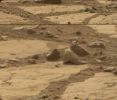
SOL0198-MR1007040000E1_DXXX-EB-MF-LXTT-IPF-1.jpg"The Horned Mars"... - Sol 198 (Natural Colors; credits for the additional process. and color.: Elisabetta Bonora and Marco Faccin/Lunar Explorer Italia/Italian Planetary Foundation)89 visiteil dettaglio in oggetto (ossìa una sorta di minuscolo "corno"), individuato dai nostri Amici e Partner, Marco Faccin ed Elisabetta Bonora, proietta un'ombra piuttosto netta, ergo non è un image-artifact. E' situato poco più in alto di una lunga fissurazione (---> crepa) longitudinale che biseca un macigno semi-interrato di medie dimensioni e, in questa immagine (colorizzata in Colori Naturali) il dettaglio PARE non condividere completamente la colorazione del macigno dal quale si protrude (il macigno, infatti, è - o almeno ci sembra - giallastro chiaro, mentre la protuberanza "cornina", invece, è più di colore arancione/rossastra). In versione tridimensionale (ed in Alta Definizione) il dettaglio diviene incredibilmente affascinante, e difficile da ignorare...per noi! La NASA, ovviamente, non lo vedrà.
MareKromium
(4 voti)
|
|

SOL0173-EDM-MR0926020000E1_DXXX.jpgExtremely unusually-looking Feature on the Floor of Yellowknife Bay: "The Metal Head" - Sol 173 (EDM: Calibrated Natural Colors - Credits: Dr Gianluigi Barca/Lunar Explorer Italia/Italian Planetary Foundation362 visiteMareKromium
(4 voti)
|
|

SOL0173-GB-LXTT-IPF-CTX+EDM.jpgExtremely unusually-looking Feature on the Floor of Yellowknife Bay: "The Metal Head" - Sol 173 (CTX Frame: RAW Natural Colors and EDM: Calibrated Natural Colors - Credits: Dr Gianluigi Barca/Lunar Explorer Italia/Italian Planetary Foundation284 visiteMareKromium
(4 voti)
|
|

SOL0135-EB-MF-LXTT-IPF.jpgVarious Surface Features at Yellowknife Bay - Sol 135 (credits for the additional process. and color.: Elisabetta Bonora and Marco Faccin/Lunar Explorer Italia/Italian Planetary Foundation) 168 visitenessun commentoMareKromium
(4 voti)
|
|
| 261 immagini su 22 pagina(e) |
 |
|
|
|
|
14 | |
|
|
|
|








