| Piú votate - Curiosity and the Exploration of Gale Crater |

SOL0188-EB-MF-LXTT-IPF.jpgHorizons... - Sol 194 (an Image-Mosaic in Enhanced Natural Colors; credits for the additional process. and color.: Elisabetta Bonora and Marco Faccin/Lunar Explorer Italia/Italian Planetary Foundation)87 visitenessun commentoMareKromium
(5 voti)
|
|
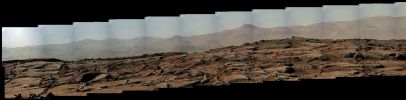
SOL0194-MF-EB-LXTT-IPF.jpgHorizons... - Sol 194 (an Image-Mosaic in "White Balanced" Colors; credits for the additional process. and color.: Elisabetta Bonora and Marco Faccin/Lunar Explorer Italia/Italian Planetary Foundation)108 visitenessun commentoMareKromium
(5 voti)
|
|

SOL0198-MR1007040000E1_DXXX-EB-MF-LXTT-IPF-2.jpg"The Horned Mars"... - Sol 198 (False Colors; credits for the additional process. and color.: Elisabetta Bonora and Marco Faccin/Lunar Explorer Italia/Italian Planetary Foundation)81 visiteOsservate bene: è, a nostro modestissimo parere, impossibile non vedere ed è impossibile non ritenere questa Configurazione Superficiale una, se non altro, "Singolarità". Poi, per l'Amor di Dio, ognuno può credere quello che vuole (anche alle "spiegazioni" - con "s" rigorosamente minuscola... - della GRANDE NASA), però per arrivare a dire (così come inevitabilmente accadrà) che questo "dettaglio" è qualcosa di "normale", ci vuole una faccia di bronzo di "Caratura Suprema"!....MareKromium
(5 voti)
|
|
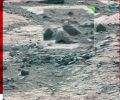
SOL0198-MR1007040000E1_DXXX-EB-MF-LXTT-IPF-3.jpg"The Horned Mars"... - Sol 198 (High-Def-3D; credits for the additional process.: Elisabetta Bonora and Marco Faccin/Lunar Explorer Italia/Italian Planetary Foundation)89 visiteEd infine, nell'anaglifo ad Alta Definizione, ecco che il Rilievo Controverso (chi dice "una specie di corno" e chi "una sorta di verme") ci appare tanto chiaro ed evidente, quanto straordinario nella sua "Singolarità". Un GRANDISSIMO Complimento ancora a Marco Faccin (Titanio44) ed Elisabetta Bonora (2di7) per la loro incredibile (eppur vera) Scoperta!
Ed ora vediamo da chi ci verrà rubata e come la NASA (o chi per essa) la smonterà, dicendoci che un "Rilievo" simile è "assolutamente normale"....MareKromium
(5 voti)
|
|
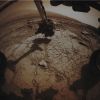
SOL0182-PIA16728-PCF-LXTT-IPF.jpgDrilling Time! - Sol 182 (Absolute Natural Colors; credits for the additional process. and color.: Dr Paolo C. Fienga/Lunar Explorer Italia/IPF)94 visitenessun commentoMareKromium
(5 voti)
|
|

SOL0173-GB-LXTT-IPF-CTX+EDM_ivana_p3_(1).jpgMartian Oddities - Sol 173225 visiteAs we wrote in yesterday's, February 4th, 2013, APOD, nobody knows for sure what this bright and metal-looking Feature that shines in the Sun right in front of the NASA - Mars Exploration Rover - Mars Laboratory "Curiosity" - and highlighted by a red circle that we drew around it - can be. As a matter of fact, the texture of the whole Feature (that looks extremely smooth) and the color of its upper portion, are completely different from the texture and color of the Rocky Paving that the Feature appears to be part of, and which characterizes the area currently explored by the Rover, and known as Yellowknife Bay. Maybe, if the NASA People will decide to get closer to this intriguing Feature and so take a better look at it, we may know more. But for now, we can only draw your attention on what it seems to be one of the greatest oddities ever discovered on the Red Planet.
And that is not all! Look at the Feature highlighted by the yellow square that we drew around it and then take a careful look at what seems to be hiding in an horizontal crack of the huge boulder that is only a few meters away from the Rover... Is that an optical illusion? A very oddly-shaped rock? Or - maybe - we are really looking at something that looks like a small rodent that can perfectly "hide in plain sight"? Of course, we do not know. What we do know is that this second Feature is not just a a light-trick (actually, it casts a small shadow on the wall of the crack behind it), but something real. Something that, in our opinion, as IPF, should really be investigated...
This picture (which is an image-mosaic obtained from several Original NASA - Mars Exploration Rover - Mars Laboratory "Curiosity" b/w frames taken during the 173rd Sol of the Rover's exploration of Gale Crater) has been additionally processed, calibrated and colorized in Natural Colors (such as the colors that a perfect human eye - or an Electronic Eye - would actually perceive if someone were near the NASA - Mars Exploration Rover (MER) - Mars Laboratory "Curiosity" and then looked ahead, towards the Rocky Paving located in front of and around the Rover), by using an original technique created - and, in time, dramatically improved - by the Lunar Explorer Italia Team. Different colors, as well as different shades of the same color, mean, among other things, the existence of different Elements (Minerals) present on the Surface of Gale Crater, each having a different Albedo (---> Reflectivity) and Chemical Composition.MareKromium
(5 voti)
|
|

SOL0120-PIA16707-PCF-LXTT-IPF.jpg"Shaler Unit" - Sol 120 (Slightly Darkened Absolute Natural Colors; credits for the additional process. and color.: Dr Paolo C. Fienga/Lunar Explorer Italia/Italian Planetary Foundation)70 visiteCaption NASA:"This image from the Mast Camera (MastCam) onboard NASA's MER Curiosity shows a bizarre-looking Stratigraphic Unit (known as "Cross-Bedding") located in an Outcrop called "Shaler". This Stratigraphic Unit has been informally dubbed "Shaler Unit". This kind of "Cross-Bedding" in the Shaler Unit is indicative of Sediment transport in Stream Flows. Currents mold the Sediments into Small Underwater Dunes that migrated downstream. When exposed in cross-section, evidence of this Migration is preserved in the form of Strata that are steeply inclined as to the Bed (---> River or Lake's Floor) they lay on (thus the term "Cross-Bedding." The grain sizes here are coarse enough to exclude an Aeolian transport.
This Cross-Bedding occurs stratigraphically above the Gillespie Unit located in the "Yellowknife Bay" area of Gale Crater, and is therefore geologically younger. The MastCam obtained the image on the 120th Martian day, or sol, of Curiosity's Operations (such as December, 7th, 2012).MareKromium
(5 voti)
|
|

SOL0126-2-GB-LXTT-IPF.jpgFeatures of Yellowknife Bay - Sol 127 (an Image-Mosaic in RAW Natural Colors; credits for the additional process. and color.: Dr Gianluigi Barca/Lunar Explorer Italia/Italian Planetary Foundation)90 visitenessun commentoMareKromium
(5 voti)
|
|

SOL0127-2-GB-LXTT-IPF.jpgFeatures of Yellowknife Bay - Sol 127 (an Image-Mosaic in Calibrated Natural Colors; credits for the additional process. and color.: Dr Gianluigi Barca/Lunar Explorer Italia/Italian Planetary Foundation)106 visitenessun commentoMareKromium
(5 voti)
|
|

SOL0127-1-GB-LXTT-IPF.jpgFeatures of Yellowknife Bay - Sol 127 (an Image-Mosaic in Calibrated Natural Colors; credits for the additional process. and color.: Dr Gianluigi Barca/Lunar Explorer Italia/Italian Planetary Foundation)90 visitenessun commentoMareKromium
(5 voti)
|
|

SOL0059-PIA16452-PCF-LXTT-IPF.jpgRocknest 3 - Sol 59 (Absolute Natural Colors; credits for the additional process. and color.: Dr Paolo C. Fienga/Lunar Explorer Italia/Italian Planetary Foundation)95 visiteThis view of a Martian Rock nicknamed "Rocknest 3" combines 4 (four) images taken by the right-eye camera of the Mast Camera (MastCam) Instrument located onboard the NASA - Mars Exploration Rover - Mars Laboratory "Curiosity", which has a telephoto, 100-millimeter-focal-length lens. The component images were taken a few minutes after Martian noon (---> 12:00 Mars Local Solar Time) on the 59th Martian Day, or Sol, of Curiosity's operations at Gale Crater, Mars.
Rocknest 3 is a Sedimentary Rock approximately 15" (such as about 40 centimeters) long and about 4" (approx. 10 centimeters) tall; next to "Rocknest 3" there is a patch of windblown Dust and Sand where Curiosity scooped and analyzed several Soil Samples. The MastCam was about 13 feet (approx. 4 meters) from Rocknest 3 when the component images were taken, thus providing an image scale of about 0,01" (approx. 0,3 millimeter) per pixel.
This picture (which is an Original NASA - Mars Exploration Rover - Mars Laboratory "Curiosity" white-balanced color frame published on the NASA - Planetary Photojournal with the ID n. PIA 16452) has been additionally processed and then re-colorized in Absolute Natural Colors (such as the colors that a human eye would actually perceive if someone were near the NASA - Mars Exploration Rover (MER) - Mars Laboratory "Curiosity" and then looked down, towards the Rock known as Rocknest 3), by using an original technique created - and, in time, dramatically improved - by the Lunar Explorer Italia Team. Different colors, as well as different shades of the same color, mean, among other things, the existence of different Elements (Minerals) present on the Surface of Gale Crater, each having a different Albedo (---> Reflectivity) and Chemical Composition.MareKromium
(5 voti)
|
|

SOL0107-0109-PCF-LXTT-IPF.jpgMount Sharp - Soles 107 and 109 (An Image-Mosaic in Absolute Natural Colors; credits for the additional process. and color.: Elisabetta Bonora, Marco Faccin and Paolo C. Fienga/Lunar Explorer Italia/Italian Planetary Foundation)143 visitenessun commentoMareKromium
(5 voti)
|
|
| 261 immagini su 22 pagina(e) |
 |
|
|
|
|
11 | |
|
|
|
|








