| Piú votate - Mars from Orbit (from July 2009) |
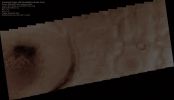
Craters-UnnamedCrater-Aonia_Terra-20091005a-PCF-LXTT.jpgUnnamed Crater in Aonia Terra (Natural Colors; credits for the additional process. and color.: Dr Paolo C. Fienga - Lunexit Team)57 visitenessun commentoMareKromium
(2 voti)
|
|
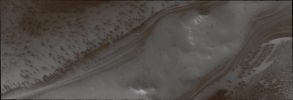
South_Polar_Features-PIA13813.jpgSouth Polar Layers and Geysers (Absolute Natural Colors; credits: Dr Paolo C. Fienga - Lunexit Team)144 visiteCaption NASA:"The South Polar Cap of Mars is comprised of alternating Layers of Ice and Dust. The darker Dust Layers help show the Layering, especially on Steep Slopes".
Orbit Number: 39856
Latitude: 85,3099° South
Longitude: 98,2745° East
Instrument: VIS
Captured: December, 9th, 2010
MareKromium
(2 voti)
|
|
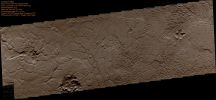
Avernus_Colles-PIA13780.jpgAvernus Colles (Natural Colors; Credits for the additional process. and color.: Dr Paolo C. Fienga - Lunexit Team)80 visitenessun commentoMareKromium
(2 voti)
|
|

Dunes-PIA13740.jpgSouthern Dunefield (Absolute Natural Colors; credits: Dr Paolo C. Fienga - Lunexit Team)78 visitenessun commentoMareKromium
(2 voti)
|
|
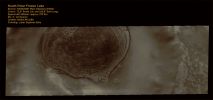
Craters-Unnamed_Crater-V13506008.jpgUnnamed Crater with Frozen Dunefield (Absolute Natural Colors; credits for the additional process. and color.: Dr Paolo C. Fienga - Lunexit Team)85 visitenessun commentoMareKromium
(2 voti)
|
|
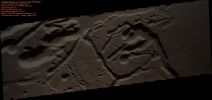
Volcanoes-Ascraeus_Mons-PIA13745.jpgCollapse Features on Ascraeus Mons' S/W Flank (Absolute Natural Colors; additional process.: Dr Paolo C. Fienga - Lunexit Team)119 visitenessun commentoMareKromium
(2 voti)
|
|

Dunes-PIA13733.jpgLarge Dunes (Absolute Natural Colors; credits for the additional process. and color.: Dr Paolo C. Fienga - Lunexit Team) 75 visitenessun commentoMareKromium
(2 voti)
|
|
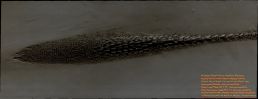
Dunes-North_Polar_Features-PIA13663.jpgExtremely unusually-looking Surface Feature near the North Pole of Mars (Absolute Natural Colors; credits for the additional process. and color.: Dr Paolo C. Fienga - Lunexit Team)146 visiteCaption NASA:"Although this may look like a hostile alien lifeform, it's actually a complex line of Sand Dunes near the Northern Ice-Cap of Mars. The image covers an area about 10 Km (a little more than 6 miles) wide. It was taken in April 2006 by the Thermal Emission Imaging System instrument on NASA's Mars Odyssey Orbiter. It is part of a special set of images marking the occasion of Odyssey becoming the longest-working Mars Spacecraft in history.
The pictured location on Mars is at approx. 82,4° North Latitude and 314,5° East Longitude".MareKromium
(2 voti)
|
|
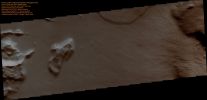
Volcanoes-Olympus_Mons-PIA13713.jpgPortion of the Northern Escarpment of Olympus Mons (Absolute Natural Colors; credits for the additional process. and color.: Dr Paolo C. Fienga - Lunexit Team)83 visitenessun commentoMareKromium
(2 voti)
|
|

Cerberus_Fossae-PIA13665.jpgCerberus Fossae (Natural Colors; credits for the additional process. and color.: Dr Paolo C. Fienga - Lunexit Team)119 visitenessun commentoMareKromium
(2 voti)
|
|
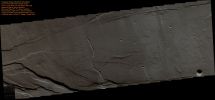
Collapse_Features-Ceraunius_Fossae-PIA13712.jpgCeraunius Tholus (Natural Colors; credits for the additional process. and color.: Dr Paolo C. Fienga - Lunexit Team)99 visitenessun commentoMareKromium
(2 voti)
|
|
Craters-Udzha_Crater-PIA13657.jpgUdzha Crater (Absolute Natural Colors; credits for the additional process. and color.: Elisabetta Bonora and Paolo C. Fienga - Lunexit Team)89 visiteCaption NASA:"Although it is about 45 Km (approx. 28 miles) wide, countless layers of Ice and Dust have all but buried Udzha Crater. Udzha lies near the edge of the North Polar Cap, and only the topmost edges of its Crater Rim rise above the NPLD to hint at its circular shape.
The image was taken by the Thermal Emission Imaging System instrument on NASA's Mars Odyssey Orbiter and posted in a special December 2010 set marking the occasion of Odyssey becoming the longest-working Mars spacecraft in history.
The pictured location on Mars is at 81,8° North Lat. and 77,2° East Longitude".MareKromium
(2 voti)
|
|
| 1003 immagini su 84 pagina(e) |
 |
|
|
|
|
73 | |
|
|
|
|





