| |

| Piú votate - Mars from Orbit (from July 2009) |
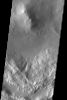
Craters-Unnamed_Crater_in_Deuteronlius_Mensae-PIA07452.jpgCentral Peak Crater in Deuteronlius Mensae (Original NASA/JPL/ASU b/w Frame)70 visiteCaption NASA originale:"This image is located in Deuteronlius Mensae and contains a Central Peak in the middle of an older, flat-floored Unnamed Crater, infilled by Sediment".
Notate il picco centrale, fortemente deteriorato, e poi mettetelo a confronto con le immagini della Sfinge di Marte: dovreste notare che esistono delle (leggere) similitudini. Allora noi ci domandiamo, alla luce di quest'ultimo particolare (ultimo di una LUNGA serie...), se la NASA stia cercando di smontare in maniera radicale e definitiva la "Leggenda di Cydonia" riprendendo altri rilievi curiosi (pensate ai frames THEMIS ART MONTH p.e.) ma indubitabilmente di origine naturale, oppure se, effettivamente, il fatto di vedere un rilievo dall'alto e da una certa angolazione può essere (come noi crediamo che sia!) una fonte costante di sviste clamorose ed alle quali nessuno (neppure il Prof. Hoagland & Co.) è davvero immune.
E speriamo che i sostenitori dell'artificialità della "Faccia di Marte" non si arrabbino troppo con noi...
(3 voti)
|
|

Coprates_Chasma-PIA17517-PCF-LXTT-IPF.jpgFeatures of Coprates Chasma (Absolute Natural Colors; credits for the additional process. and color.: Dr Paolo C. Fienga/Lunar Explorer Italia/Italian Planetary Foundation)60 visiteIn this VIS image, taken by the NASA - Mars Odyssey Orbiter on August 12th, 2013, and during its 51.735th orbit around the Red Planet, we can see part of the Floor of Coprates Chasma, including a large Sand Sheet and a few smaller Dunes.
Latitude (centered): 13,967° South
Longitude (centered): 296,942° East
Instrument: VIS
This frame (taken from an Original Mars Odyssey Orbiter b/w and Map-Projected frame published on the NASA - Planetary Photojournal with the ID n. PIA 17517) has been additionally processed, magnified, contrast enhanced, Gamma corrected and then colorized in Absolute Natural Colors (such as the colors that a human eye would actually perceive if someone were onboard the NASA - Mars Odyssey Orbiter and then looked down, towards the Surface of Mars), by using an original technique created - and, in time, dramatically improved - by the Lunar Explorer Italia Team.MareKromium
(2 voti)
|
|

Craters-Proctor_Crater-PIA17421-PCF-LXTT-IPF.jpgProctor Crater's Dunefield (Absolute Natural Colors; credits for the additional process. and color.: Dr Paolo C. Fienga/Lunar Explorer Italia/IPF)61 visiteIn this VIS image, taken by the NASA - Mars Odyssey Orbiter on July 4th, 2013, and during its 51.257th orbit around the Red Planet, we can see part of the very large Dunefield that is located located on the Floor of Proctor Crater (a large Impact Crater found in the Noachis Quadrangle of Mars, at about 48° South Latitude and 330,5° West Longitude).
Proctor Crater is approx. 168 Km (such as about 104,3 miles) in diameter and it was so named after Dr Richard A. Proctor, a British Astronomer (who was born in Chelsea - London, UK, on March, 23rd, 1837 and died in New York - USA - on September, 12th, 1888). Proctor Crater contains an approx. 35 x 65 Km (such as about 21,7 x 40,36 miles) Dark Dunefield that was one of the first Sand Dunefields ever recognized on Mars - note: this discovery was based on the NASA - Mariner 9 Spacecraft's images. Just out of curiosity, Proctor's Dunes are still being monitored by several Spacecrafts now orbiting the Red Planet (including the NASA- Mars Reconnaissance Orbiter) with the aim of identifying the changes (if any) which might have occurred - over time - in the shape of the Dunefield itself.
Latitude (centered): 47,4158° South
Longitude (centered): 30,9423° East
Instrument: VIS
This frame (taken from an Original Mars Odyssey Orbiter b/w and Map-Projected frame published on the NASA - Planetary Photojournal with the ID n. PIA 17421) has been additionally processed, magnified, contrast enhanced, Gamma corrected and then colorized in Absolute Natural Colors (such as the colors that a human eye would actually perceive if someone were onboard the NASA - Mars Odyssey Orbiter and then looked down, towards the Surface of Mars), by using an original technique created - and, in time, dramatically improved - by the Lunar Explorer Italia Team.MareKromium
(2 voti)
|
|

Craters-Gale_Crater-PIA16289-PCF-LXTT-IPF.jpgGale Crater (Absolute Natural Colors; credits for the additional process. and color.: Dr Paolo C. Fienga/Lunar Explorer Italia/Italian Planetary Foundation)109 visiteDuring the month of April, of the AD 2013, Mars will be in a so-called "Conjunction" relative to the Planet Earth. This means that the Sun is exactly in the line-of-(direct) sight between the two aforementioned Celestial Bodies, such as our Home Planet Earth and the Red Planet. In this Spatial Configuration, as you can easily understand, the communications between the two Planets are - in fact - almost impossible; however, during the Conjunction Period, the Rovers operating on the Surface of Mars and the Spacecrafts orbiting around it, will continue to operate, but without sending all the collected data to Earth. This data, which are all recorded and stored, will be sent to Earth when the Conjunction is over, Mars shall have moved away from behind the Sun (of course, only from our Terrestrial point of view) and therefore the line-of-(direct) sight between Earth and Mars is re-established.
During the Conjunction Period, the "NASA - THEMIS Image of the Day" will be a visual tour of Gale Crater, such as the location of the newest Mars Exploration Rover (and Laboratory) Curiosity. The first image of Gale Crater that we propose you on today's APOD (image that was taken more than 6 years ago, by the NASA - Mars Odyssey Orbiter, during its 23.897th orbit around the Red Planet) shows, among other Features, the Landing Site of the Mars Exploration Rover (and Laboratory) Curiosity (which is located approximately near the center of the image). On the other hand, the Dark Material that is visible towards the South (the lower portion of the frame), is just (Basaltic, most likely) Sand that is set on the Floor of Gale Crater in the form of Dunes; Dunes that the Curiosity Rover, in a way or another, will have to navigate through in order to get to the Layered Central Deposit (also partially visible in the frame), whose official name, as you should know by now, is "Mount Sharp".
Latitude (centered): 4,47891° South
Longitude (centered): 137,46500° East
Instrument: VIS
Captured: April, 5th, 2007
This frame (which is an Original Mars Odyssey Orbiter b/w frame published on the NASA - Planetary Photojournal with the ID n. PIA 16289) has been additionally processed and then colorized in Absolute Natural Colors (such as the colors that a human eye would actually perceive if someone were onboard the NASA - Mars Odyssey Orbiter and then looked down, towards the Surface of Mars), by using an original technique created - and, in time, dramatically improved - by the Lunar Explorer Italia Team.MareKromium
(2 voti)
|
|
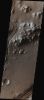
Craters-Gale_Crater-PIA16240-PCF-LXTT-IPF.jpgGale Crater (Absolute Natural Colors; credits for the additional process. and color.: Dr Paolo C. Fienga/Lunar Explorer Italia/Italian Planetary Foundation)103 visiteThis is a 9 years' old frame taken by the NASA - MArs Odyssey Orbiter during its 11330th orbit around the Red Planet; it shows us, again (but, this time, from a slightly different position as to the one where the picture that we published yesterday was obtained), some more Features of the Floor of Gale Crater, including - once again - the Landing Site of the Mars Exploration Rover (and Laboratory) "Curiosity" (bottom right portion of the image, near the Dark Dunes), and a medium-sized Channel that cuts through the Crater's Rim (on the left side of the frame).
Latitude (centered): 4,2574° South
Longitude (centered): 137,3510° East
Instrument: VIS
Captured: July, 4th, 2004
This frame (which is an Original Mars Odyssey Orbiter b/w frame published on the NASA - Planetary Photojournal with the ID n. PIA 16240) has been additionally processed and then colorized in Absolute Natural Colors (such as the colors that a human eye would actually perceive if someone were onboard the NASA - Mars Odyssey Orbiter and then looked down, towards the Surface of Mars), by using an original technique created - and, in time, dramatically improved - by the Lunar Explorer Italia Team.MareKromium
(2 voti)
|
|

Channels-Arda_Valles-PIA16286-PCF-LXTT-IPF.jpgFeatures of Arda Valles (Absolute Natural Colors; credits for the additional process. and color.: Dr Paolo C. Fienga/Lunar Explorer Italia/Italian Planetary Foundation)72 visiteThis is a frame taken by the NASA - MArs Odyssey Orbiter during its 49661st orbit, and it shows us a few Drainage Channels which are part of the Channel Network that comprises Arda Valles.
Latitude (centered): 20,3688° South
Longitude (centered): 327,2160° East
Instrument: VIS
Captured: February, 23rd, 2013
This frame (which is an Original Mars Odyssey Orbiter b/w frame published on the NASA - Planetary Photojournal with the ID n. PIA 16286) has been additionally processed and then colorized in Absolute Natural Colors (such as the colors that a human eye would actually perceive if someone were onboard the NASA - Mars Odyssey Orbiter and then looked down, towards the Surface of Mars), by using an original technique created - and, in time, dramatically improved - by the Lunar Explorer Italia Team.MareKromium
(2 voti)
|
|

Channels-Terra_Cimmeria-PIA16274-PCF-LXTT-IPF-2.jpgChannels in Terra Cimmeria (Absolute Natural Colors; credits for the additional process. and color.: Dr Paolo C. Fienga/Lunar Explorer Italia/Italian Planetary Foundation)64 visiteThis VIS frame shows us a network of large and small Channels dissecting the Surface of an Highland Region located in Terra Cimmeria. The frame was acquired by the NASA - Mars Odyssey Orbiter during its 49.492nd orbit around the Red Planet.
Latitude (centered): 34,904° South
Longitude (centered): 157,710° East
Instrument: VIS
Captured: February, 9th, 2013
This frame (which is an Original Mars Odyssey Orbiter b/w frame published on the NASA - Planetary Photojournal with the ID n. PIA 16274) has been additionally processed and then colorized in Absolute Natural Colors (such as the colors that a human eye would actually perceive if someone were onboard the NASA - Mars Odyssey Orbiter and then looked down, towards the Surface of Mars), by using an original technique created - and, in time, dramatically improved - by the Lunar Explorer Italia Team.MareKromium
(2 voti)
|
|

Craters-Unnamed_Crater-Terra_Cimmeria-PIA16266-PCF-LXTT-IPF.jpgUnnamed Crater with Gullies and Dunefield in Terra Cimmeria (Absolute Natural Colors; credits for the additional process. and color.: Dr Paolo C. Fienga/Lunar Explorer Italia/Italian Planetary Foundation)66 visiteIn this frame, taken by the NASA - Mars Odyssey Orbiter during its 49.393rd orbit around the Red Planet, several Gullies of different shapes, depths and sizes located on the Southern Rim of an Unnamed Impact Crater in Terra Cimmeria can be seen. As you may easily notice, there are way more Gullies on the North-facing Inner Rim (such as the Southern Inner Rim) of this Unnamed Crater, and the reason of such a remarkable difference is found, most likely, in the circumstance that the Southern Region of the Crater itself gets more Sun-related warming than the other one, which is corresponding to the South-facing Inner Rim (such as the Northern Inner Rim).
Also well visible towards the top of the picture, right at the base of the Northern Inner Slopes (Wall) of this Unnamed Cimmerian Impact Crater, there is a small and Dark Dunefield (probably formed - once you take into duly consideration the peculiar-looking shapes and surroundings of the Dunes forming it - by "Migrating Dunes". Dunes which may contain, among Dust, Rocky Sands and Volcanic Ashes, also a significant amount of Iron Oxide). It must be said, however, that a Surface Feature like this last one (---> the Dark Dunefield), is really very common, specifically at these Middle (Southern) Latitudes.
Latitude: 48,25° South
Longitude: 129,612° East
Instrument: VIS
Captured: February, 1st, 2013
This frame (which is an Original Mars Odyssey Orbiter b/w frame published on the NASA - Planetary Photojournal with the ID n. PIA 16266) has been additionally processed and then colorized in Absolute Natural Colors (such as the colors that a human eye would actually perceive if someone were onboard the NASA - Mars Odyssey Orbiter and then looked down, towards the Surface of Mars), by using an original technique created - and, in time, dramatically improved - by the Lunar Explorer Italia Team.MareKromium
(2 voti)
|
|

Coprates_Labes-PIA16271-PCF-LXTT-IPF.jpgCoprates Labes (Absolute Natural Colors; credits for the additional process. and color.: Dr Paolo C. Fienga/Lunar Explorer Italia/Italian Planetary Foundation)64 visiteThe finely ridged Materials visible in the upper portion of this NASA - Mars Odyssey Orbiter image - taken by the Spacecraft during its 49.450th orbit around the Red Planet - are huge Landslide (associated, most likely, with Mudslide) Deposits called Coprates Labes. These Deposits are found on the Floor of Coprates Chasma: a huge Canyon characterized by very steep Walls which is located in the Coprates Quadrangle of Mars, at 13,4° South Latitude and 61,4° West Longitude. Coprates Chasma is just a portion of the Valles Marineris Canyon System; it is approx. 966 Km (such as a little less than 600 miles) long and it got its name after a so-called "Classical Albedo Feature".
Latitude (centered): 11,7442° South
Longitude (centered): 292,003° East
Instrument: VIS
Captured: February, 5th, 2013
This frame (which is an Original Mars Odyssey Orbiter b/w frame published on the NASA - Planetary Photojournal with the ID n. PIA 16271) has been additionally processed and then colorized in Absolute Natural Colors (such as the colors that a human eye would actually perceive if someone were onboard the NASA - Mars Odyssey Orbiter and then looked down, towards the Surface of Mars), by using an original technique created - and, in time, dramatically improved - by the Lunar Explorer Italia Team.MareKromium
(2 voti)
|
|
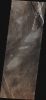
Aeolian_Features-Windstreaks-AM-PIA16513-PCF-LXTT-IPF.jpgWindstreaks on the S/W Flank of Alba Mons (Absolute Natural Colors; credits for the additional process. and color.: Dr Paolo C. Fienga/Lunar Explorer Italia/IPF)68 visiteOrbit Number: 47653
Latitude (centered): 34,8278° North
Longitude (East): 241,838°
Instrument: VIS
Captured: September, 9th, 2012MareKromium
(2 voti)
|
|

Channels-Dao_Vallis-PIA15215-PCF-LXTT-IPF.jpgFeatures of Dao Vallis (Absolute Natural Colors; credits for the additional process. and color.: Dr Paolo C. Fienga/Lunar Explorer Italia/Italian Planetary Foundation)74 visiteDao Vallis is a Martian Channel that, as the peculiar texture and color of its bottom and edges show us quite well, was not carved by Molten (and very fluid) Lava, but by real Water instead. Dao Vallis runs South/Westward into the Hellas Planitia Region, and it has been identified (among others, by Dr M.H. Carr) as a so-called Outflow Channel. Dao Vallis has a main Tributary Channel, known as Niger Vallis, and it extends on the Martian Southern Hemisphere's Surface for over 1200 Km. Its name, just out of curiosity, apparently comes from a Thai word meaning "star" (and God only knows why the IAU made such a bizarre and, in our opinion, pointless choice...).
However, talking again about our today's APOD Surface Feature, we can say that we know that the (possible) sources of Dao Vallis are near an extremely old Martian Volcano, called Hadriaca Patera; it is thought by many Scientists that the Water that formed it came out from the Subsurface when a huge quantity of hot Magma, erupted from Hadriaca Patera, melted, in a very short time period (in a case like this, we might be talking about minutes), huge amounts of Ice that was caught in the otherwise already frozen Ground. Anyway, much of this Water may have also been released during the occurrence of a few very large "Outburst Floods".
In addition to the above, and after a carfeul examination of Dao Vallis' now completely desiccated Riverbed, we, as IPF, strongly believe that, whatever the actual origin of the Channel might have been, Dao Vallis must have carried liquid Water for a very long time, before drying up. As a matter of fact, and as it is clearly visible in this NASA - 2001 Mars Odyssey Orbiter frame, on the bottom of the Channel can be identified several layers of dried material (Mud, likely) that, in our opinion, make the physical evidence that the desiccation process of Dao Vallis took some time before it was complete. In other words, the desiccation (or, like some Scientists say, evaporation and/or sublimation) of the Waters that ran through the Channel, was far from being semi-instantaneous or (this, of course, relatively speaking) rather fast. Furthermore, the almost complete lack of Impact Craters on the Riverbed, if seen and evaluated in direct contrast with the strong presence of Impact Craters (of various size and shape - meaning both Primary and Secondary Craters) that exist and is VERY well visible on both the edges of the Channel, proves us that, when Liquid Water ran through Dao Vallis, the strong meteoric activity which scarred most of the Surface of the Red Planet, was already ended. In other words, Dao Vallis hosted liquid and running Waters until a very (always relatively - and geologically - speaking) recent time.
Picture Data: Orbit Number: 44201; Latitude: 39,4843° South and Longitude: 86,4444° East; Instrument: VIS; Captured: December, 1st, 2011; Mars Local Time (M.L.T.): 17:39 (Late Aftrnoon)
This frame has been colorized in Absolute Natural Colors (such as the colors that a human eye would actually perceive if someone were onboard the NASA - 2001 Mars Odyssey Orbiter and then looked down towards the Surface of Mars), by using an original technique created - and, in time, dramatically improved - by the Lunar Explorer Italia Team.MareKromium
(2 voti)
|
|

Aeolian_Features-DD_Tracks-PIA16316-PCF-LXTT-IPF.jpgDust Devils Tracks in Utopia Planitia (Absolute Natural Colors; credits for the additional process. and color.: Dr Paolo C. Fienga/Lunar Explorer Italia/IPF)73 visiteOrbit Number: 47084
Latitude: 52,1033° North
Longitude: 91,7234° East
Instrument: VIS
Captured: July, 26th, 2012MareKromium
(2 voti)
|
|
| 1003 immagini su 84 pagina(e) |
|
|
|
|
|
62 | |
|
|
|
|
|
|





