| Piú votate - Mars from Orbit (from July 2009) |
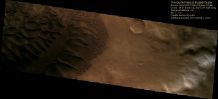
Craters-Russel_Crater-Dunefield-20080317a-PCF-LXTT.jpgDunefield inside Russel Crater (Absolute Natural Colors; credits for the additional process. and color.: Dr Paolo C. Fienga - Lunexit Team)57 visiteCaption NASA:"This beautiful Dunefield is located on the Floor of Russell Crater, in the Noachis Region of Mars".
MareKromium
(7 voti)
|
|
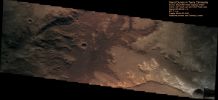
Dunes-Dunefield_in_Terrra_Cimmeria-20080327a-PCF-LXTT.jpgLarge Dunefield in Terra Cimmeria (Absolute Natural Colors; credits for the additional process. and color.: Dr Paolo C. Fienga - Lunexit Team)54 visitenessun commentoMareKromium
(7 voti)
|
|
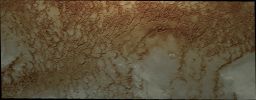
North_Polar_Regions-North_Polar_Erg-PCF-LXTT.jpgNorthern Dunes (Natural Colors; credits for the additional process. and color.: Dr Paolo C. Fienga - Lunexit Team)56 visiteCaption NASA:"This region of North Polar Dunes has less dune materials than other portions of the North Polar Erg. This allows the base (assumption) that the dunes are moving across to be observed".MareKromium
(7 voti)
|
|
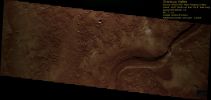
Channels-Unnamed_Channel_in_Granicus_Vallis-20080430a~0.jpgGranicus Vallis (Absolute Natural Colors; credits for the additional process. and color.: Dr Paolo C. Fienga - Lunexit Team)70 visiteCaption NASA:"Granicus Vallis originates from fracture systems of the Elysium Volcanic Complex. This channel system was likely produced by volcanic flows".
MareKromium
(7 voti)
|
|

Craters-Unnamed_Crater_with_Dunefield-20080506a-PCF-LXTT.jpgUnnamed Crater with Small Dunefield (Darkened and Enhanced Natural Colors; credits for the additional process. and color.: Dr Paolo C. Fienga - Lunexit Team)55 visiteCaption NASA:"A field of Sand Dunes in located on the Floor of this Unnamed Crater of Noachis Terra. Uzboi Vallis runs along the Western Rim of this Crater".
MareKromium
(7 voti)
|
|

North_Polar_Features-20080623a-PCF-LXTT.jpgUnnamed Crater with small Dunefield (Natural Colors; credits for the additional process. and color.: Dr Paolo C. Fienga - Lunexit Team)66 visiteCaption NASA:"The dunes in this Polar Crater are starting to darken as the Sun warms the surface and the frost sublimates".
Coord.: 79,2° North Lat. and 61,1° East Long.MareKromium
(7 voti)
|
|

Ophir_Chasma-IR-20071219a.jpgLandslide in Ophir Chasma (IR) - coloring: Lunexit55 visiteCaption NASA: “The large landslide that can be seen on the right side (Dx) of this InfraRed (IR) image is located in Ophir Chasma. Although the resolution is less than the one that can be obtained from an image taken in Visible Light (VL), the large size of the feature is more completely covered by the wider frame size of the THEMIS infrared camera”.
Nota Lunexit: un esempio concreto di caption NASA "non sense".
Perchè vengono scattate le fotografie in IR? Beh – e questo lo sanno anche i bambini e gli “Scienziati da Salotto”… – non certo per avere una "qualità visiva migliore" (in senso stretto) del frame, né per "coprire meglio la superficie ripresa" (in termini di area inquadrabile).
A tal ultimo proposito Vi rammentiamo che il quantum di superficie inquadrabile dipende, in buona sostanza, non solo e non tanto dall'estensione del rilievo che interessa riprendere (attenzione: per questo tipo di frames si parla di rilievi aventi dimensioni comprese fra i 4 ed gli 8 Km di estensione in lunghezza ed i 2/3 Km di estensione in larghezza, e NON di rilievi grandi quanto possono esserlo dei continenti...), né dal tipo di "imaging strip" che la camera dell'Orbiter può ottenere.
Il quantum di cui sopra dipende, essenzialmente, DALL'ALTEZZA da cui la ripresa viene effettuata e dalla capacità di magnificazione della camera che riprende (ed ecco la semplicissima regola generale: per coprire una maggiore superficie con un singolo scatto, occorre aumentare l'altezza dell'Orbiter rispetto al suolo e ridurre la capacità di magnificazione della camera che riprende).
Tutto ciò premesso, e quindi tornando al quesito originale, Vi ricordiamo che le riprese orbitali in IR si fanno, di regola, di notte (o, comunque, in ore nelle quali la luminosità della superficie e bassissima e/o tendente a zero) e per verificare se un certo rilievo EMETTE o RITIENE (e, se SI, QUANTO) CALORE.
La spiegazione NASA, nei termini in cui viene esposta nella riportata caption, quindi – a nostro umile parere –, è totalmente priva di significato.
Anzi, peggio: è fuorviante.
Ed ora provate a rileggerla...
MareKromium
(7 voti)
|
|

Craters-Unnamed_Crater_with_possible_Oil_Lake-V07738009-PCF-LXTT-03.jpgMigrating Dunes, Dirty Waters or maybe Surfacing Hydrocarbons? (4 - Natural Colors; credits for the additional process. and color.: Dr Paolo C. Fienga - Lunexit Team)54 visitenessun commentoMareKromium
(7 voti)
|
|

Clouds-South_Polar_Regions-PCF-LXTT.jpgSouthern Dust Storm (Enhanced Natural Colors; credits for the additional process. and color.: Dr Paolo C. Fienga - Lunexit Team)54 visiteCaption NASA:"This image captured part of one of the larger storms that occurred during the latest Spring Season on Mars. Southern Spring is the season of Dust Storms and this storm is located over Promethei Terra".MareKromium
(7 voti)
|
|

Dunes-Migrating_Dunes-PCF-LXTT.JPGUnnamed Southern Crater with Migrating Dunefield (Extremely Saturated and Enhanced Natural Colors; credits for the additional process. and color.: Dr Paolo C. Fienga - Lunexit Team)54 visitenessun commentoMareKromium
(7 voti)
|
|
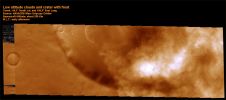
Craters-Unnamed_Crater_with_Frost-00-PCF-LXTT.JPGClouds over "Frosty" Crater (CTX Frame - False Colors; credits for the additional process. and color.: Dr Paolo C. Fienga - Lunar Explorer Italia)55 visiteIl dettaglio della nuvola che scivola sul cratere senza nome situato a Sud-Est del bacino di impatto denominato "Hellas" è molto bello, ma non fermiamoci al dettaglio artistico ed osserviamo il margine interno del cratere posto alla Vostra Sx: le tracce di brina sono evidenti.
E non è tutto: osservate il fondo del cratere. C'è qualcosa che lo "allaga", in parte? Sicuramente non si tratta solo di fango (è l'albedo del dettaglio che ce lo dice).
La nostra prima ipotesi è che, sul fondo di questo cratere senza nome, vi possa essere un discreto quantitativo di ghiaccio d'acqua il quale è talmente trasparente, da permetterci di riuscire a vedere anche i minuscoli crateri che giacciono al di sotto di esso.
La seconda ipotesi, meno immaginifica ma, forse, più realistica, è che sul fondo del cratere vi sia un deposito sottile, ma abbondante, di brina ghiacciata.
Caption NASA:"The dust storm season in the Southern Hemisphere of Mars is well underway. This image of an unnamed crater South-East of Hellas Basin shows the encroachment of a storm in the region".MareKromium
(7 voti)
|
|

Craters-Unnamed_Craters_in_Vastitas_Borealis.jpgTwin-Craters?54 visitenessun commentoMareKromium
(7 voti)
|
|
| 1003 immagini su 84 pagina(e) |
 |
|
|
|
6 | |
|
|
|
|
|





