| Piú votate - Mars from Orbit (from July 2009) |
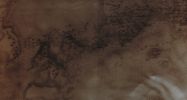
North_Polar_Region-The_Erg-PIA07820-01.jpgFeatures of the North Polar Erg (Absolute Natural Colors; credits for the additional process. and color.: Dr Paolo C. Fienga - Lunexit Team) 143 visiteCaption NASA:"Sand Seas on Earth are often called "Ergs", an Arabic name for Dunefield, but a Sand Sea DIFFERS from a Dunefield in - at least - two ways:
1) a Sand Sea has a LARGE regional extent and
2) the individual Dunes forming the Sand Sea are LARGE in size and complex in form.
This VIS image was taken at 82° North Latitude during Northern Spring. The Dunes are still partially frost covered. This Region is part of the North Polar Sand Sea: so note the complexity and regional coverage of the Dunes".
Image information: VIS instrument;
Latitude: 81,2° North;
Longitude: 118,2° East (such as 241,8° West);
Resolution: 19 meter/pixel.MareKromium
(3 voti)
|
|
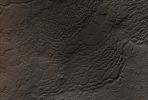
Chaotic_Terrain-Avernus_Chaos-PIA08719-01.jpgFeatures of Avernus Chaos (Enhanced Absolute Natural Colors; credits for the additional process. and color.: Dr Paolo C. Fienga - Lunexit Team) 159 visiteImage information: VIS instrument;
Latitude: 1,3° South;
Longitude: 173,4° East;
Resolution: 18 meter/pixel.MareKromium
(3 voti)
|
|
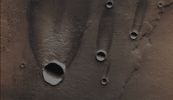
Aeolian_Features-Windstreaks-PIA08422-01.jpgBeautiful Windstreaks (Absolute Natural Colors; credits for the additional process. and color.: Dr Paolo C. Fienga - Lunexit Team)157 visiteCaption NASA originale:"This group of Windstreaks is located on Lava Flows, West of Arsia Mons".
Image information: VIS instrument;
Latitude: 11,0° South;
Longitude: 219,5° East;
Resolution: 18 meter/pixel.
MareKromium
(3 voti)
|
|
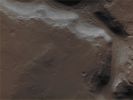
Channels-Auqakuh_Vallis-PIA08465-01.jpgFeatures of Auqakuh Vallis (Absolute Natural Colors; credits for the additional process. and color.: Dr Paolo C. Fienga - Lunexit Team) 137 visiteImage information: VIS instrument;
Latitude: 31,0° North;
Longitude: 60,6° East;
Resolution: 19 meter/pixel.MareKromium
(3 voti)
|
|
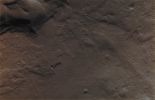
Channels-Auqakuh_Vallis-PIA08465-03.jpgFeatures of Auqakuh Vallis (Absolute Natural Colors; credits for the additional process. and color.: Dr Paolo C. Fienga - Lunexit Team) 136 visiteMareKromium
(3 voti)
|
|
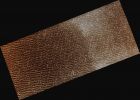
North_Polar_Regions-Olympia_Undae-PIA06848-01.jpgNorth Polar Erg: Olympia Undae (Absolute Natural Colors; credits for the additional process. and color.: Dr Paolo C. Fienga - Lunexit Team)174 visiteImage information: VIS instrument;
Latitude: 81,4° North;
Longitude: 180,6° East (such as 179,4° West);
Resolution: 19 meter/pixel.
MareKromium
(3 voti)
|
|
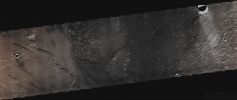
Aeolian_Features-Windstreaks-PIA03935-01.jpgWindstreaks (Enhanced and Darkened Natural Colors; credits for the additional process. and color.: Dr Paolo C. Fienga - Lunexit Team)133 visiteCaption NASA originale:"Windstreaks are features caused by the interaction of Wind and Topographic Landforms. The raised Rims and Bowls of Impact Craters cause a complex interaction such that the Wind Vortex in the Lee (---> lato sottovento/lato protetto) of the Crater can both scour away the Surface Dust and deposit it back in the center of the Lee. If you look closely, you will see evidence of this in a darker Rim enclosing a brighter interior. These Windstreaks are located in the Region between Gordii Dorsum and Amazonis Mensa".
Image information: VIS instrument;
Latitude 23,2° North;
Longitude 237,1° East (such as 122,9 West);
Resolution: 36 meter/pixel.MareKromium
(3 voti)
|
|
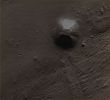
Hills-Knob-Elysium_Planitia-PIA08079-01.jpgBizarre "Knob" in Elysium Planitia (Absolute Natural Colors; credits for the additional process. and color.: Dr Paolo C. Fienga - Lunexit Team)181 visiteImage information: VIS instrument;
Latitude: 1,1° South;
Longitude: 156,0° East;
Resolution: 18 meter/pixel. MareKromium
(3 voti)
|
|
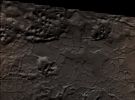
Chaotic_Terrain-Elysium_Chaos-PIA08641-01.jpgChaotic Terrain in Elysium Planitia (1 - Absolute Natural Colors; credits for the additoonal process. and color.: Dr Paolo C. Fienga - Lunexit Team)145 visiteImage information: VIS instrument;
Latitude: - 0,8° North;
Longitude: 172,5° East;
Resolution: 18 meter/pixel. MareKromium
(3 voti)
|
|
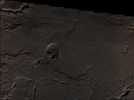
Chaotic_Terrain-Elysium_Chaos-PIA08641-03.jpgChaotic Terrain in Elysium Planitia (2 - Absolute Natural Colors; credits for the additoonal process. and color.: Dr Paolo C. Fienga - Lunexit Team)139 visiteImage information: VIS instrument;
Latitude: - 0,8° North;
Longitude: 172,5° East;
Resolution: 18 meter/pixel. MareKromium
(3 voti)
|
|
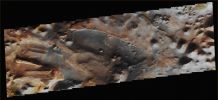
Chaotic_Terrain-Aureum_Chaos-PIA07931-PCF-LXTT-01.jpgFeatures of Aureum Chaos (Extremely Enhanced Natural Colors; credits for the additional process. and color.: Dr Paolo C. Fienga - Lunexit Team)188 visiteNote: the THEMIS VIS camera is capable of capturing color images of the Martian Surface using 5 different color filters. In this mode of operation, the spatial resolution and coverage of the image must be reduced to accommodate the additional data volume produced from using multiple filters. To make a color image, 3 of the 5 filter images (each in grayscale) are selected. Each is contrast enhanced and then converted to a red, green, or blue intensity image.
These 3 images are then combined to produce a full color, single image BUT, since the THEMIS color filters DO NOT span the full range of colors seen by the human eye, a color THEMIS image DOES NOT represent true color. Also, because each single-filter image is contrast enhanced before inclusion in the 3-color image, the apparent color variation of the scene is exaggerated. Nevertheless, the color variation that does appear is representative of some change in color, however subtle, in the actual scene. The long edges of THEMIS color images typically contain color artifacts that do not represent or imply actual Surface Variations.
Image information: VIS instrument;
Latitude 3,6° South;
Longitude 332,9° East (such as 27,1° West);
Resolution: 35 meter/pixel.MareKromium
(3 voti)
|
|
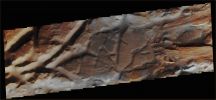
Chaotic_Terrain-Aureum_Chaos-PIA07932-PCF-LXTT.jpgFeatures of Aureum Chaos (Extremely Enhanced Natural Colors; credits for the additional process. and color.: Dr Paolo C. Fienga - Lunexit Team)188 visiteNote: the THEMIS VIS camera is capable of capturing color images of the Martian Surface using 5 different color filters. In this mode of operation, the spatial resolution and coverage of the image must be reduced to accommodate the additional data volume produced from using multiple filters. To make a color image, 3 of the 5 filter images (each in grayscale) are selected. Each is contrast enhanced and then converted to a red, green, or blue intensity image.
These 3 images are then combined to produce a full color, single image BUT, since the THEMIS color filters DO NOT span the full range of colors seen by the human eye, a color THEMIS image DOES NOT represent true color. Also, because each single-filter image is contrast enhanced before inclusion in the 3-color image, the apparent color variation of the scene is exaggerated. Nevertheless, the color variation that does appear is representative of some change in color, however subtle, in the actual scene. The long edges of THEMIS color images typically contain color artifacts that do not represent or imply actual Surface Variations.
Image information: VIS instrument;
Latitude 3,6° South;
Longitude 332,9° East (such as 27,1° West);
Resolution: 35 meter/pixel.MareKromium
(3 voti)
|
|
| 1003 immagini su 84 pagina(e) |
 |
|
|
|
|
46 | |
|
|
|
|





