| Piú votate - Mars from Orbit (from July 2009) |

Channels-Drainage_Channel-MO.jpgDrainage Channel System (Natural Colors; credits for the additional process. and color.: Dr Paolo C. Fienga - Lunexit Team)61 visiteCaption NASA:"This small Channel System is located on the Outer Rim of Sytinskaya Crater".
Coord.: 43,1° North Lat. and 306,4° East Long.MareKromium
(4 voti)
|
|
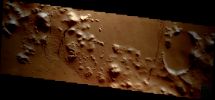
Volcanic_and_Tectonic_Features-Fissures-Cerberus_Fossae-PCF-LXTT.jpgFeatures of Cerberus Fossae: Fissures (Darkened Natural Colors; credits for the additional process. and color.: Dr Paolo C. Fienga - Lunar Explorer Italia)58 visiteSource: NASA/2001 Mars Odyssey Orbiter
Coord.: 8,9° North Lat. and 158,6° East Long. (center of the frame)
Credits: NASA/JPL/Arizona State University (ASU)
Additional process. and color.: Lunar Explorer ItaliaMareKromium
(4 voti)
|
|
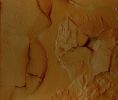
Volcanic_Regions-Elysium_Planitia-PIA11446.jpgFractured Mounds in Elysium Planitia (3D and Enhanced Natural Colors; credits: NASA and Lunar Explorer Italia)62 visiteThis stereo view shows fractured mounds on the southern edge of Elysium Planitia on Mars. It combines two images taken by the High Resolution Imaging Science Experiment (HiRISE) camera on NASA's Mars Reconnaissance Orbiter. When seen through red-green (or blue) glasses, the view appears three dimensional.
This is one example of 362 stereo views posted by the HiRISE team on Dec. 8, 2008, at http://hirise.lpl.arizona.edu/anaglyphs. This view spans an area about 6 Km (3,7 miles) wide.
The mounds on the southern edge of Elysium Planitia are typically a few kilometers or miles in diameter and about 60 meters (200 feet) tall. Fractures that crisscross their surfaces are dilational (extensional) in nature, suggesting that the mounds formed by localized uplift (meaning that they were pushed up from below).
The 3D perspective shows that the uplift is not uniform along a fracture and can favor one side.
The mounds are probably composed of solidified lava. They are contiguous with, and texturally similar to, flood lavas that blanket much of Elysium Planitia. Where dilation cracks provide cross-sectional exposure, the uplifted material is rocky.
Patches of mechanically weak and disrupted material overlie the rocky mound material. This is particularly conspicuous in the northeast corner of the image. These patches may be remnants of a layer that was once more continuous but has been extensively eroded. Smooth lava plains fill the low-lying areas between the mounds. They are riddled with sinuous pressure ridges. The entire area is covered by a relatively thin layer of dust and sand.
One of the HiRISE images used in this stereo view is catalogued as PSP_003597_1765, taken May 3, 2007, and as PSP_002542_1765, taken Feb. 10, 2007. The location is about 3° South Lat. and 168° East Long. .MareKromium
(4 voti)
|
|

Craters-Unnamed_Crater_in_Sirenum_Fossae-20071121a-PCF-LXTT.jpgUnnamed Crater in Sirenum Fossae (Darkened and Enhanced Absolute Natural Colors; credits for the additional process. and color.: Dr Paolo C. Fienga - Lunar Explorer Italia)70 visiteCaption NASA:"This Unnamed Crater is located in near Sirenum Fossae and some of its modifications may be related to the tectonic activity that created the Fossae System. The Floor of this Unnamed Crater has be changed drastically from its original appearance". MareKromium
(4 voti)
|
|

Channels-Unnamed_Channel_and_Chaotic_terrain_in_Terra_Sabaea-MO.jpgUnnamed Channel and Chaotic Terrain in Terra Sabaea (Natural Colors/Tri-Chromatic Version; credits: Dr Paolo C. Fienga - Lunexit Team)60 visitenessun commentoMareKromium
(4 voti)
|
|
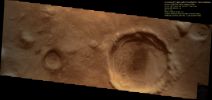
Craters-Unnamed_Crater-Terra_Sabaea-PCF-LXTT.jpgUnnamed Crater in Terra Sabaea (Natural Colors; credits for the additional process. and color.: Dr Paolo C. Fienga - Lunar Explorer Italia)58 visitenessun commentoMareKromium
(4 voti)
|
|
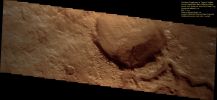
Craters-Unnamed_Crater_with_Channel-PCF-LXTT.jpgUnnamed Crater with Channel and small Dunefield in Tagus Valles (Natural Colors; credits for the additional process. and color.: Dr Paolo C. Fienga - Lunexit Team)58 visitenessun commentoMareKromium
(4 voti)
|
|

Landslides-Melas_Chasma-20071114a-PCF-LXTT.jpgLandslide in Melas Chasma (Enhanced Natural Colors; credits for the additional process. and color.: Dr Paolo C. Fienga - Lunexit Team)59 visitenessun commentoMareKromium
(4 voti)
|
|
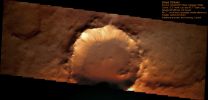
Craters-Unnamed_Crater_in_Terra_Sabaea-20071122a-PCF-LXTT.jpgUnnamed Crater in Terra Sabaea (Absolute Natural Colors; credits for the additional process. and color.: Dr Paolo C. Fienga - Lunar Explorer Italia)74 visiteCaption NASA:"The Dark Slope Streaks on the Interior Rim of this Unnamed Crater located in Terra Sabaea mark those places where the upper layer of Dust has been removed, exposing the darker rock beneath". MareKromium
(4 voti)
|
|
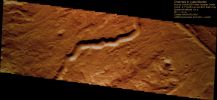
Channels-Unnamed_Channel-Lybia_Montes_Region-20080703a.jpgUnnamed Channel in Lybia Montes (Extremely Enhanced Natural Colors/Tri-Chromatic Version; credits: Dr Paolo C. Fienga - Lunexit Team)60 visitenessun commentoMareKromium
(4 voti)
|
|
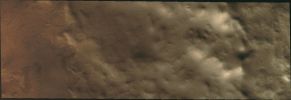
Craters-Unnamed_Crater-Southern_Latitudes-20080114a-PCF-LXTT.jpgWhen Summer "Falls"... (Absolute Natural Colors; credits for the additional process. and color.: Dr Paolo C. Fienga - Lunexit Team)57 visiteCaption NASA:"Autumn has begun in the Southern Hemisphere of Mars. As the Sun retreats northward frost will begin to accumulate. The frost-free Floor of this Unnamed Crater, with it's intricate texture, will soon be hidden. Due to Mars' orbit, the seasons are twice as long as on Earth - so it will be a full earthyear before this Crater Floor is exposed again".MareKromium
(4 voti)
|
|
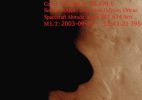
Craters-Unnamed_Crater_with_possible_Oil_Lake-V07738009-PCF-LXTT-00.jpgMigrating Dunes, Dirty Waters or maybe Surfacing Hydrocarbons? (1 - Natural Colors; credits for the additional process. and color.: Dr Paolo C. Fienga - Lunexit Team)65 visiteAttraverso la ricerca e selezione, operata dal bravissimo Dr Gianluigi Barca, di 5 frames, ottenuti nell'arco di 4 anni ma TUTTI relativi al medesimo rilievo superficiale (ossìa un cratere di modeste dimensioni situato ad una relativamente elevata Latitudine Sud), è possibile vedere con estrema chiarezza la - diciamo così... - "bizzarra" evoluzione di un "qualcosa" che giace sul fondo del cratere stesso.
Non è necessario spendere troppe parole sull'evidenza delle variazioni (anche cromatiche) occorse al materiale inquadrato in questi 5 frames, ma ci sembra opportuno sottolineare che una sequenza talmente incredibile e così chiaramente indicativa del verificarsi di eventi caratterizzati da una matrice (forse) indicativa di una recentissima - ed ancora perdurante - attività geologica avrebbe meritato l'attenzione di Scienziati e Ricercatori di tutto il Mondo. Attenzione che, invece (ed almeno per quanto ci è dato sapere) non c'è stata. Zero, nihil: totale silenzio. Curioso. Curioso specialmente allorchè andiamo a vedere (e leggere, in 1000 salse diverse!) che un evento di gran lunga meno eclatante - il rinnovarsi/ampliarsi di un "gully" - ha trovato spazio ed interesse (forse eccessivi e sproporzionati) nell'intera Comunità Scientifica.
Attenzione: che l'ampliarsi e modificarsi di "gullies" sia un possibile indice della presenza di acque superficiali su Marte è un fatto importante, senza dubbio; ma anche l'avanzare, il ritrarsi ed il mutare di forma di questo "materiale" (il quale potrebbe anche avere una origine organica) in un arco di tempo così piccolo - geologicamente parlando - a noi pare un evento meritevole di grande - anzi GRANDISSIMA - attenzione!
Ma che cosa stiamo guardando? Un nuovo - e terribilmente ingannevole gioco di chiaro/scuri (al quale si abbina un ulteriore elemento fuorviante per i nostri occhi il quale è derivante da leggeri mutamenti della luce sull'Orizzonte Locale e/o da variazioni dell'altezza e dell'angolazione da cui le riprese sono state effettuate)?
Secondo noi, fra le ipotesi (pur) logiche e pragmatiche considerabili, questa è decisamente la meno soddisfacente (anche se non possiamo comunque escluderla al 100%).
Si tratta allora di "dune migranti"? Tendenzialmente, anche dopo aver esaminato altri frames relativi a queste "migrating dunes", saremmo portati a dire di no (manca l'effetto "scia" - di polveri e sabbie (collose) residuali - che caratterizza questo particolare fenomeno).
Si tratta forse di "fanghi" (ossìa di "acque sporche")? Ipotesi plausibile.
O magari si tratta di Idrocarburi Affioranti? Ecco: questa idea ci piace e, ora che stiamo osservando Marte con sempre maggiore attenzione e - soprattutto - "sapendo" quello che cerchiamo, l'ipotesi di cui sopra ci sembra attendibilissima. Idrocarburi frammisti a polveri e residui di CO2: osservate il frame n. 4 con particolare attenzione e poi, se volete, comunicateci le Vostre opinioni.
E COMPLIMENTI vivissimi al Dr Barca!MareKromium
(4 voti)
|
|
| 1003 immagini su 84 pagina(e) |
 |
|
|
|
|
40 | |
|
|
|
|





