| Piú votate - Mars from Orbit (from July 2009) |

Chasmas-Echus_Chasma-PIA08022-00.jpgDust Avalanches in Echus Chasma (1)57 visiteImage information: VIS instrument;
Latitude: 3,6° North;
Longitude: 280,9° East;
Resolution: 18 meter/pixel. 
(5 voti)
|
|
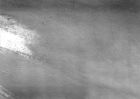
South_Polar_Regions-Clouds-PIA02171-2.jpgClouds (RAW and b/w NASA Original Frame)59 visiteIn questa immagine si possono vedere delle sottili (quasi trasparenti...) formazioni nuvolose che sovrastano le Regioni Presso-Sud Polari di Marte. L'evidente sottigliezza delle nuvole è indicativa della circostanza per cui esse dovrebbero essere composte in larga prevalenza da ghiaccio d'acqua. Da ricordare, quindi, che le formazioni nuvolose "spesse", su Marte, sono invece prevalentemente costituite da polveri.
Image information: VIS instrument;
Latitude: 86,7° South;
Longitude: 212,3° East;
Resolution: 17 meter/pixel.
(5 voti)
|
|

Craters-Holden_Crater-PIA03694-1.jpgDeposits inside Holden Crater (1)57 visiteImage information: VIS instrument;
Latitude: -27,3° N;
Longitude: 324,5° E;
Resolution: 17 meter/pixel.
(5 voti)
|
|

Dunes-PaleoDunes-3.JPGPaleodunes (3 - Original NASA/Viking 2 Project b/w Frame)57 visitenessun commento
(5 voti)
|
|
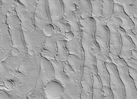
Dunes-PaleoDunes-1.jpgPaleodunes (1 - Original NASA/MGS/MSSS b/w Frame)57 visiteCaption NASA:"A pair of MGS-MOC images shows close-up views of a Sand Dunefield that was first detected by the Viking Orbiters in the late 1970's. What is surprising about the MOC images is that they reveal a dune field unlike any other thus far seen on Mars: this one has Impact Craters on its Surface, and LOTS of them! The field of parallel Ridges North of the Dunefield is a wind-eroded material named "Apollinaris Sulci". It is possible that the Dunefield shown here was once covered by this wind-eroded material and was later exhumed. Regardless, the Dunes were somehow hardened and have been exposed as hard rock on the Martian Surface long enough for many Impact Craters smaller than a few hundred meters (such as few hundred yards) across to form. These Dunes are therefore quite ancient: one might say that this is a 'fossilized' Dunefield".
(5 voti)
|
|
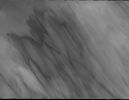
Martian_Lower_Athmosphere-Winds_and_Fog-PIA07417-00.jpgLower Athmosphere (Original NASA/JPL/ASU b/w Frame)69 visitenessun commento
(5 voti)
|
|

North_Polar_Features-Layers-PIA18238-PCF-LXTT-IPF.jpgNorth Polar Layers with "Unconformities" (Absolute Natural Colors; credits for the additional process. and color.: Dr Paolo C. Fienga/Lunar Explorer Italia/Italian Planetary Foundation)100 visiteIn this VIS image, taken by the NASA - Mars Odyssey Orbiter on March, 3rd, 2014, and during its 54.206th orbit around the Red Planet, we can see a small portion of the so-called North Polar Layered Deposits (or "NPLD", for short), which - according to the data collected so far and duly examined by Planetary Scientists - are (mostly) made of Water-Ice.
Latitude (centered): 79,8759° North
Longitude (centered): 339,4930° East
Instrument: VIS
This image (which is a crop taken from an Original Mars Odyssey Orbiter b/w and Map-Projected frame published on the NASA - Planetary Photojournal with the ID n. PIA 18240) has been additionally processed, magnified to aid the visibility of the details, contrast enhanced, Gamma corrected and then colorized in Absolute Natural Colors (such as the colors that a human eye would actually perceive if someone were onboard the NASA - Mars Odyssey Orbiter and then looked down, towards the Surface of Mars), by using an original technique created - and, in time, dramatically improved - by the Lunar Explorer Italia Team.MareKromium
(4 voti)
|
|

Tempe_Terra-PIA18251-PCF-LXTT-IPF-1.jpgFeatures of Tempe Terra (Absolute Natural Colors; credits for the additional process. and color.: Dr Paolo C. Fienga/Lunar Explorer Italia/Italian Planetary Foundation)86 visiteIn this VIS image, taken by the NASA - Mars Odyssey Orbiter on March, 5th, 2014, and during its 54.219th orbit around the Red Planet, we can see a small portion of the Eastern Margin of the Martian Region known as Tempe Terra, where numerous Unnamed Outflow Channels can be found. In this picture, if you look at it carefully, you will be able to see an interesting and unusually-looking Craters' Cluster (approx. 13 small Impact Craters, very close to one another and showing different levels of degradation, are visible - look at the lower Right - Dx - center of the frame) and a white-colored, medium-sized Outcrop (lower center of the frame), surrounded by small, low and curvilinear Ridges whose origin is (so far) unknown.
Latitude (centered): 35,3128° North
Longitude (centered): 305,1220° East
Instrument: VIS
This image (which is a crop taken from an Original Mars Odyssey Orbiter b/w and Map-Projected frame published on the NASA - Planetary Photojournal with the ID n. PIA 18251) has been additionally processed, magnified to aid the visibility of the details, contrast enhanced, Gamma corrected and then colorized in Absolute Natural Colors (such as the colors that a human eye would actually perceive if someone were onboard the NASA - Mars Odyssey Orbiter and then looked down, towards the Surface of Mars), by using an original technique created - and, in time, dramatically improved - by the Lunar Explorer Italia Team.MareKromium
(4 voti)
|
|

Chasmas-Coprates_Chasma-PIA17224-PCF-LXTT-IPF.jpgFeatures of Coprates Chasma (Absolute Natural Colors; credits for the additional process. and color.: Dr Paolo C. Fienga/Lunar Explorer Italia/Italian Planetary Foundation)68 visiteIn this VIS image, taken by the NASA - Mars Odyssey Orbiter on March, 11, 2013 and during its 49.862nd orbit around the Red Planet, we can see that a large Landslide Deposit fills a portion of the Floor of Coprates Chasma: a huge and extremely long Canyon located the Coprates Quadrangle of Mars, at 13,4° South Latitude and 61,4° West Longitude. Coprates Chasma (---> the Abyss of Coprates) is part of the enormous Valles Marineris Canyon System and its length is of approx. 966 Km (such as about 599,88 miles).
Latitude (centered): 12,850° South
Longitude (centered): 293,254° East
Instrument: VIS
This frame (which is an Original Mars Odyssey Orbiter b/w frame published on the NASA - Planetary Photojournal with the ID n. PIA 17224) has been additionally processed, magnified, contrast enhanced and then colorized in Absolute Natural Colors (such as the colors that a human eye would actually perceive if someone were onboard the NASA - Mars Odyssey Orbiter and then looked down, towards the Surface of Mars), by using an original technique created - and, in time, dramatically improved - by the Lunar Explorer Italia Team.MareKromium
(4 voti)
|
|

Channels-Marte_Vallis-Streamlined_Islands-PIA16507-PCF-LXTT-IPF.jpgStreamlined Island in Marte Vallis (Absolute Natural Colors; credits for the additional process. and color.: Dr Paolo C. Fienga - Lunar Explorer Italia/Italian Planetary Foundation)62 visiteToday's APOD is a frame taken by the NASA - Mars Odyssey Orbiter which shows us a so-called "Streamlined Island" that formed in the Northern Channel known as Marte Vallis. This Martian Channel is about 185 Km long and it has been identified as an Outflow Channel, carved in a quite distant geological past by the action of catastrophic releases of Water from Aquifers existing beneath the Martian Surface.
Orbit Number: 47605
Latitude: 12,4105° North
Longitude: 182,426° East
Instrument: VIS
Captured: September, 6th, 2012
This frame (which is an Original Mars Odyssey Orbiter b/w frame published on the NASA - Planetary Photojournal with the ID n. PIA 16507) has been additionally processed and then colorized in Absolute Natural Colors (such as the colors that a human eye would actually perceive if someone were onboard the NASA - Mars Odyssey Orbiter and then looked down, towards the Surface of Mars), by using an original technique created - and, in time, dramatically improved - by the Lunar Explorer Italia Team.MareKromium
(4 voti)
|
|

Channels-Maja_Valles-PIA16339-PCF-LXTT-IPF.jpgMaja Valles (Absolute Natural Colors; credits for the additional process. and color.: Dr Paolo C. Fienga/Lunar Explorer Italia/Italian Planetary Foundation)71 visiteOrbit Number: 47426
Latitude: 16,552° North
Longitude: 304,341° East
Instrument: VIS
Captured: August, 3rd, 2012MareKromium
(4 voti)
|
|
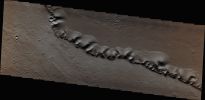
Volcanic_Regions-Tharsis-Uranius_Dorsum-PIA16336-PCF-LXTT-IPF.jpgUranius Dorsum (Absolute Natural Colors; credits for the research and the additional process.: Dr Paolo C. Fienga/Lunar Explorer Italia/Italian Planetary Foundation)61 visiteOrbit Number: 47664
Latitude (centered): 22,1827° North
Longitude (East): 282,689°
Instrument: VIS
Captured: September, 11th, 2012MareKromium
(4 voti)
|
|
| 1003 immagini su 84 pagina(e) |
 |
|
|
|
|
24 | |
|
|
|
|





