| Piú votate - Mars from Orbit (from July 2009) |

Channels-Unnamed_Channel_in_Noachis_Terra-MO-20090331a.jpgUnnamed Channel in Noachis Terra (Natural Colors/Tri-Chromatic Version; credits: Dr Paolo C. Fienga - Lunexit Team)59 visiteCaption NASA:"Numerous Channels dissect the Inner Rim of this Unnamed Crater in Noachis Terra. Several small, dark dunes are located in the center of the Crater".
Coord.: 38,0° South Lat. and 9,8° East Long.MareKromium
(5 voti)
|
|

Melas_Chasma-20090326a-PCF-LXTT.jpgDeposits in Melas Chasma (Saturated Natural Colors; credits for the additional process. and color.: Dr Paolo C. Fienga - Lunar Explorer Italia)57 visiteCoord.: 12,8° South Lat. and 288,1° East Long.MareKromium
(5 voti)
|
|
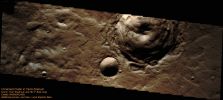
Craters-Unnamed_Crater-Terra_Sirenum-20090318a-PCF-LXTT.jpgHighly Degraded Unnamed Crater in Terra Sirenum (Natural Colors; credits: Dr Paolo C. Fienga - Lunar Explorer Italia)56 visitenessun commentoMareKromium
(5 voti)
|
|
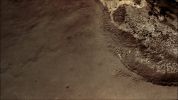
Meridiani_Planum-PIA08718-PCF-LXTT.jpgOutcrop and Surface of Meridiani Planum (Absolute Natural Colors; credits for the additional process. and color: Dr Paolo C. Fienga - Lunexit Team)57 visiteImage information: VIS instrument;
Latitude: 0,9° North;
Longitude: 0,6° East;
Resolution: 18 meter/pixel MareKromium
(5 voti)
|
|
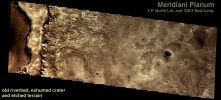
Meridiani_Planum-PCF-LXTT.jpgFeatures of Meridiani Planum (Absolute Natural Colors; credits for the additional process. and color: Dr Paolo C. Fienga - Lunexit Team)57 visitenessun commentoMareKromium
(5 voti)
|
|

Candor_Chasma-MO-20090309a.jpgCandor Chasma (Natural Colors; credits: Lunar Explorer Italia)56 visiteCoord.: 8,0° South Lat. and 295,0° East Long.MareKromium
(5 voti)
|
|
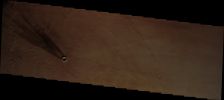
Aeolian_Features-Windstreaks-Pavonis_Mons-20090306a.jpgBeautiful Windstreak, East of Pavonis Mons (Enhanced and Darkened Natural Colors; credits for the additional process. and color.: Dr Paolo C. Fienga - Lunar Explorer Italia)56 visiteCaption NASA:"This Windstreak is located on the Volcanic Flows located East of Pavonis Mons. The multiple tail ends indicate the direction of the wind has changed over time. The darkest tail is the most recent".
Coord.: 0,8° South Lat. and 256,5° East Long.MareKromium
(5 voti)
|
|
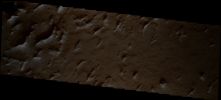
Dunes-Gigas_Sulci-20090304a-PCF-LXTT.jpgHard and Old Dunes in Gigas Sulci (Darkened Natural Colors; credits for the additional process. and color.: Dr Paolo C. Fienga - Lunar Explorer Italia)55 visiteCoord.: 8,0° North Lat. and 230,3° East Long.MareKromium
(5 voti)
|
|
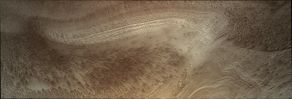
South_Polar_features-Fans-SP-MO-20090224a.jpgSouth Polar Spring: Fans (Natural Colors; credits for the additional process. and color.: Dr Paolo C. Fienga - Lunar Explorer Italia)56 visiteCaption NASA:"As the Sun continues to warm the South Polar Region, spots appear on the ice. The dark material of the spots is apparently mobile, with the wind able to lengthen the spots into streaks".
Coord.: 86,6° South Lat. and 99,1° East Long.MareKromium
(5 voti)
|
|

Craters-Unnamed_Crater-PIA11793-PCF-LXTT.jpgLobate and Chevron Flows (possible Natural Colors; credits: Dr Paolo C. Fienga - Lunar Explorer Italia)56 visiteCaption NASA:"The lower portion of this image from the Thermal Emission Imaging System camera (THEMIS) on NASA's Mars Odyssey Orbiter shows a Crater about 16 Km (approx. 10 miles) in diameter with features studied as evidence of deposition or erosion.
The Crater is centered at 40,32° South Lat. and 132,5° East Long., in the eastern portion of the Hellas basin on Mars. It has Gullies and Arcuate Ridges on its North, pole-facing interior wall.
This Crater is in the center of a larger (60-Km or aaprox. 37-mile diameter) crater with lobate flows on its North, interior wall. The image, number V07798008 in the THEMIS catalog, covers a swath of ground of about 17,4 Km (such as approx. 10,8 miles) wide".
Nota Lunexit: c'è un'indicazione NASA che abbiamo barrato con un "NO" poichè essa indica (e quindi definisce) come "Lobate" un rilievo che è invece - a nostro parere - caratterizzato da una configurazione superficiale a "Chevron".
Verificate Voi stessi.
A titolo di annotazione personale, ci sembra davvero strano che un Addetto NASA (sulla cui competenza non discutiamo) possa incorrere in una simile svista.
Inoltre, sempre con riguardo a questo rilievo a "Chevron", siamo anche dubbiosi sul fatto che esso possa essere definito come "Flow" (ossìa "flusso", evidenza di una "colata").
Più che altro, il rilievo in questione ci SEMBRA una sorta di doppia-cresta del terreno la quale è stata - parzialmente - sepolta a seguito di un fenomeno alluvionale (per i più "Immaginosi" fra i nostri Lettori, poi, vi è anche la possibilità che si possa trattare di una struttura più complessa e "meno naturale" di una semplice increspatura del suolo la quale, sempre a seguito di un evendo alluvionale, è stata quasi completamente sepolta da fango e detriti, poi solidificatisi).MareKromium
(5 voti)
|
|
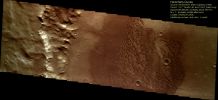
Craters-Herschel_Crater-Dunefield-20080505a-PCF-LXTT.jpgDunefield inside Herschel Crater (Extremely Enhanced Natural Colors; credits for the additional process. and color.: Dr Paolo C. Fienga - Lunexit Team)56 visitenessun commentoMareKromium
(5 voti)
|
|
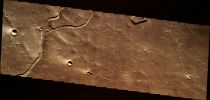
Channels-Hebrus_Vallis-PCF-LXTT.jpgHebrus Vallis (Enhanced Natural Colors; credits for the additional process. and color.: Dr Paolo C. Fienga - Lunar Explorer Italia)56 visiteCoord.: 20,0° North Lat. and 127,2° East Long.MareKromium
(5 voti)
|
|
| 1003 immagini su 84 pagina(e) |
 |
|
|
|
|
19 | |
|
|
|
|





