| Piú votate - Mars from Orbit (from July 2009) |

North_Polar_Features-The_Erg-20080620a-PCF-LXTT.jpgThe North Polar Erg (Absolute Natural Colors; credits for the additional process. and color.: Dr Paolo C. Fienga - Lunexit Team)56 visiteCaption NASA:"Spring in the Northern Polar Region means the return of the Sun. This image shows a small portion of the North Polar Sand Sea, an immense Region of sand dunes. The dunes are just starting to shed their Winter frost and will darken as Spring becomes Summer and the dark sand is revealed".MareKromium
(12 voti)
|
|

Aeolian_Features-DD_Tracks-PIA02185-1.jpgDeep Dust Devil Tracks between Brashear and Ross Crater (Original NASA/JPL/ASU b/w Frame)61 visiteCaption originale:"Dust Devil activity in this region between Brashear and Ross Craters is very common.
Large areas full of DD tracks surround the South Polar Region of Mars.
Image information: VIS instrument;
Latitude: - 55,2° North;
Longitude: 244,2° East;
Resolution: 17 meter/pixel.
(12 voti)
|
|

Aeolian_Features-Windstreaks-00.jpgDark-Smoke Emissions or Windstreaks? (False Colors)56 visiteCaption NASA:"The dark windstreaks in this image are located on volcanic flows North-West of Ascraeus Mons".
Nota: la NASA, come sempre, ci dice tutto e non ci dice nulla.
I Windstreaks, se ci pensate bene, non sono altro che le “impronte” lasciate dal vento allorchè esso soffia - in modo particolarmente violento - su rilievi (più o meno) elevati rispetto al Datum.
Rilievi che “proteggono” la superficie che si trova alle loro “spalle” (ossìa nel loro lato sottovento).
E' così, infatti, che si spiegano i Windstreaks sui lati opposti rispetto ai versanti sopravvento di picchi, collinette, crateri con bordi elevati e, talvolta, massi e macigni di grandi dimensioni.
Su scala più piccola, queste "impronte del vento", sono conosciute come "Windtails" e si possono vedere in svariati frames Viking, Pathfinder, Spirit ed Opportunity.
Come le riconosciamo? Le riconosciamo come strisce di colore più chiaro o più scuro (e comunque diverso) rispetto al resto del paesaggio circostante il rilievo dal quale si dipartono; strisce del tutto similari a quelle dei loro reciproci più grandi.
E che cosa unisce i Windstreaks alle Windtails? Ma è chiaro: si tratta della meccanica di formazione, che è del tutto identica per entrambi.
Ora, osservate qualche frames delle nostre Gallerie dedicate a Marte (ed anche alla Luna, se volete) che Vi mostra i bellissimi Windstreaks che caratterizzano innumerevoli rilievi del Pianeta Rosso (guardate i Windstreaks che si formano in corrispondenza di crateri, soprattutto) e poi osservate i Windstreaks di questo frame. Una differenza c'è, ed è notevole!
Ricordate: il vento "spazza" il suolo di Marte; i rilievi che si "oppongono" al vento, proteggono il suolo.
Il contrasto fra suolo "spazzato" e suolo "protetto" si evidenzia nel Windstreak ed il Windstreak, quindi, è la porzione di suolo opposta rispetto al rilievo sopravvento la quale rimane intatta nonostante il (o comunque meno colpita dal) soffiare del vento – Windstreak di Tipo 1).
I Windstreaks che vedete in questo frame, invece, sono esattamente l'opposto di quanto sopra descritto: essi sono i segni di un "cambiamento" del suolo (un suo divenire più scuro, quasi nero) a seguito del soffiare del vento.
Quindi essi non sono l'evidenza oggettiva di un'area superficiale intatta (in tutto od in parte), bensì l'opposto! Essi evidenziano, a nostro parere, un deposito di materiale il quale è stato "caricato" dal vento e quindi spinto (soffiato via) nella direzione in cui esso - vento - spirava.
Questo fenomeno (tipicamente vulcanico, in origine) si verifica - ad esempio - anche sulla Terra allorchè, durante un'emissione di fumo (o comunque durante un'emissione di materiale dalle profondità - pensate ad uno sbuffo di fumo o di cenere vulcanica, od anche ad un geyser), inizia a spirare vento.
In direzione opposta rispetto al camino, si forma il Windstreak.
Un Windstreak, però, che "segna e definisce" l'area superficiale toccata da quanto trasportato dal vento e NON l'area superficiale intatta poiché protetta dal rilievo posto sopravvento (Windstreak di Tipo 2)!
I Windstreaks di questo frame sono, a nostro avviso, di Tipo 2.
Ora, se questo è vero, la conclusione del commento è in queste domande: che cosa stava fuoriuscendo dalle prossimità di quei crateri ripresi da Mars – Odyssey quando il vento ha iniziato a soffiare, disegnando quello che ora vediamo?
Era cenere, erano polveri, era fumo?
E soprattutto, che cosa c'è "al di sotto della superficie" che è ancora così vivo e vitale?
Quando Marte si risveglierà, che cosa potrebbe accadere?...
(11 voti)
|
|

North_Polar_Features-The_Erg-PCF-LXTT-1.jpgBarchan Dunes in the North Polar Erg (Absolute Natural Colors; credits for the additional process. and color.: Dr Paolo C. Fienga - Lunexit Team)56 visitenessun commentoMareKromium
(10 voti)
|
|

Dunefield-Vinogradov_Crater-20080303a-PCF-LXTT.jpgHuge Dune-Field inside Vinogradov Crater (Natural Colors; credits for the additional process. and color.: Dr Paolo C. Fienga - Lunexit Team)54 visitenessun commento
MareKromium
(10 voti)
|
|

Dunes-Migrating_Dunes-PCF-LXTT.jpgThe "Migrating Dunes" of Bosporus Planum...Again! (Saturated and Enhanced Natural Colors; credits for the additional process. and color.: Dr Paolo C. Fienga - Lunexit Team)56 visitenessun commento
(10 voti)
|
|

Dunes-Dunefield_in_Nereidum_Montes-20071214a-PCF-LXTT.jpgDark Dunefield in Western Nereidum Montes (Natural Colors; credits for the additional process. and color.: Dr Paolo C. Fienga - Lunexit Team)54 visitenessun commentoMareKromium
(9 voti)
|
|

North_Polar_Features-The_Erg-PCF-LXTT-3.jpgNorth Polar Erg (Absolute Natural Colors; credits for the additional process. and color.: Dr Paolo C. Fienga - Lunexit Team)56 visiteCaption NASA:"A vast Region of sand dunes is located on the margin of the North Polar Cap of Mars. This 'sea' of sand is call "Polar Erg".
Coord.: 80,5° North Lat. and 183,5° East Long.
MareKromium
(9 voti)
|
|
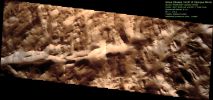
Chaotic_Terrain-Slope_Streaks-PCF-LXTT.jpgSlope Streaks (Enhanced and Saturated Natural Colors; credits for the additional process. and color.: Dr Paolo C. Fienga - Lunexit Team)57 visitenessun commentoMareKromium
(9 voti)
|
|
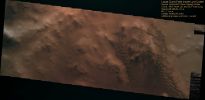
Craters-Lyot_Crater-Dunefield-20080625a-PCF-LXTT.jpgLarge Dunefield inside Lyot Crater (Absolute Natural Colors; credits for the additional process. and color.: Dr Paolo C. Fienga - Lunexit Team)56 visitenessun commentoMareKromium
(9 voti)
|
|

Aeolian_Features-Windstreaks-20080515a-PCF-LXTT.jpg"V-Shaped" Windstreaks in Meridiani Planum (Natural Colors; credits for the additional process. and color.: Dr Paolo C. Fienga - Lunexit Team)101 visiteCaption NASA:"These windstreaks are located to the North-East of Meridiani Planum. The "tails"point in different directions, indicating that the winds in the Region vary in direction".MareKromium
(9 voti)
|
|

Craters-Pollack_Crater_and_White_Rock-20020419a-PCF-LXTT.jpgPollack Crater and "White Rock" (Slightly Saturated Absolute Natural Colors; credits for the additional process. and color.: Dr Paolo C. Fienga - Lunexit Team)55 visiteCaption NASA:"White Rock is the unofficial name for this unusual landform which was first observed during the Mariner 9 Mission in the early 70's. As later analysis of additional data sets would show, White Rock is neither white nor dense rock. Its apparent brightness arises from the fact that the material surrounding it is so dark. Images from the Mars Global Surveyor MOC camera revealed dark sand dunes surrounding White Rock and on the floor of the troughs within it.
Some of these dunes are just apparent in the THEMIS image. Although there was speculation that the material composing White Rock could be salts from an ancient dry lakebed, spectral data from the MGS TES instrument did not support this claim. Instead, the White Rock deposit may be the erosional remnant of a previously more continuous occurrence of air fall sediments, either volcanic ash or windblown dust.
The THEMIS image offers new evidence for the idea that the original deposit covered a larger area.
Approximately 10 Km to the South-East of the main deposit are some tiny knobs of similarly bright material preserved on the floor of a small crater. Given that the eolian erosion of the main White Rock deposit has produced isolated knobs at its edges, it is reasonable to suspect that the more distant outliers are the remnants of a once continuous deposit that stretched at least to this location.
The fact that so little remains of the larger deposit suggests that the material is very easily eroded and simply blows away".MareKromium
(9 voti)
|
|
| 1003 immagini su 84 pagina(e) |
1 |
 |
|
|
|
|
|
|
|
|
|





