| Piú votate - Phobos: the "Doomed" Moon |

Phobos-MEXP-2-h3868_0000_H.jpgPhobos, the "Doomed Moon", from Mars Express (MULTISPECTRUM; credits: Lunexit)66 visiteCaption ESA:"An image of Phobos by the High-Resolution Stereo Camera on board Mars Express taken on January 10, 2007.
The larger and inner of the two Martian Moons is seen here floating just above the Martian Limb. The image has been enhanced slightly to bring out the detail on the moon".
MareKromium
(6 voti)
|
|

w-Eclipse-PIA23135.gifAnnular Eclipse from Mars (GIF-Movie)118 visiteLe "eclissi", su Marte, sono SEMPRE "presso-anulari". Il che significa "MAI" oscurità assoluta. Solo "penumbra". Ecco un esempio.MareKromium
(5 voti)
|
|
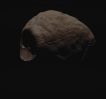
vo1_357a64-PCF-LXTT.jpgPhobos - frame Viking Orbiter 1, n. 357a64 (Absolute Natural Colors; credits for the additional process. and color: Dr Paolo C. Fienga - Lunexit Team)372 visitenessun commentoMareKromium
(5 voti)
|
|
![vo1_343a15[1]-PCF-LXTT.jpg](albums/userpics/10060/small_vo1_343a15%5B1%5D-PCF-LXTT.jpg "Nome del file=vo1_343a15[1]-PCF-LXTT.jpg
Dimensione del file=83KiB
Dimensioni=970x1084
Aggiunta il=Giu 12, 2011")
vo1_343a15[1]-PCF-LXTT.jpgMore "Surface Striations" on Phobos - frame Viking Orbiter 1, n. 343a15 (Absolute Natural Colors; credits for the additional process. and color: Dr Paolo C. Fienga - Lunexit Team)158 visitenessun commentoMareKromium
(5 voti)
|
|
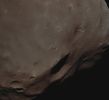
vo1_252a63-PCF-LXTT.jpgPhobos' Plains and Craters - frame Viking Orbiter 1, n. 252a63 (Absolute Natural Colors; credits for the additional process. and color: Dr Paolo C. Fienga - Lunexit Team)253 visitenessun commentoMareKromium
(5 voti)
|
|
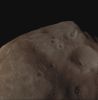
vo1_315a12-PCF-LXTT.jpgSmall "Crater-Chain" and "Crater Cluster" on Phobos - frame Viking Orbiter 1, n. 315a12 (Absolute Natural Colors; credits for the additional process. and color: Dr Paolo C. Fienga - Lunexit Team)259 visitenessun commentoMareKromium
(5 voti)
|
|
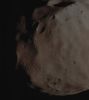
vo1_242a19-PCF-LXTT.jpgPhobos - frame Viking Orbiter 1, n. 242a19 (Absolute Natural Colors; credits for the additional process. and color: Dr Paolo C. Fienga - Lunexit Team)232 visitenessun commentoMareKromium
(5 voti)
|
|
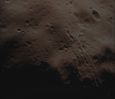
vo1_246a05-PCF-LXTT-2.jpgPhobos' "Surface Striations" - frame Viking Orbiter 1, n. 246a05 (Absolute Natural Colors; credits for the additional process. and color: Dr Paolo C. Fienga - Lunexit Team)245 visitenessun commentoMareKromium
(5 voti)
|
|
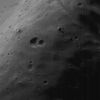
Phobos-PIA01336.jpgHigh-Resolution MOC Image of Phobos' Face74 visiteThis image of Phobos, the inner and larger of the two moons of Mars, was taken by the Mars Global Surveyor on August 19, 1998. The minimum distance between the Spacecraft and Phobos was 1080 Km (about 671 miles).
Phobos was observed by both the Mars Orbiter Camera (MOC) and Thermal Emission Spectrometer (TES). This image is one of the highest resolution images (4 meters or 13 feet per picture element or pixel) ever obtained of the Martian satellite.
The image shows several new features of this lumpy moon -- features that are associated with the prominent crater seen in the upper left quarter of the image. This is the largest crater on Phobos, Stickney, 10 Km (about 6 miles) in diameter. Individual boulders are visible on the near rim of the crater (D), and are presumed to be ejecta blocks from the impact that formed Stickney. Some of these boulders are enormous - more than 50 meters (160 feet) across.
Also crossing at and near the rim of Stickney are shallow, elongated depressions called grooves. This crater is nearly half the size of Phobos and these grooves may be fractures caused by its formation. The far wall of the crater shows lighter and darker streaks going down the slopes (C). The presence of material of different brightness on the far crater slopes and in some of the grooves shows that the satellite is heterogeneous (that is, it is made of a mixture of different types of materials). The motion of debris down slopes is guided by gravity, which is only about 1/1000th that of the Earth -- e.g., a 68-Kg (150- pound) person would weigh only about 57 gr (2 ounces) on Phobos.
Previous images from the Viking Spacecraft in the 1970's were not of sufficient resolution to show the effectiveness of gravity on Phobos in moving material down slopes.MareKromium
(5 voti)
|
|
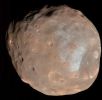
PSP_007769_9010_IRB.jpgPhobos (Natural Colors; credits: NASA)68 visiteHiRISE acquired 2 dramatic views of the Martian moon, Phobos, on 23 March 2008. Observation PSP_007769_9010, acquired at a distance of 6800 Km from Phobos, provides surface detail at 6,8 mt/pixel scale and a object diameter of about 3200 pixels.
The second observation, PSP_007769_9015, providing a closer look at 5800 Km, views the surface at slightly more detail (5,8 mt/pixel with an object diameter of about 4000 pixels).
The 2 images were taken within 10' of each other and show roughly the same features, but from a different angle so that they can be combined to yield a stereo view.
The illuminated part of Phobos visible in the images is about 21 Km across. Images from previous spacecraft have been of smaller pixel scale (for example, Mars Global Surveyor got data at 4 mt/pixel, because this spacecraft came closer to Phobos), but the HiRISE images have greater signal-to-noise, making the new data some of the best ever for Phobos.MareKromium
(5 voti)
|
|

w-Phobos_shadow-233-150206-2345-4-nd-01-PhobosShadow.JPGPhobos' shadow100 visitenessun commentoMareKromium
(4 voti)
|
|
Phobos_Approach.gifApproaching Phobos132 visitenessun commentoMareKromium
(4 voti)
|
|
| 53 immagini su 5 pagina(e) |
2 |  |
|
|








