| Piú votate - From Ashes to Eternity: the Phoenix Mars Mission |
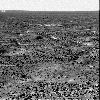
PHOE-SOL104-PIA11155-GIF.gifLate, once again! - Sol 104 (GIF-Movie; credits: NASA/JPL-Caltech/University of Arizona/Texas A&M University)85 visiteCon quattro giorni di ritardo rispetto alla pubblicazione operata da Lunar Explorer Italia di un filmato GIF prodotto dal Dr Barca e relativo al MEDESIMO fenomeno, anche i nostri Amici di Pasadena hanno pensato di elargirci il loro filmatino che ritrae un Dust Devil mentre passa non lontano dal Phoenix Lander.
La NASA ci legge? Ma certo che ci legge, e noi ne siamo onorati! E comunque sia, vedere che alla NASA arrivano (quantomeno nelle pubblicazioni divulgative) spessissimo - anzi: quasi sempre - DOPO di noi, è comunque una fonte di enorme soddisfazione: umana e professionale.
Ed eccoVi la caption NASA al filmino:"The Surface Stereo Imager on NASA's Phoenix Mars Lander caught this Dust Devil (a.k.a.: "DD" or "DDs", for the plural) in action West of the Lander in four frames shot about 50 seconds apart from each other between 11:53 and 11:56 M.L.T. Sol 104, or the 104th Martian day of the mission - such as Sept. 9, 2008).
DDs have not been detected in any Phoenix images from earlier in the Mission, but at least six were observed in a dozen images taken on Sol 104.
Dust Devils are whirlwinds that often occur when the Sun heats the surface of Mars, or some areas on Earth. The warmed surface heats the layer of atmosphere closest to it, and the warm air rises in a whirling motion, stirring dust up from the surface like a miniature tornado.
The DD visible in this sequence was about 1 Km (about 3300 feet) from the Lander when the first frame was taken, and had moved to about 1700 meters (about 5600 feet) away by the time the last frame was taken about two and a half minutes later. The DD was moving Westward at an estimated speed of 5 meters per second (such as abou 11 mph), which is similar to typical late-morning wind speed and direction indicated by the Telltale Wind Gauge - such as the Anemomether) on Phoenix.
This Dust Devil is about 5 meters (16 feet) in diameter. This is much smaller than DDs that have been observed by NASA's Mars Exploration Rover Spirit much closer to the Equator. It is closer in size to DDs seen from orbit in the Phoenix Landing Region, though still smaller than those..
The image has been enhanced to make the Dust Devil easier to see. Some of the frame-to-frame differences in the appearance of foreground rocks is because each frame was taken through a different color filter". MareKromium
(7 voti)
|
|
PHOE-SOL095-PIA11151-GIF.gifNight-Clouds over Vastitas - Sol 95 (GIF-Movie; credits: NASA/JPL-Caltech/University of Arizona/Texas A&M University )67 visiteAn angry looking sky is captured in a movie clip consisting of 10 frames taken by the Surface Stereo Imager on NASA's Phoenix Mars Lander.
The clip accelerates the motion. The images were take around 03:00 M.L.T. at the Phoenix Site during Sol 95 (Aug. 30), the 95th Martian day since landing.
The swirling clouds may be moving generally in a Westward direction over the Lander.
MareKromium
(7 voti)
|
|
PHOE-SOL101-lg_29677.jpgPre-Dawn Lights and Clouds - Sol 101 (original - True Colors; credits: Lunexit)93 visitenessun commentoMareKromium
(7 voti)
|
|

PHOE-SOL094-PIA11060.gifIce Clouds over Vastitas - Sol 94 (GIF-Movie; credits: NASA)68 visiteClouds scoot across the Martian Sky in a movie clip consisting of 10 frames taken by the Surface Stereo Imager on NASA's Phoenix Mars Lander.
This clip accelerates the motion. The camera took these 10 frames over a 10-minute period from 14:52 to 15:02 M.LT. at the Phoenix Site during Sol 94 (Aug. 29), the 94th Martian day since landing.
Particles of water-ice make up these clouds, like ice-crystal cirrus clouds on Earth. Ice hazes have been common at the Phoenix site in recent days. The camera took these images as part of a campaign by the Phoenix team to see clouds and track winds. The view is toward slightly West of due South, so the clouds are moving Westward or West-NorthWestward.
The clouds are a dramatic visualization of the Martian Water Cycle. The water vapor comes off the North Pole during the peak of Summer. The Northern-Mars Summer has just passed its peak water-vapor abundance at the Phoenix Site. The atmospheric water is available to form into clouds, fog and frost, such as the Lander has been observing recently. MareKromium
(7 voti)
|
|
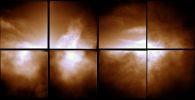
PHOE-SOL095-MF.jpgThrough the Clouds... - Sol 95 (natural colors; credits: Dr M. Faccin)66 visitenessun commentoMareKromium
(7 voti)
|
|
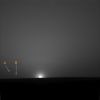
PHOE-SOL090-PIA11054-1.jpgStar-like Objects in the Morning Lights - Sol 9065 visitenessun commentoMareKromium
(7 voti)
|
|
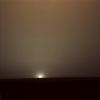
PHOE-SOL090-PIA11054-2.jpgIce Cold Sunrise on Mars - Sol 90 (natural colors; credits: Lunexit)65 visiteFrom the location of NASA's Phoenix Mars Lander, above the Martian Arctic Circle, the Sun does not set during the peak of the Martian Summer.
This period of maximum solar energy is past — on Sol 86, the 86th Martian Day after the Phoenix landing, the Sun fully set behind a slight rise to the North for about half an hour.
This red-filter image taken by the lander's Surface Stereo Imager, shows the Sun rising on the morning of Sol 90, Aug. 25, 2008, the last day of the Phoenix nominal mission.
The image was taken at 51 minutes past Midnight (Local Solar Time) during the slow sunrise that followed a 75 minute "night". The skylight in the image is light scattered off atmospheric dust particles and ice crystals.
The setting Sun does not mean the end of the Mission. In late July, the Phoenix Mission was extended through September, rather than the 90-Sol duration originally planned as the Prime Mission.MareKromium
(7 voti)
|
|
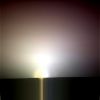
PHOE-SOL090-lg24930-24931-24932-2.jpgSunrise - Sol 90 (Superdefinition; credits: Dr G. Barca)65 visitenessun commentoMareKromium
(7 voti)
|
|
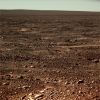
PHOE-SOL082-lg22820-22828-22830.jpgVastitas' Panorama - Sol 82 (Superdefinition and natural colors; credits: Dr G. Barca)64 visitenessun commentoMareKromium
(7 voti)
|
|
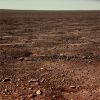
PHOE-SOL082-lg22856-22857-22858.jpgVastitas' Panorama - Sol 82 (Superdefinition and natural colors; credits: Dr G. Barca)64 visitenessun commentoMareKromium
(7 voti)
|
|

PHOE-SOL080-lg21570-21579-21580-3.jpgSunset - Sol 80 (Superdefinition and natural colors; credits: Dr G. Barca & Lunexit)64 visitenessun commentoMareKromium
(7 voti)
|
|

PHOE-SOL080-lg21572-21577-21581-2.jpgSunset - Sol 80 (Superdefinition; credits: Dr G. Barca)64 visitenessun commentoMareKromium
(7 voti)
|
|
| 399 immagini su 34 pagina(e) |
 |
|
|
|
6 | |
|
|
|
|
|








