| Piú votate - From Ashes to Eternity: the Phoenix Mars Mission |

000-Phoenix_Logo.jpgThe Phoenix Mars Lander Logo70 visiteThe Phoenix, a fabulous mythical bird the size of an eagle, symbolizes rebirth in many ancient cultures. According to the ancient Greeks, the bird lives in Arabia, nearby a cool well and sings a beautiful morning song. The Phoenix lives 500 years or longer with only one Phoenix existing at a time.
When the bird's death approaches, it bursts into flames, and a new bird springs from the consumed pyre.
Similar to its namesake, the Phoenix Mission "raises from the ashes" a spacecraft and instruments from 2 previous unsuccessful attempts to explore Mars: the Mars Polar Lander and the Mars Surveyor 2001 Lander. The Mars Polar Lander failed to return data upon its arrival to Mars' antarctic region on December 3, 1999 and left many ambitious science goals undone. Phoenix uses 3 instruments from this earlier Polar Lander, the SSI, the RA and the TEGA.
The Phoenix Mission uses the Mars Surveyor 2001 Lander, built in 2000, but later administratively mothballed. The '01 lander is undergoing modifications to improve the spacecraft's robustness and safety during entry, descent, and landing. Phoenix recovers two instruments delivered for the '01 lander that have been in protected storage: the MARDI and the MECA. Also, the RA has been modified from the '01 lander version.
MareKromium
(8 voti)
|
|

A-Phoenix-003B.jpgThe Landing Phase: inside the Martian Atmosphere (Entry Phase)75 visitenessun commentoMareKromium
(8 voti)
|
|

PHOE-SOL140-lg40161-40162-40163-2.jpgMicroscopic Vastitas - Sol 140 (Superdefinition and possible True Colors; credits: Dr G. Barca)93 visitenessun commentoMareKromium
(7 voti)
|
|
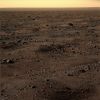
PHOE-SOL131-PIA11132.jpgDust Storm over Vastitas - Sol 131 (possible True Colors; credits: Lunexit)64 visitenessun commentoMareKromium
(7 voti)
|
|
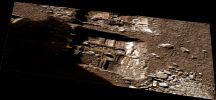
PHOE-SOL133-lg38921-38922-38923-3.jpgThe "Trench" in Perspective - Sol 133 (Superdefinition and possible True Colors; credits: Dr G. Barca)70 visiteUna nuova e spettacolare "visione prospettica" delle trincee scavate da Phoenix: la qualità dell'elaborazione e la cura nella definizione dei dettagli del suolo usate dal Dr Barca rendono questo frame - al pari di MOLTI altri - un Lavoro (a nostro avviso) di gran lunga migliore di quelli "Made by NASA".
E scusateci la franchezza...MareKromium
(7 voti)
|
|

PHOE-SOL132-lg38724-38725-38726-2.jpgNumbers! - Sol 132 (Superdefinition and possible True Colors; credits: Dr G. Barca)67 visitenessun commentoMareKromium
(7 voti)
|
|
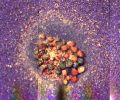
PHOE-SOL058-PIA11204.jpgUnbelievable!!!72 visiteEnnesima SCOPIAZZATURA NASA di un frame processato dal nostro Dr Faccin, addirittura 2 mesi e mezzo fa!!!
Che dire? Non hanno davvero ritegno...
Caption NASA:"This image from NASA's Phoenix Mars Lander's Optical Microscope shows a strongly magnetic surface which has scavenged particles from within the microscope enclosure before a sample delivery from the lander's Robotic Arm. The particles correspond to the larger grains seen in fine orange material that makes up most of the soil at the Phoenix site. They vary in color, but are of similar size, about one-tenth of a millimeter.
As the microscope's sample wheel moved during operation, these particles also shifted, clearing a thin layer of the finer orange particles that have also been collected. Together with the previous image, this shows that the larger grains are much more magnetic than the fine orange particles with a much larger volume of the grains being collected by the magnet. The image is 2 milimeters across.
It is speculated that the orange material particles are a weathering product from the larger grains, with the weathering process both causing a color change and a loss of magnetism".
Nota Lunexit: l'Imperial College di Londra, dopo aver esaminato (usando le nostre Funzioni Statistiche) la lista delle Università che si collegano con Lunar Explorer Italia, risulta essere un "aficionado" della nostra Fondazione!
Ok, è un onore. Ma dire "Grazie" al Dr Faccin ed a Lunexit sarebbe stato MOLTO EDUCATO ed APPREZZATO.
Che altro aggiungere? Anche gli Inglesi, a quanto pare, hanno imparato che "rubacchiare" è più facile che creare...MareKromium
(7 voti)
|
|

PHOE-SOL122-lg35921-35922-35923-2.jpgMicroscopic Vastitas - Sol 122 (Superdefinition and possible True Colors; credits: Dr G. Barca & Lunexit)80 visitenessun commentoMareKromium
(7 voti)
|
|
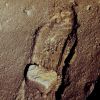
PHOE-SOL117-lg34310-34313-34314-2.jpg"Headless": just like NASA... - Sol 117 (True Colors; credits: Dr G. Barca)70 visitenessun commentoMareKromium
(7 voti)
|
|
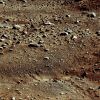
PHOE-SOL115-lg33948-33951-33952-2.jpgThe Surface of Vastitas Borealis - Sol 115 (Superdefinition and possible True Colors; credits: Dr G. Barca)65 visitenessun commentoMareKromium
(7 voti)
|
|
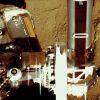
PHOE-SOL108-lg31415-31424-31425-2.jpgPhoenix "Overexposed"! - Sol 108 (Superdefinition and natural colors; credits: Dr G. Barca)64 visitenessun commentoMareKromium
(7 voti)
|
|

PHOE-SOL108-lg31337-31338-31339-2.jpgDetails of the Phoenix Lander - Sol 108 (Superdefinition and natural colors; credits: Dr G. Barca)64 visitenessun commentoMareKromium
(7 voti)
|
|
| 399 immagini su 34 pagina(e) |
 |
|
|
5 | |
|
|
|
|
|
|








