| Piú votate - From Ashes to Eternity: the Phoenix Mars Mission |

B-PIA09947.jpgContext Image of Planned Landing Site64 visiteCaption NASA:"This view covers an area about 27 Km (about 17 miles) wide within the planned landing area for NASA's Phoenix Mars Lander. It was taken by the Context Camera on NASA's Mars Reconnaissance Orbiter and catalogued as image P02_001893_2485_XI_68N126W_061221 from that instrument.
Note the crater near the top (north) of the image. The red box indicates the position of a higher-resolution image PIA09948 of ground texture in this area".MareKromium
(3 voti)
|
|

B-PIA09944.jpgFar-Northern Destination for Phoenix Mars Lander69 visiteCaption NASA:"The planned Landing Site for NASA's Phoenix Mars Lander lies at a latitude on Mars equivalent to Northern Alaska on Earth. It is within the region designated "D" on this global image.
This is an orthographic projection with color-coded elevation contours and shaded relief based on data from the Mars Orbiter Laser Altimeter on NASA's Mars Global Surveyor Orbiter. Total vertical relief is about 28 Km (about 17 miles) from the top of the highest volcano (red) to the Northern Lowlands (blue).
North Pole is where the longitude lines converge".MareKromium
(3 voti)
|
|

B-PIA09946-1.jpgPossible Landing Ellipses for Phoenix (1)65 visiteCaption NASA:"Launch date makes a difference in the orientation of ellipses marking where NASA's Phoenix Mars Lander will have a high probability of landing, given the planned targeting for the Spring 2008 Landing Site. This map shows possible landing ellipses for the Aug. 3, 2007, opening of the launch period (the ellipse oriented North-West to South-East) and for launch dates at the middle and end of the 3-week period of launch opportunities.
The map also shows a color-coded interpretation of geomorphic units -- categories based on the surface textures and contours. The yellow-coded area surrounding a crater informally named "Heimdall" appears to have even fewer boulders on the surface than other units. The geomorphic mapping is overlaid on a shaded relief map based on data from the Mars Orbiter Laser Altimeter on NASA's Mars Global Surveyor orbiter.
The red box indicates the location of an image PIA09947 from the Context Camera on NASA's Mars Reconnaissance Orbiter".MareKromium
(3 voti)
|
|
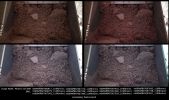
PHOE-SOL009-MF-LXTT.jpgVastitas' Icy Terrain - Sol 9 (an Image-Mosaic in Natural and Enhanced Natural Colors by Marco Faccin - Lunexit Team)69 visitenessun commentoMareKromium
(2 voti)
|
|

PHOE-SOL151-PIA11725.jpgOne Last Look at the Martian Arctic - Sol 151 (False Colors, according to NASA)68 visiteCaption NASA:"This is a false color image of the Martian Terrain and rock called "Winkies" (rock "Quadlings" in foreground) taken by the Surface Stereo Imager camera on NASA's Phoenix Mars Lander on Sol 151 of the Mission (Oct. 27, 2008).
This frosty image is among the last taken by the Lander before the Mission's final communications on Nov. 2, 2008".MareKromium
(2 voti)
|
|

PHOE-SOL053-lg14261-14267-14268-2_copia.jpgIn the Trench - Sol 53 (True Colors; credits: Dr G. Barca & Lunexit)89 visitenessun commentoMareKromium
(2 voti)
|
|

PHOE-SOL151-lg42476-42509-42510-2.jpgFrost... - Sol 151 (Superdefinition and natural colors; credits: Dr G. Barca)68 visitenessun commentoMareKromium
(2 voti)
|
|

PHOE-SOL110-lg31792-31793-31794-2.jpgMicroscopic Vastitas - Sol 110 (Superdefinition and True Colors; credits: Dr G. Barca & Lunexit)66 visitenessun commentoMareKromium
(2 voti)
|
|

PHOE-SOL110-lg31889-31890-31891-2.jpgMicroscopic Vastitas - Sol 110 (Superdefinition and True Colors; credits: Dr G. Barca & Lunexit)81 visitenessun commentoMareKromium
(2 voti)
|
|
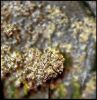
PHOE-SOL110-MF-LXT.jpgMicroscopic Vastitas - Sol 110 (Superdefinition and True Colors; credits: Dr M. Faccin & Lunexit)73 visitenessun commentoMareKromium
(2 voti)
|
|

PHOE-SOL049-13039-13040-13041-2-comp.jpgPhoenix Scoop Inverted Showing Rasp (credits: NASA/JPL/Univ. of Arizona - Dx - and Dr Barca & Lunexit - Sx)73 visiteCaption NASA:"This image taken by the Surface Stereo Imager on Sol 49, or the 49th Martian Day of the mission (July 14, 2008), shows the silver colored rasp protruding from NASA's Phoenix Mars Lander's Robotic Arm Scoop.
The Scoop is inverted and the rasp is pointing up. Shown with its forks pointing toward the ground is the Thermal and Electrical Conductivity Probe, at the lower right.
The Robotic Arm Camera is pointed toward the ground".MareKromium
(2 voti)
|
|

PHOE-SOL003-lg_677.jpgGreen Signs... - Sol 3 (natural colors; credits: Dr M. Faccin)127 visite...Segni di muffe e muschi, o errore di processing?...
Un nuovo ed ECCEZIONALE Lavoro del Dr Faccin per meravigliarsi, valutare e discutere.MareKromium
(2 voti)
|
|
| 399 immagini su 34 pagina(e) |
 |
|
|
|
|
|
|
|
32 | |
|








