| Piú votate - From Ashes to Eternity: the Phoenix Mars Mission |

PHOE-SOL007-lg_1698.jpgUnbelievable!!!! - Sol 757 visiteAbbiamo notificato quest'oggi, alle ore 17:43 ed alle ore 17:45 CET, rispettivamente, le elaborazioni del Dr Faccin ai seguenti indirizzi NASA:
1) phxepo@lpl.arizona.edu <phxepo@lpl.arizona.edu> e
2) phx-webmaster@lpl.arizona.edu <phx-webmaster@lpl.arizona.edu>
Nessuna risposta a noi, come ovvio, ma pubblicazione, alle ore 20:20 CET (un caso più unico che raro di "solerzia") sul Sito Ufficiale Phoenix (http://phoenix.lpl.arizona.edu/), di questa elaborazione "NASA" del medesimo frame processato dal Dr Faccin, ma con un evidente shift cromatico.
Morale: non solo gli Amici di Pasadena sono arrivati "tardi", ma hanno pure copiato e cromaticamente "taroccato" la nostra elaborazione - che comunque era e rimane la PRIMA ELABORAZIONE A COLORI pubblicata sul WWW la quale rappresenta il ghiaccio di Vastitas Borealis.
Un nostro commento "al volo" ed "onesto" sul comportamento della NASA e del Max Planck Institute c/o University of Arizona? RIVOLTANTE!!!!
p.s.: esiste (ED E' VISIBILE!) una prova INCONFUTABILE che questa elaborazione è stata fatta sul frame colorizzato dal Dr Faccin. Sapreste individuarla?... Piccolo aiuto: "look up"!...MareKromium     (3 voti)
|
|

PHOE-SOL007-PIA10742~0.jpgICE!!!!! - Sol 7 (True Colors + MULTISPECTRUM; credits: Dr Marco Faccin & Lunexit)57 visitenessun commentoMareKromium     (3 voti)
|
|

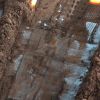
PHOE-SOL007-PIA10742.jpgICE!!!!! - Sol 7 (True Colors; credits: Dr Marco Faccin)54 visiteUna roccia? Noi, dopo aver esaminato l'immagine processata in Colori Veri (grazie al Dr Faccin), siamo dell'idea che questo sia Ghiaccio.
Un bel "blocco di ghiaccio d'acqua", di colorito bianco/azzurro.
Ed una piccola nota: Lunar Explorer Italia è la PRIMA Libera Associazione di Ricerca al Mondo che Vi presenta questi frames (probabilmente di valore Storico) in True Colors!
E scusateci se non è abbastanza...MareKromium     (3 voti)
|
|

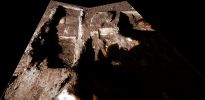
PHOE-SOL007-lg_1375.jpgICE!!!!! - Sol 7 (True Colors; credits: Dr Marco Faccin)101 visiteUn giusto tributo alla grandissima Professionalità e Competenza del nostro Compagno di Viaggio, il Dr Marco Faccin. Il frame n. 18000 che viene pubblicato sulle pagine di Lunar Explorer Italia costituisce l'Evidenza Oggettiva di quello che già in tantissimi (NASA inclusa, riteniamo) si aspettavano: tracce di ghiaccio nel terriccio di Vastitas, appena raccolto dalla paletta posta sul Robotic Arm (RA) di Phoenix.
Questa "Evidenza", praticamente "invisibile" in un frame in b/n, emerge in tutta la sua spettacolare bellezza e chiarezza nel frame processato in Colori Veri. Guardate: frammenti di ghiaccio d'acqua (sembra nevischio, addirittura) di un bel colorito bianco/azzurro, si mostrano evidenti nel "terriccio" (umido: certo non si tratta di aride e gelide "sabbie"!) di Vastitas Borealis.
Ma lasciamo parlare il bravissimo Marco:"...sul lato Dx della paletta si notano delle formazioni ghiacciate - non è "terriccio bianco" - (nè agglomerati di cristalli di sale, aggiungiamo noi!) mentre all'interno, invece, si nota del terriccio che è rimasto appiccicato alle pareti della paletta stessa. Appiccicato, ergo: quel terriccio deve essere umido! Inoltre, si noti che il terriccio contenuto nella paletta NON E' UN BLOCCO COMPATTO DI TERRENO CON CRISTALLI DI GHIACCIO (rectius: con degli agglomerati di cristalli): al contrario! Esso appare "frammentato" ed "agevolmente frammentabile"!
Ora questa evidenza fotografica potrebbe dimostrare che il terreno NON E' - in effetti - del tutto ghiacciato e "tutt'uno con il ghiaccio d'acqua" (la quale agirebbe come "elemento compattante")!
NO!
In effetti si potrebbe anche pensare che l'acqua che esso contiene, una volta che viene "smosso" (e quindi l'acqua viene portata in superficie), ghiacci!!!
Insomma (ed in altre parole): questo terreno ha già, al suo interno, dell'acqua allo stato liquido e/o semi-liquido. Un'acqua che, una volta a contatto con l'atmosfera, ghiaccia, formando dei "grumi".
Domanda: è possibile che lo strato di terriccio che ricopre il " liquido" funga da isolante termico?...".
Risposta: SI, è possibile. In teoria (e, sembra, anche in pratica) è possibile.
Così come è possibile che noi abbiamo davanti agli occhi la prima EVIDENZA OGGETTIVA che Marte, nella sua sub-superficie, non sia affatto "gelido", ma "temperato" (ergo idoneo a mantenere l'acqua allo stato di una - almeno - semi-liquidità); ed inoltre (va detto per completezza di informazione) abbiamo davanti anche l'evidenza oggettiva del fatto che l'atmosfera di Marte, se non altro nelle Regioni presso-Polari, è gelida. Ma questa non ci sembra una grandissima notizia...
Ed ora pensate: se gran parte dello strato sub-superficiale di Marte (dell'INTERO Pianeta Marte) fosse EFFETTIVAMENTE INTRISO di ghiaccio d'acqua (o di acqua vera e propria), come fare ad escludere che esistano delle Forme Vitali (magari anche solo Vegetali) Indigene (ad es.: muschi, licheni, alghe et sim.) nelle sue Regioni Temperate (Regioni Equatoriali e Peri-Equatoriali)?
Insomma: se anche nelle Regioni presso-Polari di Marte l'acqua, nei suoi strati sub-superficiali, rimane in uno stato di semi-liquidità, che cosa dire, allora, di quello che "potrebbe" accadere nelle Regioni "istituzionalmente calde" (e specie nei mesi che vanno dalla tarda Primavera alla piena Estate)?!?
Acqua su Marte? Signori, la PROVA E' DAVANTI A VOI!
Un complimento davvero Grandissimo e Congratulazioni al Dr Faccin, per lo splendido Lavoro svolto (con grande anticipo rispetto ai "Fenomeni" della NASA e della University of Arizona)!MareKromium     (3 voti)
|
|

PHOE-SOL004-lg_877-A.jpgHalf-Dusty and Half-Clean... - Sol 4 (Context Frame/Superdefinition; credits: Dr M. Faccin)55 visitenessun commentoMareKromium     (3 voti)
|
|

PHOE-SOL004-lg_877-B.jpgHalf-Dusty and Half-Clean... - Sol 4 (detail mgnf/Superdefinition; credits: Dr M. Faccin)54 visitenessun commentoMareKromium     (3 voti)
|
|

PHOE-SOL003-lg_609-1.jpgPhoenix and the Landscape in True Colors! - Sol 3 (Superdefinition + MULTISPECTRUM; credits: Dr Marco Faccin & Lunexit)64 visiteQuesta immagine? Un capolavoro! (altro che gli "Approximate Colors" della NASA....)MareKromium     (3 voti)
|
|

PHOE-SOL002-lg_542-543-3.jpgLandscape... Sol 2 (Natural Colors + MULTISPECTRUM; credits: Dr G. Barca & Lunexit)57 visitenessun commentoMareKromium     (3 voti)
|
|

PHOE-SOL000-HIRISE.jpgThe Descent of Phoenix, from MRO - Sol 056 visiteCaption NASA:"NASA's Mars Phoenix Lander can be seen parachuting down to Mars, in this image captured by the High Resolution Imaging Science Experiment (HiRISE) camera on NASA's Mars Reconnaissance Orbiter. This is the first time that a spacecraft has imaged the final descent of another spacecraft onto a planetary body.
From a distance of about 310 Km (193 miles) above the surface of the Red Planet, Mars Reconnaissance Orbiter pointed its HiRISE obliquely toward Phoenix shortly after it opened its parachute while descending through the Martian Atmosphere. The image reveals an apparent 10-meter-wide (30-foot-wide) parachute fully inflated. The bright pixels below the parachute show a dangling Phoenix. The image faintly detects the chords attaching the backshell and parachute. The surroundings look dark, but correspond to the fully illuminated Martian surface, which is much darker than the parachute and backshell.
Phoenix released its parachute at an altitude of about 12,6 Km (7,8 miles) and a velocity of 1.7 times the speed of sound".MareKromium     (3 voti)
|
|

PHOE-SOL001-PIA10693.jpgMartian Surface (Approximate Colors; credits: NASA/JPL-Caltech/University of Arizona/Texas A&M )55 visitenessun commentoMareKromium     (3 voti)
|
|
E-PIA10633.jpgDust Devils and Frozen Craters at Phoenix Landing Site (MULTISPECTRUM; credits: Lunexit)57 visiteNASA's Phoenix Mars Lander is scheduled to land on the Martian Northern Plains near 68° North Lat. and 127° West Long. on May 25, 2008. In preparation for the landing, NASA's Mars Reconnaissance Orbiter has been monitoring weather in the Region around the Landing Site.
On April 20, 2008, the orbiter's Context Camera captured this view showing two active DD within the Phoenix Landing Ellipse.
This is a subframe covering an area about 26 Km (approx. 16 miles) on each side (...). It shows two Dust Devils and their shadows. Based on measurement of the shadows cast by the DD, one of the vortices towered about 590 meters (about 1930 feet) with a dust plume extending 920 meters (about 3020 feet) above the surface. The other reached about 390 meters (1280 feet) high, with a dust plume extending to 790 meters (2590 feet). The resolution here is 6 meters (19,7 feet) per pixel.
When the Context Camera acquired this image, the season in Mars' Northern Hemisphere was late Spring. A few weeks earlier, the Phoenix Landing Site was still covered with seasonal frost left over from the previous Winter. White patches in small craters near the center of the picture are areas where the Winter frost remained, even as late as April 20, 2008.
As Spring gives way to Summer, DD are likely to occur more frequently, as local temperatures rise. These two DD observed in late April are among the first of the season. The cameras on the Phoenix Lander might be able to spot additional Dust Devils after the spacecraft arrives, as the Mars Exploration Rover Spirit has been able to do at its Southern Hemisphere Landing Site.
Dust Devils are whirling vortices that have picked up dust from the ground. Such vortices can occur even when no dust is present, but then they are not visible to the cameras onboard the Mars Reconnaissance Orbiter. Such vortices commonly form as hot air rises from the surface on an otherwise generally calm day with little or no breeze. Dust Devils will travel across the surface on the gentle breezes that do occur. Sometimes, DD have been observed by cameras orbiting Mars to create streaks on the ground as they disrupt and pick up dust, though no streaks are observed in this image.
The Mars Orbiter Camera onboard NASA's Mars Global Surveyor orbiter observed Dust Devils — and streaks created by them — throughout its 1997 to 2006 mission. During that time, scientists at Malin Space Science Systems observed more than 12.000 active Dust Devils. They were seen over the full range of elevations and nearly all latitudes on Mars. Dust Devil Streaks were found in Mars Orbiter Camera images as far North as the edge of the North Polar Residual Cap and the dune fields that surround the Region.
However, the northernmost active DD captured by that camera was at 62,2° North Latitude, which is further South than the Phoenix Landing Site.
Another camera on the Mars Reconnaissance Orbiter, the Mars Color Imager, captured a simultaneous, wider-field, color view of the area included in this Context Camera image. That view can be seen at PIA10634.MareKromium     (3 voti)
|
|

A-Phoenix-003A.jpgThe Road to Mars59 visitenessun commentoMareKromium     (3 voti)
|
|
| 403 immagini su 34 pagina(e) |
 |
 |
 |
 |
 |
28 |  |
 |
 |
 |
|