| Piú votate - From Ashes to Eternity: the Phoenix Mars Mission |

PHOE-SOL044-lg11672-11673-11674.jpgVastitas' Permafrost - Sol 44 (Superdefinition + MULTISPECTRUM; credits: Dr G. Barca & Lunexit)63 visitenessun commentoMareKromium
(4 voti)
|
|
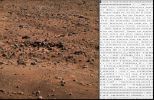
PHOE-SOL043-Exadecimal.jpgInteresting "Caption" - Sol 43 (natural colors; credits: Dr M. Faccin)70 visiteIn questo nuovo e spettacolare Lavoro del Dr Faccin abbiamo un frame in Colori Naturali davvero molto bello - e stupendamente definito - il quale è accompagnato da una "Caption" (ottenuta in esadecimale) che, almeno a nostro parere, suona piuttosto "criptica".
Curiosamente, infatti, a noi non sembra che esista correlazione fra quanto si vede nel frame (un outcrop che si troverà ad una decina/quindicina di metri dal Lander) e quanto si legge nella Caption "allegata" al frame, la quale fa riferimento ad un esperimento sulla conduttività - Conductivity Analyzer - di un campione di Suolo Marziano e ad una coppia di frames (un "before" ed un "after") correlati alla raccolta ed alla deposizione (forse sarebbe meglio dire "allocazione") del campione stesso.
Tale acquisizione di un "prima" e di un "dopo", in accordo alla Caption Esadecimale, sarebbe finalizzata ad evidenziare, mediante una comparazione delle immagini, la presenza (nel Campione?) di elementi (features) che POTREBBERO ESSERE DERIVATI DA FONTE NON MARZIANA - questo passaggio è così criptico che non ci sentiamo di commentarlo.
Curiosa la dizione "The sample illumination configuration was Special", la quale ci dice che l'illuminazione del campione con il gruppo luce di cui è dotato Phoenix è stata "Speciale" (non comprendiamo il senso di queste frasi, purtroppo, e quindi non ci sbilanciamo).MareKromium
(4 voti)
|
|

PHOE-SOL038-AudioSignal-2.wmvPossible "Audio Signals" from Vastitas Borealis - Sol 38 (RAW Data - credits: Dr M. Faccin)64 visiteCoraggio: avete qualche commento da fare? Siamo (DAVVERO!) "tutto orecchi"...MareKromium
(4 voti)
|
|

PHOE-SOL026-PIA10918.jpgFrom "Bad" to "Worse"... - Sol 2666 visiteIncommentabile: questo frame è stata aggiunto nella Galleria del Planetary Photojournal dedicata a Marte nella notte fra il 1mo ed il 2 Luglio 2008.
E', come ben vedete, il singolo dettaglio del terriccio depositato sullo "scoop" di Phoenix che, per fattura e posizionamento (nel contesto di un altro frame), ci aveva fatto gridare (pubblicamente) al "furto". Ebbene, i nostri Amici di Pasadena (e del Max Planck Institute) che ti fanno? Inseriscono, retrodatandola, la porzione di frame che aveva isolato e colorizzato il Dr Faccin, così da conferirle una (presumiamo) "Autonoma Dignità" e per mostrare che il loro lavoro non era stato una scopiazzatura del nostro.
Ok, allora ci permettiamo di fare due puntualizzazioni:
1) noi controlliamo il Planetary Photojournal ogni giorno e questo frame, sino a ieri sera (h. 23:45 CET - data della nostra ultima lettura del Planetary Photojournal), non c'era (mentre adesso c'è e porta, come data di inserimento, il 26 Giugno u.s. - sic!);
2) questo frame dovrebbe essere parte di un filmatino "Quickmovie" il quale, al momento (h. 12:10 CET), NON E' ancora disponibile sul Planetary Photojournal (e meno male che lo avevano inserito dal 26 di Giugno u.s. (sic, again!).
Morale: i nostri (comunque) Amici di Pasadena, per "salvarsi" da una prima magrissima figura, ne hanno collezionata una seconda... Che tristezza.
Caption NASA:"This pan and zoom animation shows a microscopic view of fine-grained material at the tip of the Robotic Arm scoop as seen by the Robotic Arm Camera (RAC) aboard NASA's Phoenix Mars Lander on June 20, 2008, the 26th Martian Day, or Sol, of the mission.
RAC scientists took this image at a resolution of 30 microns by rotating the scoop to within 11 mm of the camera's front lens and refocusing the camera to macro focus.
The image shows small clumps of fine, fluffy, red soil particles collected in a sample called 'Rosy Red.'.
The sample was dug from the trench named 'Snow White' in the area called 'Wonderland'. Some of the Rosy Red sample was delivered to Phoenix's Optical Microscope and Wet Chemistry Laboratory for analysis.
The RAC provides its own illumination, so the color seen in RAC images is color as seen on Earth, not color as it would appear on Mars.
The image behind the RAC animation, taken by Phoenix's Surface Stereo Imager also on Sol 26, provides context. (See also PIA10921)".MareKromium
(4 voti)
|
|
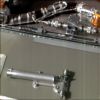
PHOE-SOL035-lg8685-8693-8714.jpgHardware and Circuits - Sol 35 (natural colors; credits: Dr G. Barca)68 visitenessun commentoMareKromium
(4 voti)
|
|
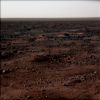
PHOE-SOL031-lg7767-7768-7769.jpgFoggy Horizon - Sol 31 (natural colors; credits: Dr G. Barca)63 visitenessun commentoMareKromium
(4 voti)
|
|
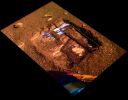
PHOE-SOL025-lg_6964~0.jpgWatch CAREFULLY! - Sol 25 (perspective view; credits: Dr M. Faccin)192 visitenessun commento (anzi: ora i "commenti" li dovete fare Voi...)MareKromium
(4 voti)
|
|
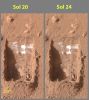
PHOE-SOL020-024-Changes_v3.jpgEvaporation or Sublimation? Water or CO2? (approximate colors; credits: NASA)74 visiteCaption NASA:" Compare these two close-up pictures taken on Sol 20 (left) and Sol 24 of a trench dug in the Martian surface by NASA's Phoenix Lander. Those Soles of the Phoenix Mission, correspond to June 15 and 18, 2008, on planet Earth. Light-colored, dice-sized chunks, visible in the lower left shadow region of the trench in the Sol 20 image have vanished by Sol 24 -- a strong indication that the chunks were ice uncovered by digging the shallow trench. The vanishing act likely demonstrates the sublimation of ice in the trench, a process similar to evaporation, in which the ice went directly from solid to gas after it was exposed to sunlight and the thin, dry Martian atmosphere". MareKromium
(4 voti)
|
|
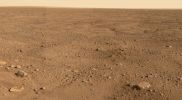
PHOE-SOL015-lg_4864.jpgVastitas Borealis: Back-Shell and Heat-Shield - Sol 15 (credits: NASA/Univ. of Arizona)64 visitenessun commentoMareKromium
(4 voti)
|
|

PHOE-SOL017-_lg_4547-4548-4551.jpgPhoenix Lander "Hardware" - Sol 17 (Superdefinition; credits: Dr G. Barca)64 visitenessun commentoMareKromium
(4 voti)
|
|
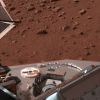
PHOE-SOL012-lg_3352-A.jpgThe Lander and the Surface - Sol 12 (Appproximate Colors; credits: NASA/JPL-Caltech)64 visiteCaption NASA:"This image shows a view from NASA's Phoenix Mars Lander's Stereo Surface Imager's left eye after delivery of soil to the Thermal and Evolved-Gas Analyzer (TEGA), taken on the 12th Martian Day after landing (Sol 12, June 6, 2008).
Soil is visible on both sides of the open doors of TEGA's #4 oven. Sensors inside the device indicate no soil passed through the screen and into the oven". MareKromium
(4 voti)
|
|
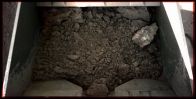
PHOE-SOL011-lg_3181.JPGMore ICE and "greenish" Soil - Sol 11 (Superdefinition; credits: Dr Marco Faccin)77 visiteAncora un'immagine in Superdefinizione che ci riporta ai VERI colori di Marte ed alla EFFETTIVA texture della superficie di Vastitas: insomma, un nuovissimo piccolo-Grande Capolavoro del Dr Faccin.MareKromium
(4 voti)
|
|
| 399 immagini su 34 pagina(e) |
 |
|
|
|
|
26 | |
|
|
|
|








