| Piú votate - From Ashes to Eternity: the Phoenix Mars Mission |

PHOE-SOL112-lg33068-33069-33070-2.jpgVastitas' Horizon - Sol 112 (Superdefinition and natural colors; credits: Dr G. Barca)71 visitenessun commentoMareKromium
(4 voti)
|
|
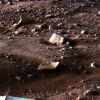
PHOE-SOL101-MF-LXT.jpgFrosty Rocks - Sol 101 (natural colors; credits: Dr M. Faccin)70 visitenessun commentoMareKromium
(4 voti)
|
|
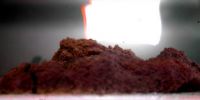
PHOE-SOL099-lg27005-27006-27007-2.jpgA "Scoop" of Vastitas - Sol 99 (Superdefinition and enhanced natural colors; credits: Dr G. Barca)110 visitenessun commentoMareKromium
(4 voti)
|
|
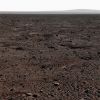
PHOE-SOL091-lg25384-25452-25674-2.jpgVastitas' Horizon - Sol 91 (Superdefinition and natural colors; credits: Dr G. Barca & Lunexit)69 visitenessun commentoMareKromium
(4 voti)
|
|
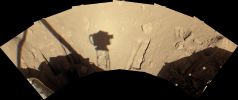
PHOE-SOL090-PIA11055.jpgVastitas' Surface, according to NASA - Sol 90 (natural colors; credits: NASA)66 visiteDuring the first 90 Martian Days, or Soles, after its May 25, 2008, landing on an Arctic Plain of Mars, NASA's Phoenix Mars Lander dug several trenches in the workspace reachable with the Lander's Robotic Arm (LRA).
The Lander's Surface Stereo Imager camera recorded this view of the workspace on Sol 90, early afternoon Local Mars time (overnight Aug. 25 to Aug. 26, 2008). The shadow of the the camera itself, atop its mast, is just left of the center of the image and roughly a third of a meter (one foot) wide.
The workspace is on the north side of the lander. The trench just to the right of center is called "Neverland".MareKromium
(4 voti)
|
|
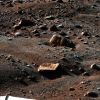
PHOE-SOL079-lg_21574.jpgMorning "Water Frost" on Vastitas - Sol 79 (false (?) colors; credits: NASA)64 visiteCaption NASA:"A thin layer of water frost is visible on the ground around NASA's Phoenix Mars Lander in this image taken by the Surface Stereo Imager at 06:00 a.m. on Sol 79 (August 14, 2008), the 79th Martian day after landing. The frost begins to disappear shortly after 6 a.m. as the sun rises on the Phoenix Landing Site. The Sun was about 22° above the horizon when the image was taken, enhancing the detail of the polygons, troughs and rocks around the Landing Site.
This view is looking east South-East with the Lander's eastern Solar Panel visible in the bottom lefthand corner of the image. The rock in the foreground is informally named "Quadlings" and the rock near center is informally called "Winkies". This false color image has been enhanced to show color variations".
Nota Lunexit: come direbbe Mr Spock "...la NASA, negli anni, non cambia mai, e la sua predilezione per l'irrilevante lo conferma ampiamente...". Già: ci dicono i nomi che hanno dato ai sassi, ma non ci spiegano perchè, a loro modo di vedere, questo frame sarebbe a falsi colori...MareKromium
(4 voti)
|
|

PHOE-SOL072-NASAORIG.jpgOooooooopsssss!!!!! - Sol 72 (false colors; credits: NASA)80 visiteSi, i colori di questo frame - come la NASA stessa suggerisce - saranno anche falsi, ma...Come mai il metallo del Lander e le altre sue componenti visibili (su tutte, la plancia, le viti e la barra di sostegno visibile in basso a Sx) sono in "colori naturali", mentre il terriccio è (leggermente) saturato e la Bandiera Americana è diventata tutta color "rubino"?!? Dove è andato a finire il "blu"?!?
Allora...Chiamateci pure "Complottisti", se Vi va, ma ricordateVi una cosa: i colori di Marte proposti dalla NASA sono - purtroppo - SEMPRE FALSI, come questo frame dimostra in maniera quasi disarmante.
Porre in essere, sulla totalità dei frames offerti al Pubblico nella loro versione "a colori", una alterazione "differenziata dei colori naturali", per i nostri Amici di Pasadena, è ormai diventato un giochetto abituale e da ragazzi (un "giochetto" che sappiamo fare anche noi, però).
Conseguenze: la Superficie di Marte viene, praticamente da sempre, nascosta agli sguardi indiscreti con una passata di rosso (che non è esattamente il "Filtro Rosso" di cui parla, comunque a proposito, l'Amico e Collega Matteo Fagone).
Una "passata" - ottenuta in via differenziale - la quale è sufficiente a cancellare tutte le sfumature del suolo e del cielo e che quindi giunge ad impedire che l'Osservatore/Analista possa arrivare, nel tempo, all'acquisizione di un'esatta percezione dell'ambiente reale Marziano (e, di conseguenza, ad individuare delle aree superficiali di colori diversi dal "rosso/rosa/giallo ocra" e, forse, "compromettenti").
Comunque sia, se dobbiamo essere onesti sino in fondo, questo caso ha comunque il profumo della "stupidata pazzesca" (causata da una distrazione o da un momento di stanchezza - capita a tutti!) piuttosto che quello del "cover-up"...Non credete?!?MareKromium
(4 voti)
|
|

PHOE-SOL070-2.jpgIcy Surface and rocks (or "chunks" of ice) - Sol 70 (Superdefiniiton; credits: Dr G. Barca)83 visitenessun commentoMareKromium
(4 voti)
|
|

PHOE-SOL070-lg17972-17981-17983.jpgIcy Surface and rocks (or "chunks" of ice) - Sol 70 (Superdefiniiton; credits: Dr M. Faccin)109 visitenessun commentoMareKromium
(4 voti)
|
|

PHOE-SOL063-lg16729-16730-16731-2.jpgPhoenix and Surface - Sol 63 (Superdefinition and natural colors; credits: Dr G. Barca)82 visitenessun commentoMareKromium
(4 voti)
|
|

PHOE-SOL050-bgr-comp.jpgVastitas Borealis in IR-Light - Sol 50 (credits: Dr M. Faccin - Sx - and Lunexit - Dx)63 visiteUno splendido esempio, regalatoci dal Grande Marco Faccin, di come processare a colori le immagini di Vastitas Borealis ottenute usando il filtro IR ed il confronto fra "RAW IR" (a Sx) ed "IR+MULTISPECTRUM" (a Dx).MareKromium
(4 voti)
|
|

PHOE-SOL050-PIA10965.jpgRasping in 'Snow White' (credits: NASA/JPL/Univ. of Arizona)76 visiteCaption NASA:"This image, taken by NASA's Phoenix Mars Lander's Surface Stereo Imager on Sol 50, or the 50th Day of the mission, July 15, 2008, shows two holes at the top created by the lander's Robotic Arm's Motorized Rasp Tool.
The holes are about 1 centimeter (such as 0,4" - inches) apart".MareKromium
(4 voti)
|
|
| 399 immagini su 34 pagina(e) |
 |
|
|
|
|
25 | |
|
|
|
|








