| Piú votate - From Ashes to Eternity: the Phoenix Mars Mission |
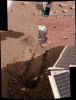
PHOE-SOL025-PIA10912.jpgMonochrome Mars: from Viking Lander 2 to Phoenix (approximate colors; credits: NASA)63 visiteCaption NASA:"This color image taken by the Surface Stereo Imager on NASA's Phoenix Mars Lander shows the trench dubbed "Snow White" after further digging on the 25th Martian Day, or Sol, of the mission (June 19, 2008). The Lander's Solar Panel is casting a shadow over a portion of the trench.
The trench is about 5 cm (2") deep and 30 cm (12") long".
Nota Lunexit: sembrano davvero poche le differenze "cromatiche" del suolo Marziano, così come appariva ai tempi del Viking Lander 2 rispetto a Phoenix. Ciò che cambia è l'intensità di fondo (accentuata nel frame Viking 2 - inset), ma la sostanza è sempre la stessa: Marte, secondo la NASA, è un Mondo sostanzialmente monocromatico (arancio, rosso, rosa o verde-giallastro che si voglia). Che tristezza e, soprattutto, che falsità...MareKromium
(9 voti)
|
|
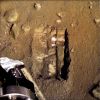
PHOE-SOL028-lg7245-7246-7247.jpgWatch CAREFULLY! - Sol 28 (natural colors; credits: Dr G. Barca)63 visitenessun commentoMareKromium
(9 voti)
|
|

PHOE-SOL001-O-Photocomposite-lg_434-001.jpgVastitas Borealis - Sol 1 (Natural Colors + MULTISPECTRUM; credits: Dr Marco Faccin & Lunexit)87 visitenessun commentoMareKromium
(9 voti)
|
|

PHOE-SOL001-lg_398-003.jpgGood-Evening Phoenix! - Sol 1 (Natural Colors and MULTISPECTRUM; credits: Lunexit)69 visitenessun commentoMareKromium
(9 voti)
|
|

PHOE-SOL151-lg_42523.jpgLast Frame from Phoenix: End of Transmissions... - Sol 151 (possible True Colors; credits: Lunexit)70 visiteNovember 10, 2008 -- NASA's Phoenix Mars Lander has ceased communications after operating for more than 5 months. As anticipated, seasonal decline in sunshine at the robot's Arctic Landing Site is not providing enough sunlight for the solar arrays to collect the power necessary to charge batteries that operate the lander's instruments.
Mission engineers last received a signal from the lander on Nov. 2. Phoenix, in addition to shorter daylight, has encountered a dustier sky, more clouds and colder temperatures as the Northern Mars Summer approaches Autumn. The mission exceeded its planned operational life of 3 months to conduct and return science data.
The Project Team will be listening carefully during the next few weeks to hear if Phoenix revives and phones home. However, engineers now believe that is unlikely because of the worsening weather conditions on Mars.
While the Spacecraft's work has ended, the analysis of data from the instruments is in its earliest stages.
Nell'immagine: il cielo cupo e sempre più scuro che sovrasta Phoenix, come ripreso intorno alle ore 15:30, M.L.T. e colorizzato da Lunexit in possibli Colori Veri (e nel rispetto della Regola Aurea che vuole il Cielo prossimo all'Orizzonte Marziano più chiaro e poi sempre più scuro a mano a mano che si alza lo sguardo).MareKromium
(8 voti)
|
|

PHOE-SOL132-lg38854-38855-38856.jpgVastitas' Horizon - Sol 132 (Superdefinition and natural colors; credits: Dr G. Barca)64 visitenessun commentoMareKromium
(8 voti)
|
|

PHOE-SOL128-lg37797-37798-37799_copia2.jpgThe Surface of Vastitas Borealis - Sol 128 (Superdefinition and possible True Colors; credits: Dr G. Barca)65 visiteUn altro fantastico Lavoro del Dr Barca: incommentabile.MareKromium
(8 voti)
|
|

PHOE-SOL121-lg35721-35722-35735-2.jpgIcy Trenches... - Sol 121 (Superdefinition and natural colors; credits: Dr G. Barca)64 visitenessun commentoMareKromium
(8 voti)
|
|

PHOE-SOL125-MF.jpgA lot of Ice in the "Scoop"! - Sol 125 (True Colors; credits: Dr M. Faccin)64 visitenessun commentoMareKromium
(8 voti)
|
|
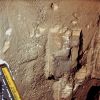
PHOE-SOL116-lg33993-33994-33995-2.jpgThe "Trench" - Sol 116 (True Colors; credits: Dr G. Barca)74 visitenessun commentoMareKromium
(8 voti)
|
|

PHOE-SOL101-lg_29677-1.jpgPre-Dawn Lights and Clouds - Sol 101 (stretched - True Colors; credits: Lunexit)86 visitenessun commentoMareKromium
(8 voti)
|
|

PHOE-SOL088-PIA11058.jpgMartian "Caterpillar" - Sol 88 (natural colors; credits: Lunexit)64 visiteAs NASA's Phoenix Mars Lander excavates trenches, it also builds piles with most of the material scooped from the holes. The piles, like this one called "Caterpillar", provide researchers some information about the soil.
On Aug. 24, 2008, during the late afternoon of the 88th Martian day after landing, Phoenix's Surface Stereo Imager took separate exposures through red, green and blue filters that have been combined into this approximately true-color image. This conical pile of soil is about 10 cm (4") tall.
The sources of material that the Robotic Arm has dropped onto the Caterpillar pile have included the "Dodo" and ""Upper Cupboard" trenches and, more recently, the deeper "Stone Soup" trench.
Observations of the pile provide information, such as the slope of the cone and the textures of the soil, that helps scientists understand properties of material excavated from the trenches.
For the Stone Soup trench in particular, which is about 18 cm (7") deep, the bottom of the trench is in shadow and more difficult to observe than other trenches that Phoenix has dug. The Phoenix team obtained spectral clues about the composition of material from the bottom of Stone Soup by photographing Caterpillar through 15 different filters of the Surface Stereo Imager when the pile was covered in freshly excavated material from the trench.
The spectral observation did not produce any sign of water-ice, just typical soil for the site. However, the bigger clumps do show a platy texture that could be consistent with elevated concentration of salts in the soil from deep in Stone Soup. The team chose that location as the source for a soil sample to be analyzed in the lander's wet chemistry laboratory, which can identify soluble salts in the soil.MareKromium
(8 voti)
|
|
| 399 immagini su 34 pagina(e) |
2 |  |
|
|
|
|
|
|
|
|
|








