| Piú votate - Mars through Mars Express (ESA - Original Raw Frames & Orbital Panoramas) |
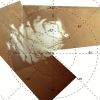
SouthPole-MG_SP_Fig02a_H.jpgThe South Pole of Mars (natural colors; credits: Lunexit)73 visiteCaption ESA:"This is a mosaic of images taken by the Mars Express’s Visible and Infrared Mineralogical Mapping Spectrometer, OMEGA.
It shows the Residual South Polar Cap at the end of Northern Winter on the Red Planet. The cap appears clearly asymmetric, its centre being displaced by 3° from the Geographic Pole".MareKromium
(5 voti)
|
|
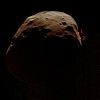
Phobos-403-20080729-5850-6-SRC-01_H1.jpgPhobos and two possible Landing Sites for "GRUNT" (natural colors; credits: Lunexit)70 visiteCaption ESA:"HRSC Super-resolution channel (SRC) image taken on July, 22, 2008 from a distance of approix. 4500 Km, showing the illuminated edge of the potential Landing Site of the Russian "Phobos-Grunt" Mission.
MareKromium
(5 voti)
|
|
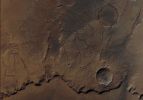
Craters-Huygens_Crater-Rim-ESA-PCF-LXTT.jpgDrainage Channels on the Rim of Huygens Crater (Absolute Natural Colors; credits for the additional process. and color.: Dr Paolo C. Fienga - Lunexit Team)198 visitenessun commentoMareKromium
(4 voti)
|
|
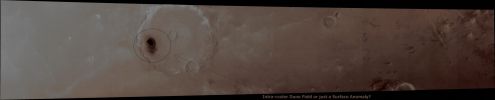
Unusually_looking_Surface_Feature-Pit-h1323_0000_nd3.jpgExtremely unusually-looking Surface Feature (Natural Colors; credits for the additional process. and color.: Dr Paolo C. Fienga - Lunexit Team)120 visitenessun commentoMareKromium
(4 voti)
|
|
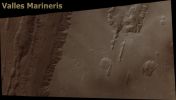
Valles_Marineris-h0471_0001_nd3.jpgPortion of the Valles Marineris Canyon System (Natural Colors; credits for the additional process. and color.: Dr Paolo C. Fienga)85 visitenessun commentoMareKromium
(4 voti)
|
|

Aeolian_Features-Windstreak-h0232_0000_nd3-01-PCF-LXTT.jpgWindstreaks (Natural Colors; credits for the additional process. and color.: Dr Paolo C. Fienga - Lunar Explorer Italia)86 visitenessun commentoMareKromium
(4 voti)
|
|
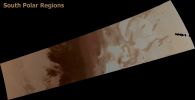
South_Polar_Regions-h1245_0000_nd3~0.jpgThe beautiful Southern Regions of Mars (Natural Colors; credits for the additional process. and color.: Dr Paolo C. Fienga - Lunexit Team)80 visitenessun commentoMareKromium
(4 voti)
|
|
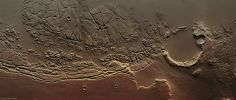
Kasei_Valles_and_Sacra_Fossae-448-20091007-6241-6-co-01_H1.jpgKasei Valles and Sacrae Fossae (Absolute Natural Colors; credits for the additional process. and color.: Dr Paolo C. Fienga - Lunexit Team)73 visiteCaption ESA:"Mars Express flew over the boundary between Kasei Valles and Sacra Fossae and imaged the Region, acquiring spectacular views of the Chaotic Terrain in the area.
The image is centred at about 12° North Latitude and 285° East Longitude and have a ground resolution of approx. 21 mt/pixel.
They cover about 225 x 95 Km (or 21.375 sq Km); an area roughly half the size of the Netherlands".MareKromium
(4 voti)
|
|
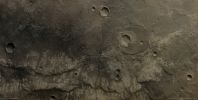
Ma_AdimVallis-ESA-PF.jpgMa'adim Vallis (possible Natural Colors; credits ESA - additional color. and process. Dr Paolo C. Fienga)93 visiteMars Express image of a region close to Ma’adim Vallis, one of the largest canyons on Mars. After Valles Marineris, Ma’adim Vallis is one of the largest canyons on Mars. The imaged region lies South-East of Ma’adim Vallis; the pictures are centred at about 29° South Lat. and 182° East Long. and have a ground resolution of approx. 15 mt/pixel.
Ma’adim Vallis is located between the Volcanic Region of Tharsis, which harbours four volcanoes, including the largest in the Solar System, and the Hellas Planitia Impact Basin.
The canyon, about 20 Km wide and 2 Km deep, originates in the southern highlands close to the ‘Dichotomy Boundary’ and ends in Gusev Crater.
The Dichotomy Boundary is a narrow region separating the Cratered Highlands, located mostly in the Southern Hemisphere of Mars, from the Northern Hemisphere's Lowland Plains.
Nota Lunexit: a nostro avviso questa "immagine" NON E' VERA! E' un disegno. Al limite, è la trasposizione digitale di un frame RAW originale unprocessed (ma ne dubitiamo). MareKromium
(4 voti)
|
|
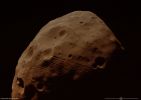
Phobos-401-20080729-5851-6-na-1a-Phobos-Flyby_H1.jpgPhobos in HR (Enhanced Natural Colors; credits for the additional process. and color.: Dr Paolo C. Fienga - Lunexit Team)72 visiteCaption ESA:"On July 23, 2008, the High Resolution Stereo Camera on board the ESA’s Mars Express took the highest-resolution full-disc image yet of the surface of the moon Phobos.
The image data were acquired from a distance of about 97 Km from Phobos' Surface, with a spatial resolution of about 3,7 mt/pixel, during orbit 5851.
These images have surpassed all previous images from other missions in continuous coverage of the illuminated surface at the highest spatial resolution of 3,7 mt/pixel".
This image has been geometrically corrected and exhibits the original illumination and photometric conditions". MareKromium
(4 voti)
|
|
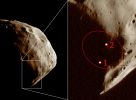
Phobos-402-20080729-5851-6-GRUNT-01-Phobos-Flyby_H1.jpgPhobos and two possible Landing Sites for "GRUNT" (natural colors; credits: Lunexit)70 visiteCaption ESA:"HRSC Stereo Channel 1 image of Phobos with a resolution of 3,7 mt/pixel at its best. The inset to the right shows the potential Landing Region and Sites for the Russia’s Phobos-Grunt sample return mission, due for launch in 2009". MareKromium
(4 voti)
|
|
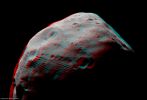
Phobos-404-20080729-5181-6-an-01-Phobos-Flyby_2_H1.jpgPhobos in 3D (red-cyan anaglyph)72 visiteCaption ESA:"On July 23, 2008, the High Resolution Stereo Camera on board ESA’s Mars Express took the highest-resolution full-disc image yet of the surface of the moon Phobos.
This image data was acquired from a distance of about 97 Km with a spatial resolution of about 3,7 m/pixel".MareKromium
(4 voti)
|
|
| 106 immagini su 9 pagina(e) |
 |
|
|
|
6 | |
|
|








